
About Herman F. Mark
Lived 1895 – 1992 (aged 96). Herman F. Mark was an Austrian and American chemist, engineer and university teacher.
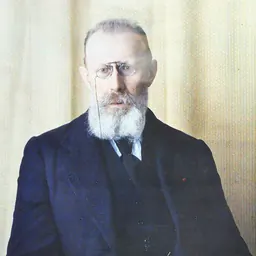
Herman Francis Mark (born Hermann Franz Mark; May 3, 1895, Vienna – April 6, 1992, Austin, Texas) was an Austrian-American chemist regarded for his contributions to the development of polymer science. Mark's X-ray diffraction work on the molecular structure of fibers provided important evidence for the macromolecular theory of polymer structure. Together with Roelof Houwink he formulated an equation, now called the Mark–Houwink or Mark–Houwink–Sakurada equation, describing the dependence of the intrinsic viscosity of a polymer on its relative molecular mass (molecular weight). He was a long-time faculty at Polytechnic Institute of Brooklyn. In 1946, he established the Journal of Polymer Science.
Biography
Early life Mark was born in Vienna in 1895, the son of Hermann Carl Mark, a physician, and Lili Mueller. Mark's father was Jewish, but converted to Christianity (Lutheran Church) upon marriage.
Several early stimuli apparently steered Herman Mark to science. He was greatly influenced by a teacher, Franz Hlawaty, who made mathematics and physics understandable. At the age of twelve, he and his friend toured the laboratories of the University of Vienna. His friend's father, who taught science, arranged the tour. The visit excited both boys and before long they turned their bedrooms into laboratories. Both had access to chemicals through their fathers, and they were soon performing experiments. This led to the computation of intermolecular distances. Linus Pauling learned X-ray diffraction from Mark, and that knowledge led to Pauling's seminal work on the structure of proteins.
Albert Einstein asked Mark and his colleagues to use the intense and powerful X-ray tubes available at their laboratory to verify the Compton Effect; this work provided the strongest confirmation yet of Einstein's light quantum theory for which he won the Nobel Prize in Physics.
Some of Mark's earliest work at the Brooklyn Polytechnic involved experiments with reinforcing ice by mixing water with wood pulp or cotton wool before freezing. In 1942, the results of these experiments were later passed to Max Perutz who had been a student of Mark in Vienna, but was now in the UK. Max Perutz's work would lead to the development of Pykrete.
In 1946, Mark established the Polymer Research Institute at Polytechnic Institute of Brooklyn, the first research facility in the United States dedicated to polymer research. Mark is also recognized as a pioneer in establishing curriculum and pedagogy for the field of polymer science. 1980: Perkin Medal 1988: Charles Goodyear Medal
Books Giant Molecules (Series: LIFE Science Library) (1966) Encyclopedia of Polymer Science and Technology 1st. Ed. 1964 4th. Ed. 2007
Don’t just read it —
keep it.
Full-length biographies made to live with: read them, listen on the way to work, watch them tonight.
- E-book
- Audio
- Video
Instant download · yours to keep · every purchase keeps this site free
Important facts
People in Herman F. Mark's life
Named in this biography and alive at the same time




Related people
Same field, nearest in time



Contemporaries
People whose lives overlapped Herman F. Mark's

Frequently asked questions
Who was Herman F. Mark?
Austrian American chemist (1895–1992)
When was Herman F. Mark born?
Herman F. Mark was born on 3 May 1895 in Vienna.
When did Herman F. Mark die?
Herman F. Mark died on 6 April 1992 in Austin.
What was Herman F. Mark's occupation?
Herman F. Mark was a chemist, engineer and university teacher.
What nationality was Herman F. Mark?
Herman F. Mark was Austrian and American.
Sources & further reading
· DBpedia: Herman Francis Mark
Cite this page
APA: Biography.guide. (2026). Herman F. Mark. https://biography.guide/herman-f-mark/
MLA: "Herman F. Mark." Biography.guide, https://biography.guide/herman-f-mark/.
Chicago: "Herman F. Mark." Biography.guide. https://biography.guide/herman-f-mark/.
Data last updated: 2026-09-20 · Spot an error? Report a correction.
Page generated 2026-09-27 05:01 UTC