
About Herbert Lawrence
Lived 1861 – 1943 (aged 81). Herbert Lawrence was a British military officer and banker.
General Sir Herbert Alexander Lawrence (8 August 1861 – 17 January 1943) was a general in the British Army, a banker and a businessman.
He worked alongside Major Douglas Haig (Assistant Adjutant General) as Intelligence head of General French's staff during the Second Boer War, and was Haig's Chief of Staff in the final year of World War I.
Early life Lawrence was born in Southgate, North London, on 8 August 1861, the son of Sir John Laird Mair Lawrence, later Lord Lawrence and the Governor-General of India, and his wife Harriette Katherine Hamilton. He was educated at Harrow School and the Royal Military College, Sandhurst.
Early military career Officers of the 17th Lancers, Lucknow, India, November 1885. In the front row, sat on the ground and first on the left, is Lieutenant Lawrence.
Commissioned into the 17th Lancers as a lieutenant on 10 May 1882, he was stationed in India and promoted to captain on 25 February 1892 before he entered the Staff College, Camberley, earning his psc, in 1896. After graduating from Camberley in 1896 he returned to serve with his regiment, but not for long. He was then, in September 1897, appointed a staff captain (intelligence) at the War Office in succession to Henry Wilson, a future field marshal, before serving there as a deputy assistant adjutant general from May 1898.
Field Marshal Douglas Haig, French Prime Minister Georges Clemenceau, and French Minister of Foreign Affairs Stéphen Pichon at the Inter-Allied Conference at Versaille in the vestibule before the session, 2 July 1918. On the left is Haig's CGS, Lieutenant General Lawrence.
He was promoted to major on 22 November 1899, shortly after the outbreak of the Second Boer War in South Africa and shortly after being appointed a deputy assistant adjutant general for intelligence on the staff of Lieutenant General Sir John French's Cavalry Division with Douglas Haig and received a brevet promotion to lieutenant colonel in the 16th Lancers on 29 November 1900. In February 1901 he resumed his former role of DAAG at the War Office. For his service in the war, he was twice mentioned in despatches and received the Queen's South Africa Medal with six clasps. He stayed in South Africa throughout the war, which ended in May 1902 with the Peace of Vereeniging. Four months later, he was among 540 officers and men of the 17th Lancers who left Cape Town on the SS German in late September 1902, and arrived at Southampton in late October, when they were posted to Edinburgh.
He resigned his commission in 1903 and became a city banker. He was also a director of the Midland Railway. In April 1908, when the Territorial Force was created, he was made an honorary colonel.
First World War When the First World War started in August 1914 he was recalled for army service and became general staff officer of the 2nd Yeomanry Division, serving in Egypt and at Gallipoli. In June 1915 he was promoted to the temporary rank of brigadier general and given the command of the 127th (Manchester) Brigade, part of the 42nd (East Lancs) Territorial Division, a Territorial Force (TF) formation. and became General Officer Commanding (GOC) 52nd (Lowland) Infantry Division, another TF formation, at Gallipoli in September 1915 and during the evacuation at the end of 1915 he oversaw the withdrawal at Cape Helles beach.
He was promoted to major general on the Active List in November and to temporary lieutenant general in July 1916. In 1916 he returned to Egypt and achieved success at the Battle of Romani, but asked to be relieved of his command later in the year and was transferred to the 71st Home Service Division in England.
Field Marshal Haig and four of his army commanders at Cambrai, France, October 1918. Stood second from the right, holding a cigarette and talking to Lieutenant General Horne, is General Sir Herbert Lawrence.
In February 1917 he was in France as GOC of the 66th (2nd East Lancashire) Division, another TF formation, with whom he remained during the Battle of Passchendaele later in the year.
He served with the 66th until made chief intelligence officer on Haig's staff on 22 January 1918. He then took over from Sir Launcelot Kiggell as chief of the general staff of the BEF in France, for which he was granted the temporary rank of lieutenant general while holding the appointment. After being made a permanent lieutenant general in June, was promoted to full general, He relinquished the post of CGS in April 1919.
Postwar Lawrence was made Knight Commander of the Order of the Bath in 1917 and Knight Grand Cross of the Order of the Bath in 1926. He also received, as well as other overseas honours, the Croix de Guerre, was made a Commander of the Order of the Star of Roumania in September 1919, and was made a Grand Officer of the Legion of Honour in 1919. He was awarded the Army Distinguished Service Medal, the citation for which reads:
In 1919 he was given the colonelcy of the 21st (Empress of India's) Lancers, transferring after amalgamation to the 17th/21st Lancers, a position he held until 1938. From February 1925 to 1932 he was also colonel of the Manchester Regiment, taking over from Major General Sir Willoughby Gwatkin.
Later life After the war he was appointed as a member of the Royal Commission on the Coal Industry in 1925, a trustee of the Imperial War Graves Commission in 1926 and a governor of Wellington College. He became chairman of Vickers in 1926 and of Glyn's Bank in 1934. He was also chairman of several other banks and a director of a number of companies. He lived for some time in Dean's Place in Alfriston and later moved to Little Berkhamsted.
He died in 1943 and was buried at Seal, near Sevenoaks, Kent. He had married Isabel Mary Mills, the daughter of Charles Mills, 2nd Baron Hillingdon, in Sevenoaks in 1892. Their two sons, Oliver James Lawrence and Michael Charles Lawrence, were both killed in action during the First World War.
Don’t just read it —
keep it.
Full-length biographies made to live with: read them, listen on the way to work, watch them tonight.
- E-book
- Audio
- Video
Instant download · yours to keep · every purchase keeps this site free
Important facts
People in Herbert Lawrence's life
Named in this biography and alive at the same time


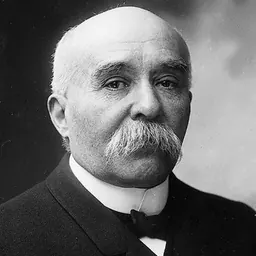

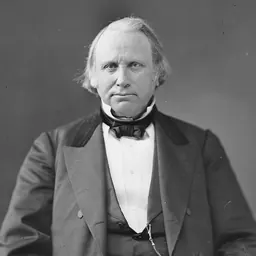

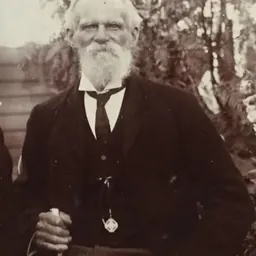
Related people
Same field, nearest in time

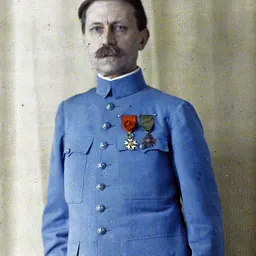


Contemporaries
People whose lives overlapped Herbert Lawrence's



Frequently asked questions
Who was Herbert Lawrence?
army officer and banker; (1861-1943)
When was Herbert Lawrence born?
Herbert Lawrence was born on 8 August 1861 in London.
When did Herbert Lawrence die?
Herbert Lawrence died on 17 January 1943 in Little Berkhamsted.
What was Herbert Lawrence's occupation?
Herbert Lawrence was a military officer and banker.
What nationality was Herbert Lawrence?
Herbert Lawrence was British.
Sources & further reading
Cite this page
APA: Biography.guide. (2026). Herbert Lawrence. https://biography.guide/herbert-lawrence/
MLA: "Herbert Lawrence." Biography.guide, https://biography.guide/herbert-lawrence/.
Chicago: "Herbert Lawrence." Biography.guide. https://biography.guide/herbert-lawrence/.
Data last updated: 2026-09-20 · Spot an error? Report a correction.
Page generated 2026-09-27 05:21 UTC