
About Launcelot Kiggell
Lived 1862 – 1954 (aged 91). Launcelot Kiggell was a British military officer and lieutenant general.
Lieutenant-General Sir Launcelot Edward Kiggell, (2 October 1862 – 23 February 1954) was an Irish-born British Army officer who was Chief of the General Staff (CGS) for the British Armies in France under Field Marshal Sir Douglas Haig from late 1915 to 1918.
Early life and military career Launcelot Edward Kiggell was born in County Limerick on 2 October 1862, the son of Launcelot John Kiggell (1829–1911), a justice of the peace and major in the Cork Light Militia. As a result of his family being "of modest means", he "was not educated at an English public school, a rarity among officers of his generation". He attended the Royal Military College, Sandhurst, and was commissioned into the Royal Warwickshire Regiment of the British Army as a lieutenant on 10 May 1882.
He was adjutant of the 2nd Battalion, Royal Warwicks, from 1886 until 1890 and was promoted captain on 3 April 1889. From 1897 to 1899 he was deputy assistant adjutant-general (DAAG) for instruction at South-Eastern District,
Second Boer War He served in South Africa throughout the Second Boer War. From late 1899 he served on the staff of General Sir Redvers Buller, then spent six months on the staff at HQ at Pretoria. He then served as assistant adjutant general (AAG) for Harrissmith District, then held the same post in Natal after the end of the war. He was mentioned in dispatches for his services during the war.
Inter-war years He was promoted to substantive lieutenant colonel in January 1904, and from then until 1907 he was DAAG at the Staff College, during which time he was promoted to brevet lieutenant colonel in April 1905. In that year he presented a paper to the Aldershot Military Society, which was criticised for excessive emphasis on the lessons of the Napoleonic and Franco-Prussian wars rather than the more recent Second Boer War and Russo-Japanese wars, and "stressing that battles would be localized with reserves conveniently placed within a few hours' march. Unsurprisingly, his audience was critical of this view". He wrote a revised edition of Edward Bruce Hamley's Operations of War. He wanted to change the name of the Staff College to the "War School" and to train commanders rather than just staff officers, a view which he shared with Henry Rawlinson, William Robertson and Douglas Haig, all of whom he would encounter during the First World War. and was a general staff officer, grade 1 (GSO1) at Horse Guards (army headquarters) from 1907 to 1909. He was then promoted to temporary brigadier general in charge of administration at Scottish Command from March to October 1909. J. F. C. Fuller, a student at the Staff College at the time, saw Kiggell as "a highly educated soldier, but a doctrinaire … he possessed knowledge, but little vision … a dyspeptic, gloomy and doleful man".
He served briefly as deputy chief of the Imperial General Staff at the end of 1915.
When General Sir Douglas Haig was promoted to commander-in-chief of the British Expeditionary Force (BEF) in December 1915, Kiggell was appointed chief of the general staff (CGS) of the BEF, which saw him raised to the temporary rank of lieutenant general while serving in this position. Richard Butler, Haig's preferred choice, was considered too junior for the role "and so, on Lord Horatio Kitchener's recommendation, the job went to Kiggell". In Haig words on his new CGS:
Kiggell would hold this position for over two years until early 1918. Sir Henry Wilson, liaising with French Grand Quartier Général early in 1917, claimed that Kiggell "hated the French".
Nigel Cave exonerates Kiggell from some of the questionable decisions which are sometimes attributed to him. Kiggell's stress on high-morale infantry attacks cannot be blamed for the catastrophe which befell General Sir Henry Rawlinson's Fourth Army on the first day of the Battle of the Somme on 1 July 1916, as an infantry advance in straight lines was only one of the formations suggested in Rawlinson's Fourth Army Tactical Notes and modern research has shown that it was not widely adopted. However, contemporary evidence demonstrates that Kiggell was kept fully briefed on the conditions in the front line: this included the delivery of a 'violent report' on the 'awful conditions' by Major Edmund A. Osborne, 34th Division.
Along with a number of other senior officers at the BEF's general headquarters in the winter of 1917–18, including Butler and John Charteris, Kiggell was removed from his position, as a result of political pressure from Prime Minister David Lloyd George, and replaced by Major General Sir Herbert Lawrence, with whom he had been at Sandhurst. He was a scapegoat following the failure of Allied forces to achieve a decisive result at Passchendaele and the German counterattack which retook almost all the British gains at Cambrai. However, he had not taken the leave which he was due, and two doctors testified that he was genuinely suffering from nervous exhaustion.
Kiggell worked on the Official History of the Great War from 1920 to 1923, but had to give up the task on health grounds.
Kiggell had married Eleanor Rose Field, daughter of a colonel, on 10 March 1888. They had three sons, born in 1890, 1894 and 1903. His wife died in 1948.
Don’t just read it —
keep it.
Full-length biographies made to live with: read them, listen on the way to work, watch them tonight.
- E-book
- Audio
- Video
Instant download · yours to keep · every purchase keeps this site free
Important facts
People in Launcelot Kiggell's life
Named in this biography and alive at the same time


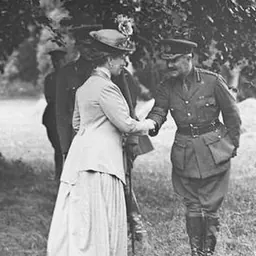
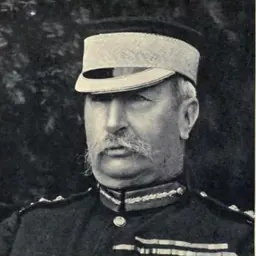
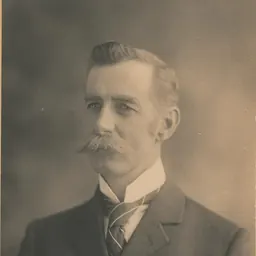

Related people
Same field, nearest in time

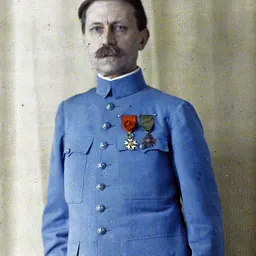



Contemporaries
People whose lives overlapped Launcelot Kiggell's





Frequently asked questions
Who was Launcelot Kiggell?
British Army general (1862–1954)
When was Launcelot Kiggell born?
Launcelot Kiggell was born on 2 October 1862 in Ballingarry.
When did Launcelot Kiggell die?
Launcelot Kiggell died on 23 February 1954 in Felixstowe.
What was Launcelot Kiggell's occupation?
Launcelot Kiggell was a military officer and lieutenant general.
What nationality was Launcelot Kiggell?
Launcelot Kiggell was British.
Sources & further reading
· Wikipedia: Launcelot Kiggell
Cite this page
APA: Biography.guide. (2026). Launcelot Kiggell. https://biography.guide/launcelot-kiggell/
MLA: "Launcelot Kiggell." Biography.guide, https://biography.guide/launcelot-kiggell/.
Chicago: "Launcelot Kiggell." Biography.guide. https://biography.guide/launcelot-kiggell/.
Data last updated: 2026-09-20 · Spot an error? Report a correction.
Page generated 2026-09-27 05:23 UTC