
About John Charteris
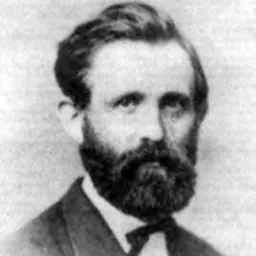
Lived 1877 – 1946 (aged 68–69). John Charteris was a British engineer, politician, military officer, intelligence officer, writer and reporter.
Brigadier-General John Charteris, (8 January 1877 – 4 February 1946) was a British Army officer. During the First World War, he was the Chief of Intelligence at the British Expeditionary Force General Headquarters from 1915 to 1918. In later life he was a Unionist Party Member of Parliament for Dumfriesshire.
Early life Charteris was born on 8 January 1877, probably in Glasgow, son of Matthew Charteris, Regius Professor of Materia Medica at the University of Glasgow, and Elizabeth Gilchrist ( Greer). He was from a distinguished academic family. His uncle was Archibald Hamilton Charteris, Professor of Liberal Criticism at the University of Edinburgh and Moderator of the General Assembly of the Church of Scotland (1892). His older brother, also called Archibald Hamilton Charteris, was Professor of International Law at the University of Sydney, and was suspected with the other brother, Francis James Charteris, Professor of Materia Medica at the University of St Andrews of the murder of Marion Gilchrist in 1908 .
Charteris received his early formal education at Kelvinside Academy from 1886 to 1891, then spent a year studying mathematics and physics at Göttingen University in Germany.
Early military career Charteris entered the Royal Military Academy, Woolwich, in December 1893, and on graduating received a commission into the Royal Engineers in March 1896, and was sent to Asia, where he joined the British Indian Army.
First World War In August 1914, on the outbreak of the First World War, whilst still at the junior officer rank of captain, Charteris was appointed an Aide-de-Camp to Haig, whom he accompanied to France with the British Expeditionary Force (BEF). In September 1914 Haig issued him with an order to establish an Intelligence Office in I Corps Headquarters, Haig's command, with the aim of providing operational information on the activities of the Imperial German Army. Despite being fluent in French and German, Charteris had no background or formal training in intelligence work. He remained in Haig's retinue engaged in this work when I Corps was enlarged and converted into the BEF's First Army in December 1914, and then on to the BEF's General Headquarters, when Haig was appointed Commander-in-Chief of the BEF in December 1915, where Charteris was promoted by Haig to the temporary rank of brigadier-general in January 1916 at 38 years of age. Haig also awarded him the Distinguished Service Order for his work on his HQ Staff in 1915. Haig kept him on after his inadequacies had been exposed. was moved to the job of deputy director of Transportation at GHQ.
Propaganda Charteris was also associated with some notable allied propaganda and disinformation successes, such as "the master hoax" of World War I, being the story of the existence of a German corpse factory Kadaververwertungsanstalt, in which the Germans supposedly rendered their own dead soldiers into fats. This story was circulated in several British and international newspapers in 1917. After the war Charteris allegedly claimed in a public speech that he invented it when he deliberately switched captions on two German war pictures: one image showed soldiers killed in battle being taken away for burial, while the other showed horse carcasses being delivered to a processing factory behind German lines. One of his subordinates created a fake diary describing the use of the factory. This was to have been planted on the corpse of a German soldier, to be "found" as proof of the story, but this plan was eventually dropped. Charteris's comments caused a media outcry. Phillip Knightley says that all the evidence suggests that the story originated in newspaper reports about a real factory for rendering animal corpses. Charteris may have concocted the claim that he invented it in order to impress his audience, not realizing a reporter was present. Randal Marlin has written that Charteris's claim to have invented the story is "demonstrably false" in a number of details. However, it is possible that a fake diary was created but never used. Nevertheless, this fake diary, which Charteris claimed still existed when he made the comments has never been found. In fact Charteris's comments later gave Adolf Hitler rhetorical ammunition to portray the British as liars. then as Deputy Adjutant- and Quartermaster-General of Eastern Command from 1921 to 1922.
Political career Charteris left the army, retiring on an Indian pension and being granted the honorary rank of brigadier general on 27 December 1922.
From 1924 until 1929 he was Unionist Party Member of Parliament for Dumfriesshire. His areas of political interest were in farming and the welfare of British war veterans. However, examination of Charteris's original letters gives evidence that these entries or dates were falsified, leading David Clarke, among others, to suggest that Charteris was using the Angels rumour for propaganda purposes. His body was buried in the graveyard of Tinwald Kirk (Church), in Dumfries and Galloway, which also displays a memorial stained glass window to his memory.
His will was valued for probate at £6,895 4s 11d (around £360,000 at 2024 prices).
Don’t just read it —
keep it.
Full-length biographies made to live with: read them, listen on the way to work, watch them tonight.
- E-book
- Audio
- Video
Instant download · yours to keep · every purchase keeps this site free
Important facts
People in John Charteris's life
Named in this biography and alive at the same time






Related people
Same field, nearest in time

Contemporaries
People whose lives overlapped John Charteris's


Frequently asked questions
Who was John Charteris?
British Army general (1877-1946)
When was John Charteris born?
John Charteris was born in 1877 in Glasgow.
When did John Charteris die?
John Charteris died in 1946 in Thorpe.
What was John Charteris's occupation?
John Charteris was an engineer, politician, military officer, intelligence officer, writer and reporter.
What nationality was John Charteris?
John Charteris was British.
Sources & further reading
Cite this page
APA: Biography.guide. (2026). John Charteris. https://biography.guide/john-charteris/
MLA: "John Charteris." Biography.guide, https://biography.guide/john-charteris/.
Chicago: "John Charteris." Biography.guide. https://biography.guide/john-charteris/.
Data last updated: 2026-09-26 · Spot an error? Report a correction.
Page generated 2026-09-27 05:16 UTC