
About Henry Swanzy
Lived 1915 – 2004 (aged 88). Henry Swanzy was a journalist and radio producer, known for BBC.
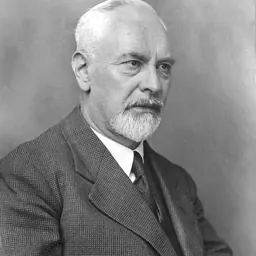
Henry Swanzy (14 June 1915 – 19 March 2004) was an Anglo-Irish radio producer in Britain's BBC General Overseas Service who is best known for his role in promoting West Indian literature particularly through the programme Caribbean Voices, where in 1946 he took over from Una Marson, the programme's first producer. Swanzy introduced unpublished writers and continued the magazine programme "with energy, critical insight and generosity". It is widely acknowledged that "his influence on the development of Caribbean literature has been tremendous".
Biography Born Henry Valentine Leonard Swanzy at Glanmire Rectory, near Cork in Ireland, he was the eldest son of the local clergyman and his wife. After his father's death in 1920, the five-year-old Swanzy moved to England with his mother.
He was educated at preparatory schools in Cheltenham and Eastbourne, before going on to Wellington College in 1928. He read History at New College, Oxford, graduating with a first-class honours degree, and he also won the Gibbs Prize. For a year thereafter, planning a career as a civil servant, he studied French and German and travelled throughout Europe, then in 1937, aged 22, he was employed at the Colonial and Dominions Office, joining the BBC four years later. reporting for the General Overseas Service. From 1944 to 1954, he was also an innovative editor of African Affairs, the journal of the Royal African Society, where he introduced African authors and opinion to the colonial mix. He took over Caribbean Voices after Una Marson, the programme's original architect and first producer, returned to Jamaica in April 1946, and he remained at the helm until 1954.
Anne Spry Rush has written of Swanzy having "a great respect for Caribbean writers as representing a legitimate and distinctive element of British literature." Writing in Caribbean Quarterly in 1949, Swanzy commented: "It is not inconceivable that of all the English-speaking world, the West Indies may be revealed as the place most suited for maintenance of a literary tradition." In collaboration with Frank Collymore of BIM magazine, he provided a platform through the programme for some of the most significant Caribbean literary talent of the twentieth century. As Montague Kobbe has written: "it is hard to overemphasise the tremendous influence which Henry Swanzy, editor to Caribbean Voices from 1946 onwards, would exert in the development of a literary tradition that was in its earliest stages. The other initiative in question corresponds, of course, to the emergence of Frank Collymore's audacious magazine, BIM. Launched in Barbados in 1942, BIM encouraged young local writers to put forward their work and quickly established a fruitful rapport with the literary findings uncovered by Swanzy's Caribbean Voices, establishing a cultural infrastructure of sorts that had its local nucleus in Collymore’s magazine and its international outlet in the BBC."
Swanzy is acknowledged to have "transformed Caribbean Voices into the primary site for new and unpublished poetry and prose from the Caribbean, granting an international forum to many who would go on to become the leading lights in Caribbean letters". Writers who received their start on Caribbean Voices or were nurtured as contributors by the programme during Swanzy's tenure include George Lamming, Edgar Mittelholzer, Shake Keane, Sam Selvon, Edward Kamau Brathwaite, Austin Clarke, Ian McDonald, Gloria Escoffery, John Figueroa, Alfred Mendes Derek Walcott According to Naipaul, Swanzy brought to the programme "standards and enthusiasm. He took local writing seriously and lifted it above the local".
In 1956, Swanzy himself wrote about what the programme had achieved:"The listener has visited every kind of home in town and village, sat with the fishermen hefting sea-eggs, gone with the pork-knockers into Guiana jungles, followed the saga-boys and the whe-whe players, heard the riddles, the digging songs, the proverbs, the ghost stories, duppies, la Diablesse, Soukiyans, zombies, maljo, obeah, voodoo, shango. He has agonised over the waifs, the unemployed, the mental patients, scoundrels, fallen women, the rich and comfortable in their wall of privilege."
1954–58 in Ghana From 1954 to 1958 Swanzy was seconded as head of programmes to the Gold Coast Broadcasting System (GCBS; later the Ghana Broadcasting Corporation), after a colonial government commission had proposed the establishment of GCBS to produce programmes of local content "in the spirit of independence", with BBC staff being sent to Accra, capital of the then Gold Coast, to develop news and entertainment programmes, train staff and promote the purchase of wireless sets by the general public. Developing a new weekly literary radio programme called The Singing Net, Swanzy specifically encouraged creative writers (Cameron Duodu has written of his experience at the time), attracting contributors and listeners through competitions and articles he wrote for the Daily Graphic.
A direct legacy of the programme was an anthology edited by Swanzy, published the year after Ghana became the first African nation to declare independence from European colonisation, and entitled Voices of Ghana: Literary Contributions to the Ghana Broadcasting System, 1955–57 (Ministry of Information and Broadcasting, Ghana, 1958). In a review for the Daily Times of Nigeria, Cyprian Ekwensi wrote: "I am certain that everyone who reads Voices of Ghana will agree that it stands as a solid examination of the achievement of a nation under the inspiration of a man who knew the importance to a nation of the (literary) printed word."
Later years Swanzy subsequently returned to the BBC's external services, where he worked until his retirement in 1976.
In November 1998, Swanzy was the subject of a BBC Radio 4 programme, What Does Mr Swanzy Want?, presented by Philip Nanton and produced by Matt Thompson.
Swanzy died on 19 March 2004, aged 88, at his home in Bishop's Stortford, England.
After Garwood died from cancer, in 1952 he married Henriette Van Eeghan, with whom he had two sons and a daughter. Recipients have been: John La Rose and Sarah White of New Beacon Books (2013); literary critics Kenneth Ramchand and Gordon Rohlehr (2014); publisher and editor Margaret Busby (2015), Jeremy Poynting, founder of Peepal Tree Press (2016), Joan Dayal, proprietor of Paper Based Books (2017), and Anne Walmsley, writer, editor, and researcher (2018).
A Postcolonial Studies seminar entitled "Henry Swanzy at the BBC: World Literature and Broadcast Culture at the End of Empire" was conducted at King's College, London University, by Dr Chris Campbell of the University of Warwick on 12 February 2013.
Archives
Swanzy's papers are held at the Bodleian Library of Commonwealth and African Studies at Rhodes House. Swanzy's BBC scripts are held by BBC Written Archives at Caversham, near Reading.Papers of Henry Swanzy are held at the Cadbury Research Library, University of Birmingham.
Selected publications "Caribbean Voices: Prolegomena to a West Indian Culture", Caribbean Quarterly, Vol. 1, No. 2 (July August September 1949), pp. 21–28. "Writing in the British Caribbean: A Study in Cultural Devolution", Overdrup win de West Indisches gids, 32.4: 217–40 ('s Gravenhage: M. Nijhoff), 1952. "A Trading Family in the Nineteenth Century Gold Coast", Transactions of the Gold Coast & Togoland Historical Society, Vol. 2, No. 2 (1956), pp. 87–120. Editor, Voices of Ghana: Literary Contributions to the Ghana Broadcasting System, 1955–57, Ghana Ministry of Information and Broadcasting, 1958.
Don’t just read it —
keep it.
Full-length biographies made to live with: read them, listen on the way to work, watch them tonight.
- E-book
- Audio
- Video
Instant download · yours to keep · every purchase keeps this site free
Important facts
People in Henry Swanzy's life
Named in this biography and alive at the same time







Related people
Same field, nearest in time



Contemporaries
People whose lives overlapped Henry Swanzy's




Frequently asked questions
Who was Henry Swanzy?
Anglo-Irish radio producer
When was Henry Swanzy born?
Henry Swanzy was born on 14 June 1915 in Glanmire.
When did Henry Swanzy die?
Henry Swanzy died on 19 March 2004 in Bishop's Stortford.
What was Henry Swanzy's occupation?
Henry Swanzy was a journalist and radio producer.
What was Henry Swanzy known for?
Henry Swanzy was known for BBC.
Sources & further reading
Cite this page
APA: Biography.guide. (2026). Henry Swanzy. https://biography.guide/henry-swanzy/
MLA: "Henry Swanzy." Biography.guide, https://biography.guide/henry-swanzy/.
Chicago: "Henry Swanzy." Biography.guide. https://biography.guide/henry-swanzy/.
Data last updated: 2026-09-22 · Spot an error? Report a correction.
Page generated 2026-09-27 05:05 UTC