
About George Lamming
Lived 1927 – 2022 (aged 94). George Lamming was a poet, writer and novelist.
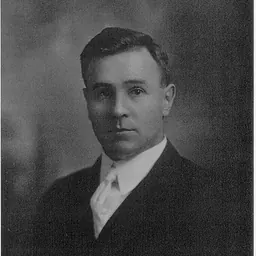
George William Lamming OCC (8 June 19274 June 2022) was a Barbadian novelist, essayist, and poet. He first won critical acclaim for In the Castle of My Skin, his 1953 debut novel. He also held academic posts, including as a distinguished visiting professor at Duke University and a visiting professor in the Africana Studies Department of Brown University, and lectured extensively worldwide.
Early life and education George William Lamming was born on June 8, 1927, in Carrington Village, Barbados, of mixed Afro-Barbadian and English parentage. After his mother, Loretta Devonish, married his stepfather, Lamming split his time between his birthplace and his stepfather's home in St David's Village. He attended Roebuck Boys' School and Combermere School on a scholarship. Encouraged by his teacher, Frank Collymore – founder of the pioneering Caribbean literary magazine BIM – Lamming found the world of books and started to write.
Career Lamming left Barbados to work as a teacher from 1946 to 1950 in Port of Spain, Trinidad, at El Colegio de Venezuela, a boarding school for boys. He then emigrated to England where, for a short time, he worked in a factory. As he later wrote: "Migration was not a word I would have used to describe what I was doing when I moved with other West Indians to England in 1950. We easily thought we were going to an England that had been painted in our childhood consciousness as a heritage and a place of welcome. It is the measure of our innocence that neither the claim of heritage nor the expectation of welcome would have been seriously doubted. England was not for us a country with classes and conflicts of interest like the islands we left. It was the name of a responsibility whose origin may have coincided with the beginning of time. ...
"The emigrants were largely men in search of work. My friend and fellow traveller, the late Samuel Selvon of Trinidad, was a poet and short-story writer then halfway through his first novel, A Brighter Sun. Sam and I had left home for the same reason - to make a career as a writer. This was a journey to an expectation, and between 1948 and 1960 every West Indian novelist of significance within their region made a similar journey: Wilson Harris, Edgar Mittleholzer, Ian Carew of Guyana, Roger Mais, Andrew Salkey and John Hearne of Jamaica. In 1951, Lamming became a broadcaster for the BBC Colonial Service. His writings were published in the Barbadian magazine Bim, edited by his teacher Frank Collymore, and the BBC's Caribbean Voices radio series broadcast his poems and short prose. Lamming himself read poems on Caribbean Voices, including some by the young Derek Walcott.
Lamming's first novel, In the Castle of My Skin, was published in London in 1953. It won a Somerset Maugham Award and was championed by eminent figures like Jean-Paul Sartre and Richard Wright, the latter writing an introduction to the book's U.S. edition. Lamming later said of the book: "I tried to reconstruct the world of my childhood and early adolescence. It was also the world of a whole Caribbean society." He was awarded a Guggenheim Fellowship, and became a professional writer. He began to travel widely, going to the United States in 1955, the West Indies in 1956 and West Africa in 1958. His second novel, The Emigrants, (1954), which focuses on the migrants' journey and the process of resettlement, was described by Quarterly Black Review as "very thought-provoking. It shows how adrift black people can be as they search for a political, economic and social context. It should also be read as an example of how black people have tried to use the novel to tell their own unique story in a unique way."
He lived in England for more than a decade but, as Hillel Italie notes, "unlike Naipaul, who settled in London and at times wrote disdainfully of his origins, Lamming returned home and became a moral, political and intellectual force for a newly independent country seeking to tell its own story. ...Lamming had a broad, connective vision he would say was inspired in part by the Trinidadian historian-activist C.L.R. James. His calling was to address the crimes of history, unearth and preserve his native culture and forge a 'collective sense' of the future."
He entered academia in 1967 as a writer-in-residence and lecturer in the Creative Arts Centre and Department of Education at the University of the West Indies, Mona, Jamaica (1967–68). Later, he was a visiting professor in the United States at the University of Texas at Austin, the University of Pennsylvania, the University of Connecticut, Brown University, Cornell University, and Duke University and a lecturer in Denmark, Tanzania, and Australia. Lamming also directed the University of Miami's Summer Institute for Caribbean Creative Writing.
In April 2012, he was chair of the judges for the OCM Bocas Prize for Caribbean Literature, and served as chief judge for the inaugural Walter Rodney Awards for Creative Writing 2014. His son Gordon had predeceased him in 2021; his daughter Natasha Lamming-Lee survives him, as does his long-time partner Esther Phillips. His second novel, The Emigrants, was a sequel to his debut autobiographical work, following the life of the same protagonist as he travels from Barbados to England in search of better prospects and opportunities.
Of Age and Innocence (1958) and Season of Adventure (1960) take place on the fictional Caribbean island of San Cristobal, and 1972's Water with Berries "describes various flaws in West Indian society through the plot of Shakespeare's The Tempest." Of Lamming's last novel, Jan Carew wrote in The New York Times: Natives of My Person' is undoubtedly George Lamming's finest novel. It succeeds in illuminating new areas of darkness in the colonial past that the colonizer has so far not dealt with, and in this sense it is a profoundly revolutionary and original work."
Much of Lamming's work had gone out of print by the late 1970s, when Allison and Busby reissued several titles, including his 1960 collection of essays, The Pleasures of Exile, which attempts to define the place of the West Indian in the post-colonial world, re-interpreting Shakespeare's The Tempest and the characters of Prospero and Caliban in terms of personal identity and the history of the Caribbean.
A later (1995) collection of essays is Coming, Coming Home: Conversations II – Western Education and the Caribbean Intellectual.
Honours and recognition In 2008, Lamming was awarded CARICOM's highest award, the Order of the Caribbean Community (OCC), "honoring fifty-five years of extraordinary engagement with the responsibility of illuminating Caribbean identities, healing the wounds of erasure and fragmentation, envisioning possibilities, transcending inherited limitations. In recognizing this son and ancestor, CARICOM is applauding intellectual energy, constancy of vision, and an unswerving dedication to the ideals of freedom and sovereignty."
Brown University held a two-day series of events celebrating Lamming, 8th–9th of March 2011.
In May 2011, the National Union of Writers and Artists of Cuba (UNEAC) awarded Lamming the first Caribbean Hibiscus Award in acknowledgement of his lifetime's work. In 2014, he received a Lifetime Achievement Prize from the Anisfield-Wolf Book Awards.
George Lamming Primary School, located at Flint Hall, St Michael, was named in his honor and opened on the 2nd of September, 2008.
His work is celebrated through the George Lamming Pedagogical Centre, housed at the Errol Barrow Centre for Creative Imagination (EBCCI), with annual distinguished lecture series held annually in June, the month of Lamming's birth. – was included on the "Big Jubilee Read" list of 70 books by Commonwealth authors, selected to celebrate the Platinum Jubilee of Elizabeth II in June 2022.
In a statement issued on the day of his death, Prime Minister Mottley described him as a national icon and as "the quintessential Bajan", saying: "Wherever George Lamming went, he epitomized that voice and spirit that screamed Barbados and the Caribbean."
Published works Novels In the Castle of My Skin (London: Michael Joseph; New York: McGraw-Hill, 1953) The Emigrants (London: Michael Joseph; New York: McGraw Hill, 1954. London: Allison & Busby, 1980) Of Age and Innocence (London: Michael Joseph, 1958; London: Allison & Busby, 1981) Season of Adventure (London: Michael Joseph, 1960; Allison & Busby, 1979; Ann Arbor: University of Michigan Press, 1999) Water with Berries (London: Longman, 1971; New York: Holt Rinehart, 1972) Natives of my Person (London: Longman; New York: Holt Rinehart, 1972. London: Allison & Busby, 1986)
Non-fiction The Pleasures of Exile (London: Michael Joseph, 1960; Allison & Busby, 1981; Ann Arbor: University of Michigan Press, 1992) Coming, Coming Home: Conversations II – Western Education and the Caribbean Intellectual (Philipsburg, St. Martin: House of Nehesi, 1995, ; in Spanish as Regreso, regreso al hogar: Conversaciones II, 2000) Caribbean Reasonings – The George Lamming Reader: The Aesthetics of Decolonisation, edited by Anthony Bogues (Ian Randle Publishers, 2010, ).
Anthologies Editor, Cannon Shot and Glass Beads: Modern Black Writing (London: Pan, 1974). Editor, On the Canvas of the World (Port of Spain: Trinidad & Tobago Institute of the West Indies, 1999.
Uncollected short stories "David's Walk", in Life and Letters (London), November 1948. "Of Thorns and Thistles" and "A Wedding in Spring", in West Indian Stories, ed. Andrew Salkey. London: Faber & Faber, 1960. "Birds of a Feather", in Stories from the Caribbean, ed. Andrew Salkey. London: Elek, 1965; as Island Voices, New York: Liveright, 1970. "Birthday Weather", in Caribbean Literature, ed. G. R. Coulthard. London: University of London Press, 1966.
Selected awards 1954: Kenyon Review Fellowship 1955: Guggenheim Fellowship 1957: Somerset Maugham Award for In the Castle of My Skin 1962: Canada Council fellowship 1987: Companion of Honour of Barbados (CHB) 1998: Langston Hughes Medal 2003: Fellow of the Institute of Jamaica (IOJ) 2008: Order of the Caribbean Community 2009: The Presidents Award (St. Martin Book Fair) 2011: Caribbean Hibiscus Prize from UNEAC 2012: ALBA Cultural Award 2013: Clement Payne Appreciation Award 2014: Lifetime Achievement, the Anisfield-Wolf Book Awards
Don’t just read it —
keep it.
Full-length biographies made to live with: read them, listen on the way to work, watch them tonight.
- E-book
- Audio
- Video
Instant download · yours to keep · every purchase keeps this site free
Important facts
Family & relationships
People in George Lamming's life
Named in this biography and alive at the same time






Related people
Same field, nearest in time

Contemporaries
People whose lives overlapped George Lamming's


Frequently asked questions
Who was George Lamming?
Barbadian novelist, essayist and poet (1927–2022)
When was George Lamming born?
George Lamming was born on 8 June 1927 in Carrington, Saint Philip, Barbados.
When did George Lamming die?
George Lamming died on 4 June 2022 in Bridgetown.
What was George Lamming's occupation?
George Lamming was a poet, writer and novelist.
What nationality was George Lamming?
George Lamming's recorded nationality: Barbados.
Sources & further reading
Cite this page
APA: Biography.guide. (2026). George Lamming. https://biography.guide/george-lamming/
MLA: "George Lamming." Biography.guide, https://biography.guide/george-lamming/.
Chicago: "George Lamming." Biography.guide. https://biography.guide/george-lamming/.
Data last updated: 2026-09-20 · Spot an error? Report a correction.
Page generated 2026-09-27 05:25 UTC