
About Henry Stapp
Born 1928. Henry Stapp is an American physicist and philosopher.
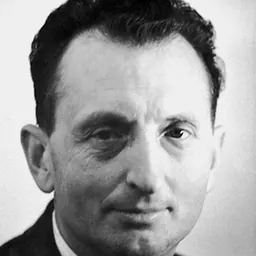
Henry Pierce Stapp (born March 23, 1928) is an American mathematical physicist, known for his work in quantum mechanics, particularly the development of axiomatic S-matrix theory, the proofs of strong nonlocality properties, and the place of free will in the orthodox quantum mechanics of John von Neumann. He is considered a member of the Fundamental Fysiks Group.
Research Some of Stapp's work concerns the implications of quantum mechanics. He has argued for the relevance of quantum mechanics to consciousness and free will.
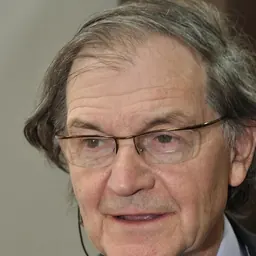
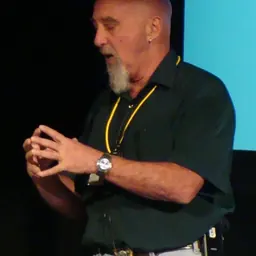
Stapp favors consciousness causes collapse, the idea that quantum wave functions collapse only when they interact with consciousness as a consequence of "orthodox" quantum mechanics. He argues that quantum wave functions collapse when conscious minds select one among the alternative quantum possibilities. His hypothesis of how mind may interact with matter via quantum processes in the brain differs from that of Roger Penrose and Stuart Hameroff's orchestrated objective reduction. While they postulate quantum computing in the microtubules in brain neurons, Stapp postulates a more global collapse, a 'mind like' wave-function collapse that exploits certain aspects of the quantum Zeno effect within the synapses. Stapp's view of the neural correlate of attention is explained in his book, Mindful Universe: Quantum Mechanics and the Participating Observer (2007). Stapp has claimed that consciousness is fundamental to the universe.
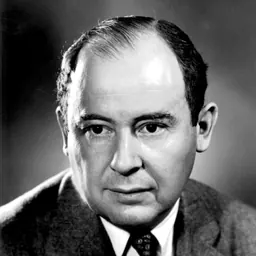
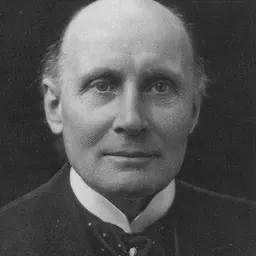
In this book he credits John von Neumann's Mathematical Foundations of Quantum Mechanics (1932) with providing an orthodox quantum mechanics demonstrating mathematically the essential role of quantum physics in the mind. Stapp has taken interest in the work of Alfred North Whitehead. He has proposed what he calls a "revised Whiteheadianism". He has also written a chapter "Whiteheadian Process and Quantum Theory" (pp. 92–102) in the book Physics and Whitehead: Quantum, Process, and Experience (2003).
His philosophy has been described as being influenced by both Heisenberg's physical realism and Bohr's idealism. A form of panpsychism Philosopher Gordon Globus noted that "Stapp unhesitatingly descends into panexperientialism". Stapp has co-authored papers with Jeffrey M. Schwartz. Schwartz has connected the work of Stapp with the concept of "mental force" and spiritual practices of Buddhism.
Reception
Stapp's work has drawn criticism from scientists such as David Bourget and Danko Georgiev. Recent papers and a book by Georgiev criticize Stapp's model in two aspects: (1) The mind in Stapp's model does not have its own wavefunction or density matrix, but nevertheless can act upon the brain using projection operators. Such usage is not compatible with standard quantum mechanics because one can attach any number of ghostly minds to any point in space that act upon physical quantum systems with any projection operators. Therefore, Stapp's model does not build upon "the prevailing principles of physics", but negates them.
Selected publications Stapp, H; Schwartz, J. M; Beauregard, M. (2005). Quantum theory in neuroscience and psychology: A neurophysical model of mind-brain interaction. Philosophical Transactions of the Royal Society of London, Series B. 360 (1458): 1309-1327. Full paper Stapp, H; Schwartz, J. M; Beauregard, M. (2004). The volitional influence of the mind on the brain, with special reference to emotional self-regulation. In Beauregard, M. (Ed.). Consciousness, emotional self-regulation, and the brain, Philadelphia, PA: John Benjamins Publishing Company, Chapter 7. Stapp, H. (2009). Mind, Matter and Quantum Mechanics (The Frontiers Collection). Springer. Stapp, H. (2011). Mindful Universe: Quantum Mechanics and the Participating Observer. Springer. Stapp, H. (2017). Quantum Theory and Free Will: How Mental Intentions Translate into Bodily Actions. Springer.
Don’t just read it —
keep it.
Full-length biographies made to live with: read them, listen on the way to work, watch them tonight.
- E-book
- Audio
- Video
Instant download · yours to keep · every purchase keeps this site free
Important facts
People in Henry Stapp's life
Named in this biography and alive at the same time


Related people
Same field, nearest in time




Contemporaries
People whose lives overlapped Henry Stapp's





Frequently asked questions
Who is Henry Stapp?
American physicist
When was Henry Stapp born?
Henry Stapp was born on 23 March 1928 in Cleveland.
What is Henry Stapp's occupation?
Henry Stapp is a physicist and philosopher.
What nationality is Henry Stapp?
Henry Stapp is American.
Sources & further reading
Cite this page
APA: Biography.guide. (2026). Henry Stapp. https://biography.guide/henry-stapp/
MLA: "Henry Stapp." Biography.guide, https://biography.guide/henry-stapp/.
Chicago: "Henry Stapp." Biography.guide. https://biography.guide/henry-stapp/.
Data last updated: 2026-09-20 · Spot an error? Report a correction.
Page generated 2026-09-27 05:06 UTC