
About Henry Smeathman
Lived 1742 – 1786 (aged 43–44). Henry Smeathman was a British botanist, naval officer, entomologist, writer, botanical collector and scientific collector.
Henry Smeathman (1742–1786) was an English naturalist, best known for his work in entomology and colonial settlement in Sierra Leone.
In 1771 the Quaker physician John Fothergill, along with two other members of the Royal Society, Sir Joseph Banks and Marmaduke Tunstall, sponsored Smeathman to spend four years in and around the Sierra Leone peninsula studying its natural history, specifically its insects.
Life
Sierra Leone Smeathman made his voyage to Africa aboard a trade ship called the Fly, which was transporting barrels of rum to the West African coast. The Fly arrived at Sierra Leone on 12 December 1771. Smeathman was given some key contacts in West African coast including Afro-European slave trading families, presumably from Drury, Fothergill or Banks. With these contacts, Smeathman was first granted permission to stay in the Banana Islands, where he settled on 17 December 1771, and stayed for more than three years. Upon arrival, Smeathman presented himself to King James Cleveland, an Afro-European slave trader who helped him settle and explore by taking him in through negotiating terms with other members of the local ruling elite (referred to as "kings" or "chiefs" by the traders in the region). In exchange for gifts, Smeathman was given permission to settle on the islands, and he was also given help in his research. He relied on the locals to assist him in constructing a house and he bartered with them in order to obtain local resources. This dependence came about due to the lack of European settlement in his location of residence. Shortly after his arrival, Smeathman contracted a case of what he described as malaria. Though he claimed that he had cured himself with Dr. Fothergill's advice and his medical books that he had brought along, he suffered from symptoms of the disease until his death from a fever, which was fifteen years after initial exposure.
Although his voyage was sponsored in large part by anti-slavery Quakers like John Fothergill, Smeathman relied on individuals involved in slave-trading networks, such as British slave-trader Miles Barber, for support and assistance. However, being lonely and dependent on the slave traders for food, protection, and transportation, "compromise by compromise", he slowly integrated himself into the system.
Departure from Africa Smeathman departed Sierra Leone in 1775 via a slave ship. However, he was delayed in the Caribbean by illness and the American War of Independence while en route to England. Hence, Smeathman supplemented this work with a further four years spent in the Caribbean. Smeathman also sold a number of enslaved Africans in the Caribbean which he purchased in Sierra Leone.
After he returned to England, Smeathman drew up a proposal for the resettlement of the "Black Poor" community in Sierra Leone, which he presented to the Committee for the Relief of the Black Poor and the British government. The plan resulted in the founding of the Sierra Leone Colony and Protectorate in 1787.
Andreas Berlin, one of the apostles of Linnaeus, was among Smeathman's associates.
Texts Smeathman, H. (1781) Some Account of the Termites, which are Found in Hot Climates. Phil. Trans. Roy. Soc. 71: 139–192, Smeathman, H. (1785?) Elocution and Polite Literature Smeathman, H. (1786) Plan of a Settlement to be Made near Sierra Leone, on the Grain Coast of Africa
Don’t just read it —
keep it.
Full-length biographies made to live with: read them, listen on the way to work, watch them tonight.
- E-book
- Audio
- Video
Instant download · yours to keep · every purchase keeps this site free
Important facts
People in Henry Smeathman's life
Named in this biography and alive at the same time
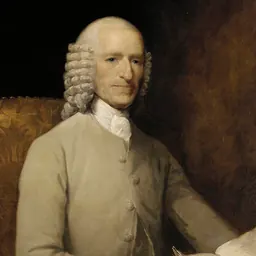

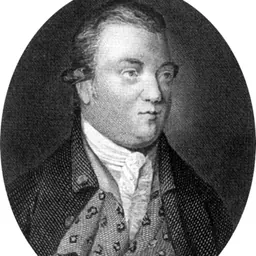


Related people
Same field, nearest in time





Contemporaries
People whose lives overlapped Henry Smeathman's
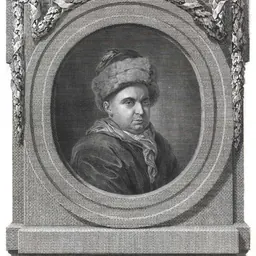




Frequently asked questions
Who was Henry Smeathman?
British entomologist (1742-1786)
When was Henry Smeathman born?
Henry Smeathman was born in 1742 in Scarborough.
When did Henry Smeathman die?
Henry Smeathman died on 1 July 1786 in London.
What was Henry Smeathman's occupation?
Henry Smeathman was a botanist, naval officer, entomologist, writer, botanical collector and scientific collector.
What nationality was Henry Smeathman?
Henry Smeathman was British.
Sources & further reading
Cite this page
APA: Biography.guide. (2026). Henry Smeathman. https://biography.guide/henry-smeathman/
MLA: "Henry Smeathman." Biography.guide, https://biography.guide/henry-smeathman/.
Chicago: "Henry Smeathman." Biography.guide. https://biography.guide/henry-smeathman/.
Data last updated: 2026-09-20 · Spot an error? Report a correction.
Page generated 2026-09-27 05:05 UTC