
About Henry Phillips
Lived 1779 – 1840 (aged 60–61). Henry Phillips was a British botanist, landscape architect, botany and landscape architecture, known for Anthaeum, Hove, Brighton and Kemp Town.
Henry Phillips ( 1779 – 8 March 1840) was a botanist, horticultural writer and landscape gardener from the seaside resort of Brighton in England. After spending time as a banker and teacher in London and Sussex, he came to national attention for his botanical articles and books, and was renowned for his landscape gardening work in Brighton during its period of rapid growth. In the 1820s he became involved in several major schemes in the town and neighbouring Hove, encompassing gardens, conservatories and similar. His grandiose Anthaeum project, an elaborate indoor botanical garden topped by "the largest dome in the world", In 1815 they moved to the Bayswater area of London, where Phillips opened "an academy for young gentlemen" and taught there. Later they moved to nearby Regent Place. His first book, Pomarium Britannicum, was published in 1820, and he wrote several others in the 1820s. In 1824 when painter John Constable came to Brighton on one of his regular visits to help improve his wife's ill health, he met Phillips and they became friends; Phillips advised him on the correct plants to paint in the hedgerows he was depicting in his latest painting, The Cornfield. Around the same time, Phillips is believed to have designed the conservatory at Edward Cross's Surrey Zoological Gardens, which opened in 1831.
On the 27 January the Sussex Advertiser reported that Mr Henry Phillips, senior, of Brighton one of the most active supporters of the Anthaeum is now confined to Horsham Goal, "the fall of that noble structure is understood to have caused the pecuniary difficulties which led to his imprisonment. He is thus deprived of the means of supporting Mrs Phillips, and those of his family, who are dependent on him; and to add to his misfortunes, he has lately been afflicted with almost loss of sight".
Henry had children: Marmaduke (1806-1806), Mary Cobden (1808–1822), Agnes (1809–1820) and Edgar (1819–1820).
His surviving children were William (?-1839), Daintry (1812–1884), Barclay (1819–1908) (1814–1861).
On the 13 May 1839 the Sussex Advertiser reported a melancholy event, the inquest on Mr Henry Phillips, junior of 26, Russell Square, Brighton, who had taken his own life.
Phillips died at 26 Russell Square, Brighton, on 8 March 1840 at the age of 61. He was suffering from enteritis.
In 1823, he produced a proposed layout for the gardens on the Kemp Town estate, This scheme was not implemented, and Read Kemp decided to put iron railings round the open space instead. Five years later, though, Phillips' revised scheme was put in place. The Kemp Town Enclosures, as the gardens became known, covered and had paths around the edges surrounded by informally laid out flowers and small shrubs which were planted on small mounds to protect them from the windy weather on the exposed clifftop. Planting began early in 1828: the Brighton Herald of 8 February 1828 reported that "the plants possess great novelty and beauty of style ... 20,000 plants have been selected to embellish the grounds". The Brighton Guardian stated that "from the size and beauty of the trees, we should have taken it for a grove of seven years' standing, rather than ... a few weeks only". Phillips charged Read Kemp £371.10s.8d , The original layout (since altered) consisted of three linked sections,
Another unexecuted scheme for Thomas Read Kemp was an extravagant plan to develop the empty downland between Read Kemp's house in the embryonic Montpelier suburb and the recently completed (1818) Bedford Square with large villas surrounding an informally planted public garden. The Brighton Gazette newspaper said of the proposal: "[it is like] the cemetery of Père Lachaise or the city of Constantinople with its roofs and minarets encircled by trees". An engraving produced at the time the "outlandish" The residential buildings were started (and eventually completed by Wilds, under the names Oriental Terrace and Oriental Place), The structure was a large dome with a diameter of and a height of (excluding the cupola in the centre), made of ribs of iron sunk into the soil and then glazed. Inside the dome, which enclosed an area of more than , "not unlike the modern Eden Project in Cornwall". Work started in late 1832, when deep foundations were dug, and the iron ribs were steadily erected over the next few months. Disagreements emerged between Wilds, Phillips, the project engineer Mr Hollis and the contractor Mr English, though, which led to the dismissal or resignation of Wilds and Hollis. English, whose decision not to build the intended central supporting pillar led to Hollis and Wilds abandoning the project, continued working with no proper supervision for several months, despite Phillips' concerns; and on 30 August 1833, the day before its official opening, the Anthaeum spectacularly collapsed: "the immense ribs of iron snapped asunder ... and a great part of [the structure], from the height it fell, was buried several feet deep in the earth". Pomarium Britannicum (1820) History of Cultivated Vegetables (1822; two volumes) Sylva florifera: the Shrubbery Historically and Botanically Treated (1823; two volumes) Flora historica (1824) Floral Emblems (1825) Companion for the Orchard (1831) Companion for the Kitchen Garden (two volumes)
Flora Domestica, or the Portable Flower Garden (1823) was misattributed to Phillips in the second half of the 19th century by FW Burbidge. The volume, published anonymously, was authored by Elizabeth Kent with input from Leigh Hunt.
Pomarium Britannicum, subtitled An historical and botanical account of fruits known in Great Britain, ran to three editions published between 1820 and 1827. History of Cultivated Vegetables and Flora historica both received a second edition.
His ideas on the layout of plants and flowers in relation to their surroundings were influential. His published works included such statements as "bad taste is seldom more conspicuous than when we see plants marshalled in regular order" and "the beauty of plants cannot be displayed when they are too much crowded, as they are then drawn into unnatural shapes".
Don’t just read it —
keep it.
Full-length biographies made to live with: read them, listen on the way to work, watch them tonight.
- E-book
- Audio
- Video
Instant download · yours to keep · every purchase keeps this site free
Important facts
People in Henry Phillips's life
Named in this biography and alive at the same time

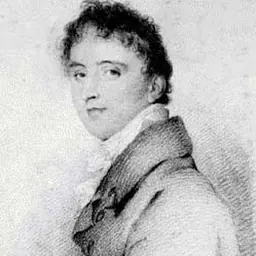
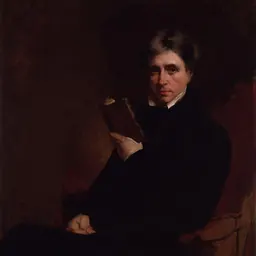
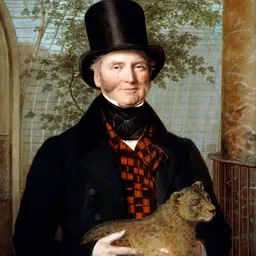
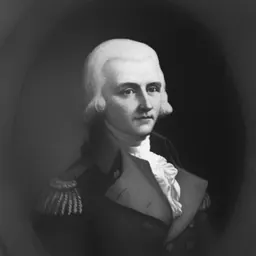

Related people
Same field, nearest in time





Contemporaries
People whose lives overlapped Henry Phillips's


Frequently asked questions
Who was Henry Phillips?
English botanist (1779–1840)
When was Henry Phillips born?
Henry Phillips was born in 1779 in Henfield.
When did Henry Phillips die?
Henry Phillips died on 8 March 1840 in Brighton.
What was Henry Phillips's occupation?
Henry Phillips was a botanist, landscape architect, botany and landscape architecture.
What was Henry Phillips known for?
Henry Phillips was known for Anthaeum, Hove, Brighton, Kemp Town, Kennington, Royal Surrey Gardens and The Level, Brighton.
What nationality was Henry Phillips?
Henry Phillips was British.
Sources & further reading
· DBpedia: Henry Phillips (horticulturist)
Cite this page
APA: Biography.guide. (2026). Henry Phillips. https://biography.guide/henry-phillips/
MLA: "Henry Phillips." Biography.guide, https://biography.guide/henry-phillips/.
Chicago: "Henry Phillips." Biography.guide. https://biography.guide/henry-phillips/.
Data last updated: 2026-09-22 · Spot an error? Report a correction.
Page generated 2026-09-27 04:58 UTC