
About Henry Newcome
Lived 1627 – 1695 (aged 67–68). Henry Newcome was a civil servant.
Henry Newcome (November 1627 – 17 September 1695) was an English nonconformist preacher and activist.
Life Early life Henry Newcome was born at Caldecote, Huntingdonshire, the fourth son of Stephen Newcome, rector of Caldecote.
He was baptised on 27 November 1627. His mother was Rose, daughter of Henry Williamson (a native of Salford and the rector of Conington, Cambridgeshire) and granddaughter of Thomas Sparke, one of the puritan divines at the Hampton Court conference in 1604. Henry was orphaned in his teens; his parents were buried in the same coffin on 4 February 1642. He was educated by his eldest brother, Robert, who succeeded their father as rector of Caldecote. In May 1644 Henry was admitted to St John's College, Cambridge. The English Civil War interrupted his studies, which were resumed on 10 May 1645. He graduated B.A. on 2 February 1648, and M.A. on 1 July 1651.
Career On 24 September 1647, he became schoolmaster at Congleton, Cheshire, and soon began to preach. He was already married when, on 22 August 1648, he received Presbyterian ordination at Sandbach, Cheshire. He was due to move to Alvanley Chapel, in the parish of Frodsham, Cheshire; but in October 1648 he received a unanimous call to the perpetual curacy of St Luke's Church, Goostrey, Cheshire, through the interest of his wife's cousin, Henry Manwaring of Kermincham, in whose house he subsequently lived. He began his duties at Goostrey on 23 November 1648, but Manwaring's interest soon obtained for him the rectory of Gawsworth, Cheshire, to which he moved on 8 April 1650. On 25 December he subscribed the engagement of fidelity to the existing government, much against the grain, for he was always a royalist. He had already taken the Solemn League and Covenant. He was closely associated with the religious work of John Machin. In October 1653 he joined Adam Martindale in the establishment of a clerical union for Cheshire on the model of Richard Baxter's Worcestershire agreement.
On the death of Richard Hollinworth, Newcome was elected (5 December 1656) one of the preachers at the collegiate church of Manchester. After much hesitation he settled in Manchester on 23 April 1657. He served at Manchester for the rest of his life. dropping the terms presbyterian and congregational. A union of this kind was projected in Lancashire in 1692. Newcome was moderator of "a general meeting of ministers of the United Bretheren" at Bolton, Lancashire, on 3 April 1693. He was appointed with Thomas Jollie on 4 September 1694 "to manage the correspondence" for the county. This was his last public work; he preached only occasionally at his new chapel, delivering his last sermon there on 13 June 1695.
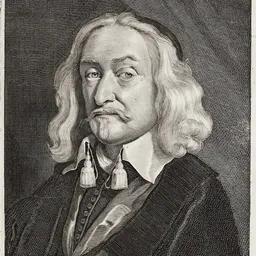
Death He died at Manchester on 17 September 1695, and was buried three days later near the pulpit in his chapel, with Chorlton preaching the funeral sermon. His inscribed tombstone is in the floor of the east aisle. His portrait, finished 15 Sept, 1658 by "Mr. Cunney," was engraved by R. White, and again by John Bull (1825); Baker has a poor woodcut from it. The original was at the Lancashire Independent College, Whalley Range, near Manchester.
Family He married, on 6 July 1648, Elizabeth Manwaring (1626–1700) of Smallwood, Cheshire.
Works Newcome's major work is his Diary (begun 10 July 1646), of which a portion (30 Sept. 1661 – 29 Sept. 1663) was edited (1849) by Thomas Heywood for the Chetham Society.
His Autobiography, an abstract of the Diary, to 3 September 1695, was edited (1852, 2 vols.) for the same society by Richard Parkinson, with a family memoir (written 1846) by Thomas Newcome. Newcome had started to write his autobiography, but due to ill health, it was completed by his son.
He also published;
In The Censures of the Church Revived, &c., 1659, the section headed A True and Perfect Narrative, &c., is by Newcome; it gives extracts from the original records of the first presbyterian classis of Lancashire, which supply a few points omitted in the existing minutes. His Faithful Narration of the life of John Machin was finished in February 1665, and published anonymously in 1671, with prefatory epistle by Sir Charles Wolseley. He revised the Narrative (1685) of the life of John Angier by Oliver Heywood The Sinner's Hope, 1660. Usurpation Defeated, 1660. An Help to the Duty in ... Sickness, 1685. A Plain Discourse about ... Anger, 1693. Edmund Calamy mentions without date a sermon on The Covenant of Grace In Slate's Select Nonconformists' Remains, 1814, are sermons by Newcome from his manuscripts.
Don’t just read it —
keep it.
Full-length biographies made to live with: read them, listen on the way to work, watch them tonight.
- E-book
- Audio
- Video
Instant download · yours to keep · every purchase keeps this site free
Important facts
People in Henry Newcome's life
Named in this biography and alive at the same time

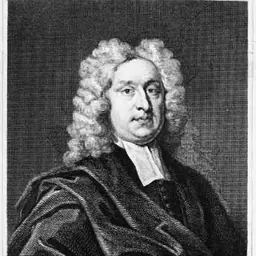

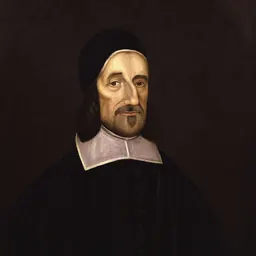
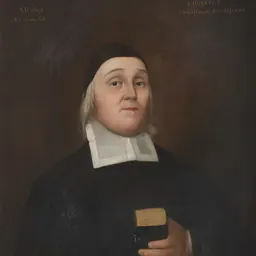
Related people
Same field, nearest in time
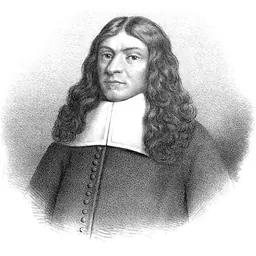
Contemporaries
People whose lives overlapped Henry Newcome's






Frequently asked questions
Who was Henry Newcome?
English nonconformist preacher
When was Henry Newcome born?
Henry Newcome was born in 1627.
When did Henry Newcome die?
Henry Newcome died on 17 September 1695.
What was Henry Newcome's occupation?
Henry Newcome was a civil servant.
Sources & further reading
Cite this page
APA: Biography.guide. (2026). Henry Newcome. https://biography.guide/henry-newcome-civil-servant/
MLA: "Henry Newcome." Biography.guide, https://biography.guide/henry-newcome-civil-servant/.
Chicago: "Henry Newcome." Biography.guide. https://biography.guide/henry-newcome-civil-servant/.
Data last updated: 2026-09-20 · Spot an error? Report a correction.
Page generated 2026-09-27 05:15 UTC