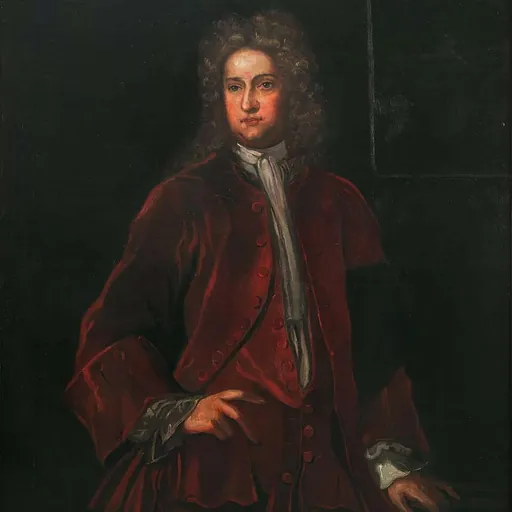
Sir William Berkeley
English colonial governor of Virginia
About Sir William Berkeley
Lived 1605 – 1677 (aged 71–72). Sir William Berkeley was an English civil servant, governor and politician.
Sir William Berkeley (; 16059 July 1677) was an English colonial administrator who served as the governor of Virginia from 1660 to 1677. One of the Lords Proprietors of the Province of Carolina, as governor of Virginia he implemented policies that bred dissent among the colonists and sparked Bacon's Rebellion. A favourite of King Charles I, the king first granted him the governorship in 1642. Berkeley was unseated following the execution of Charles I, but his governorship was restored by King Charles II in 1660.
Charles II also named Berkeley one of the eight Lords Proprietors of Carolina, in recognition of his loyalty to the Stuarts during the English Civil War. As governor, Berkeley oversaw the implementation of a policy known as partus sequitur ventrem, which mandated that all babies born to enslaved parents take the legal status of their mother. As proprietor of Green Spring Plantation in James City County, he experimented with activities such as growing silkworms as part of his efforts to expand the tobacco-based economy. He also authored Discourse and View of Virginia, where he argued for diversifying the colony's tobacco economy.
Early life Berkeley was born in 1605 in Bruton, Somersetshire to Maurice Berkeley (died 1617) and Elizabeth Killigrew, of the Bruton branch of the Berkeley family, both of whom held stock in the Virginia Company of London. he was born in the winter of 1605 into landed gentry.
First administration as governor
Berkeley replaced Sir Francis Wyatt as governor of Virginia in 1641.
Arriving at Jamestown in 1642, Berkeley erected Green Spring House on a tract of land west of the capital, where he experimented with alternatives to tobacco. oranges, lemons, grapes, They were familiar with its cultivation from their native West Africa. He owned Boldrup Plantation.
English Civil War and Commonwealth
When the parliamentarian army was successful in the civil war, defeating the royalists, Berkeley offered Virginia as an asylum to gentlemen on the royalist side. After the king was executed following trial in 1649, Berkeley dispatched his secretary of state Richard Lee I to the Dutch Republic to secure an extension of his office from the Crown Prince. That document proved worthless because Parliament dispatched a small fleet to the colony, and the governor, unable to offer resistance, was ultimately forced to resign his authority. However, Lee negotiated terms such that Berkeley received permission to remain on his own plantation as a private person.
At the Stuart monarchy's Restoration in 1660, Berkeley was reappointed governor.
Second administration as governor For Berkeley, the path towards Virginia's prosperity was fourfold: a diverse economy; free trade; a close-knit colonial society; and autonomy from London.
Berkeley strongly opposed public education. Though he was unable to foresee the eventual establishment of such schools, he held that they would bring "disobedience, heresy, and sects into the world," and were for such reasons destructive to society. He also held printing at the same level as public education.
Bacon's Rebellion and downfall
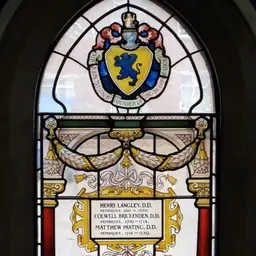
Berkeley's downfall came with the advent of his second term. He returned from retirement in 1660 due to the early death of Governor Samuel Mathews. where there is a memorial window to him and his brother, Lord Berkeley.
Don’t just read it —
keep it.
Full-length biographies made to live with: read them, listen on the way to work, watch them tonight.
- E-book
- Audio
- Video
Instant download · yours to keep · every purchase keeps this site free
Important facts
People in Sir William Berkeley's life
Named in this biography and alive at the same time


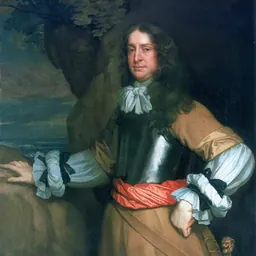

Related people
Same field, nearest in time
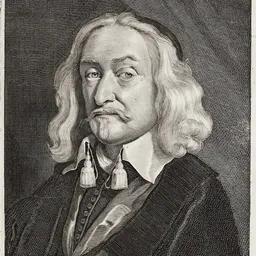


Contemporaries
People whose lives overlapped Sir William Berkeley's





Frequently asked questions
Who was Sir William Berkeley?
English colonial governor of Virginia
When was Sir William Berkeley born?
Sir William Berkeley was born in 1605 in Middlesex.
When did Sir William Berkeley die?
Sir William Berkeley died on 9 July 1677 in Mayfair.
What was Sir William Berkeley's occupation?
Sir William Berkeley was a civil servant, governor and politician.
What nationality was Sir William Berkeley?
Sir William Berkeley was English.
Sources & further reading
· Wikipedia: Sir William Berkeley
· DBpedia: William Berkeley (governor)
Cite this page
APA: Biography.guide. (2026). Sir William Berkeley. https://biography.guide/sir-william-berkeley/
MLA: "Sir William Berkeley." Biography.guide, https://biography.guide/sir-william-berkeley/.
Chicago: "Sir William Berkeley." Biography.guide. https://biography.guide/sir-william-berkeley/.
Data last updated: 2026-09-22 · Spot an error? Report a correction.
Portrait: Wikimedia Commons · author & licence
Page generated 2026-09-27 05:04 UTC