
About Samuel Mathews
Lived 1630 – 1660 (aged 29–30). Samuel Mathews was an American colonial administrator.
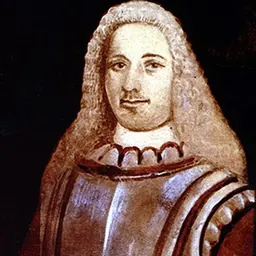
Lt. Col. Samuel Mathews (1630–1660), Commonwealth Governor of Virginia, of Warwick County in the English Colony of Virginia, was a member of the House of Burgesses, the Governor's Council, and served as Commonwealth Governor of Virginia from 1656 until he died in office in January 1660 (1659 A.S.). There was no Royal Governorship at the time of the "Protectorate", and the Governor technically answered to the Cromwellian Parliament, although Royalist sentiment was prevalent in the colony of Virginia at this time. The former Royalist governor Berkeley arrived to replace him on March 13, 1660.
Early and family life Samuel Mathews (Jr.) was the elder son of Samuel Matthews (Sr.) (1572-1657) and Frances Grevill West Peirsey Mathews (1590-1635). He was born at his father's plantation Mathews Manor, (later known as Denbigh), which was located on the north side of the James River at the confluence of the Warwick River and Deep Creek (about 2 miles north of Blunt Poynt) in the area which later became Warwick County, Virginia (and which is now within the city limits of Newport News).
The elder Samuel Mathews was the first of the Mathews family to emigrate from England to Virginia, arriving at Jamestown by 1619. He eventually had several other land holdings, including one near Henricus and another at Old Point Comfort. Known as Colonel Mathews, the elder Samuel became one of the most prominent men in the colony. He was a member of the Governor's Council and was actively involved in conflicts with the Native Americans. In 1635, Mathews Sr. was one of the leaders of the popular mutiny that ousted Royal Governor Sir John Harvey. Upon returning to England, the elder Mathews was eventually cleared of any charges; upon returning to Virginia, he resumed service on the Governor's Council until 1644.
His father was his mother's third husband. Frances Mary Grenville or Greville was one of four women who arrived at Jamestown from Bristol, England in September 1620 aboard the ship, Supply. She first married Captain Nathaniel West, brother of Thomas West, the third Lord Delaware, who had been governor of Virginia beginning in 1610. After West died several years later, Grenville married Abraham Peirsey, a wealthy man who had purchased Sir George Yeardley's Flowerdew Hundred Plantation after his death. Peirsey died several years later. Twice widowed, but with considerable legacies, she next married Samuel Mathews Sr. She bore at least two boys, and this man's brother Francis Mathews (1632-1673) outlived him.
Career
The younger Samuel Mathews, as an adult, was known as Lt. or later Lt. Colonel Samuel Mathews, reflecting his standing in the local militia. In 1652, Warwick County voters elected him one of their representatives in the House of Burgesses, which was the lower house of the legislature, alongside veteran William Whittbye, and re-elected the pair in 1653 and 1654. In 1656, shortly before his father's death and with the consent of London authorities, Mathews was appointed to the upper house, the Governor's Council, and later that year when his predecessor Edward Digges traveled to England, became the Commonwealth Governor of Virginia, a position held until his death in January 1660.
In April 1658, mainly to signal their displeasure with Oliver Cromwell, the Burgesses ceremonially dismissed him and reelected him in a single Act. Because of his loyalty, as governor, to Cromwell, he was often assumed to be a Puritan himself, although in fact he had been known as a persecutor of the Puritan sect in Virginia in the days before Cromwell.
Death and legacy
In January 1660, shortly before the English Restoration, Matthews died in office. The Burgesses at that point simply reinstated the former Royalist Governor, William Berkeley by unanimous vote.
Colonial Williamsburg's Ivor Noel Hume in the 1960s supervised archeological studies on the site of Mathews Manor, now located within the independent city of Newport News, Virginia. Although little remains but the foundation outline in a small park, Denbigh is on the National Park Service's National Register of Historic Places.
Don’t just read it —
keep it.
Full-length biographies made to live with: read them, listen on the way to work, watch them tonight.
- E-book
- Audio
- Video
Instant download · yours to keep · every purchase keeps this site free
Important facts
People in Samuel Mathews's life
Named in this biography and alive at the same time


Related people
Same field, nearest in time


Contemporaries
People whose lives overlapped Samuel Mathews's






Frequently asked questions
Who was Samuel Mathews?
Colonial Governor of Virginia
When was Samuel Mathews born?
Samuel Mathews was born in 1630.
When did Samuel Mathews die?
Samuel Mathews died in 1660.
What was Samuel Mathews's occupation?
Samuel Mathews was a colonial administrator.
What nationality was Samuel Mathews?
Samuel Mathews was American.
Sources & further reading
· DBpedia: Samuel Mathews (colonial Virginia governor)
Cite this page
APA: Biography.guide. (2026). Samuel Mathews. https://biography.guide/samuel-mathews/
MLA: "Samuel Mathews." Biography.guide, https://biography.guide/samuel-mathews/.
Chicago: "Samuel Mathews." Biography.guide. https://biography.guide/samuel-mathews/.
Data last updated: 2026-09-20 · Spot an error? Report a correction.
Page generated 2026-09-27 05:01 UTC