
About Oliver Heywood
Lived 1630 – 1702 (aged 71–72). Oliver Heywood was a civil servant.
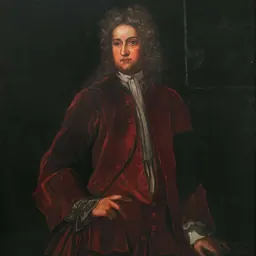
Oliver Heywood (1630–1702) was a British nonconformist minister, ejected for his beliefs.
Biography Early life and education Oliver Heywood, third son of Richard Heywood, yeoman, by his first wife, Alice Critchlaw, was born at Little Lever, near Bolton, Lancashire, in March 1630, and baptised (without the sign of the cross) at Bolton Parish Church on 15 March. His parents were strong puritans. After passing through Bolton Grammar School and other schools, he was admitted at Trinity College, Cambridge, on 12 June 1647, his tutor being Akehurst, who afterwards became a quaker.
In religious matters he was much influenced by the preaching of Samuel Hammond and joined with other students in a kind of religious club which met in the "garret-chamber" of Thomas Jollie. In 1650 he graduated Bachelor of Arts and soon began to preach; his first sermon was delivered at a village near to Preston, Lancashire. By his uncle, Francis Critchlaw, he was recommended as preacher at Coley Chapel, near the village of Northowram, in the parish of Halifax in the West Riding. He accepted this post, with a stipend of £30, on 26 November 1650, and refused an offer of Houghton Chapel, Lancashire. Though under the regular age, he was ordained on 4 August 1652 at Bury, Lancashire, by the second presbyterian classis of that county. His younger brother, Nathaniel, was minister at Illingworth Chapel, in the same parish of Halifax, and the two lived together in 1654 at Godley House. He approved of James's declaration (1687) for liberty of conscience, and at once set about building a meeting house at Northowram (opened 8 July 1688), to which he subsequently added a school. The first master was David Hartley (appointed 5 October 1693), father of David Hartley the philosopher. His meeting house was licensed under the Toleration Act on 18 July 1689. Heywood maintained his own evangelistic work till the close of 1699. In 1700 his health broke; asthma confined him to Northowram. From 5 December 1701 he was carried to his meeting house in a chair. He died at Northowram on Monday, 4 May 1702, and was buried in a side chapel of Halifax Church, known as 'Holdsworth's works,' in his mother's grave. There is no monument there to his memory, but in Northgate End Chapel, Halifax, is a memorial slab erected by a descendant.
Family He married, first, on 24 April 1655, at Denton, Elizabeth (d 26 May 1661, aged 27), daughter of John Angier, by whom he had three sons: John, born 18 April 1656, minister at Rotherham and Pontefract, died 6 September 1704; Eliezer, born 18 April 1657, minister at Wallingwells, Nottinghamshire and Dronfield, Derbyshire, died 20 May 1730; Nathaniel, born 7 August and died 24 August 1659.
Heywood married, secondly, on 27 June 1667, at Salford, Abigail, daughter of James Crompton of Breightmet in the parish of Bolton, Lancashire; she died without issue in 1707.
Publications Heywood's Works were collected by Richard Slate (1825–27, 5 vols); the collection is complete with the exception of one or two prefaces from his pen.
Among his best publications are: Heart Treasure &c., 1667, 2nd part, 1672 Closet Prayer &c., 1671 Life in God's Favour &c., 1679 Baptismal Bonds Renewed &c., 1687 The Best Entail &c., 1693 A Family Altar &c., 1693 A Treatise of Christ's Intercession &c., Leeds, 1701
Most of his books are on topics of practical religion, and he sent them out in large quantities among his friends for free distribution. For his inner life the best authority is the series of his 'Diaries,' edited, with other papers, by J. Horsfall Turner, Brighouse, 1881–85, 4 vols. His registers of baptisms, marriages and deaths, edited, with those of his successor, Thomas Dickenson, by J. Horsfall Turner, under the title of The Nonconformist Register, Brighouse, 1881, are of great biographical value.
Don’t just read it —
keep it.
Full-length biographies made to live with: read them, listen on the way to work, watch them tonight.
- E-book
- Audio
- Video
Instant download · yours to keep · every purchase keeps this site free
Important facts
People in Oliver Heywood's life
Named in this biography and alive at the same time
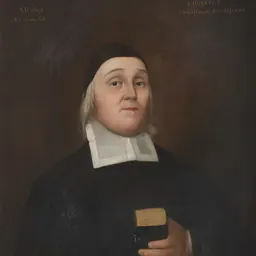

Related people
Same field, nearest in time
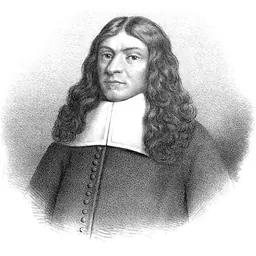
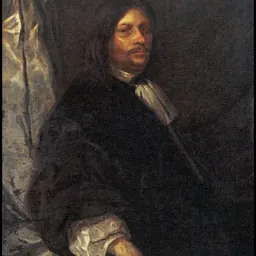
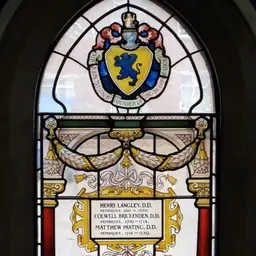


Contemporaries
People whose lives overlapped Oliver Heywood's






Frequently asked questions
Who was Oliver Heywood?
English minister
When was Oliver Heywood born?
Oliver Heywood was born in 1630.
When did Oliver Heywood die?
Oliver Heywood died in 1702.
What was Oliver Heywood's occupation?
Oliver Heywood was a civil servant.
Sources & further reading
· DBpedia: Oliver Heywood (minister)
Cite this page
APA: Biography.guide. (2026). Oliver Heywood. https://biography.guide/oliver-heywood/
MLA: "Oliver Heywood." Biography.guide, https://biography.guide/oliver-heywood/.
Chicago: "Oliver Heywood." Biography.guide. https://biography.guide/oliver-heywood/.
Data last updated: 2026-09-20 · Spot an error? Report a correction.
Page generated 2026-09-27 05:24 UTC