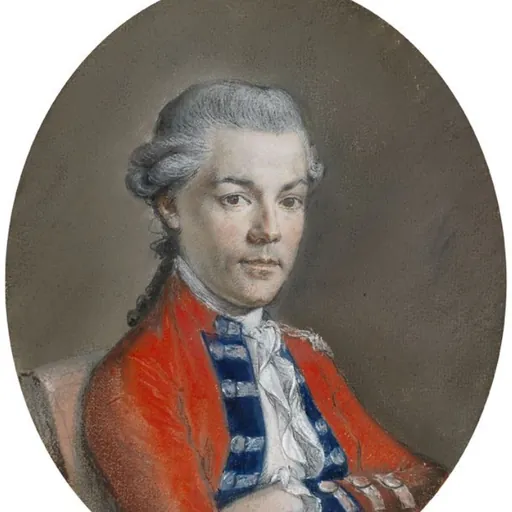
Henry Luttrell, 2nd Earl of Carhampton
British Army general
About Henry Luttrell, 2nd Earl of Carhampton
Lived 1743 – 1821 (aged 77). Henry Luttrell, 2nd Earl of Carhampton was a British politician and military personnel.
General Henry Lawes Luttrell, 2nd Earl of Carhampton, (7 August 1743 – 25 April 1821) was a British Army officer and politician, who both in public and private life attracted scandal. He was spurned by colleagues in the British House of Commons who believed that in the election of 1769 he had played an underhand role in denying his seat to the popular choice, the reformer John Wilkes. In 1788 he was publicly accused in Dublin of raping a twelve-year-old girl. Ten years later, his command in the suppression of the Irish Rebellion of 1798 was criticised by fellow officers for its brutality. His last years in Parliament were marked by his opposition to Catholic Emancipation, and to parliamentary reform.
Early years Luttrell was born in Cranford, Middlesex, the scion of an Anglo-Irish landed family, descendants of Sir Geoffrey de Luterel, who established Luttrellstown Castle, County Dublin, in the early 13th century. His grandfather, Henry Luttrell, had been a pardoned Jacobite commander murdered on the street in Dublin—it was suspected by his former comrades—in 1717. His father, Simon Luttrell, was successively titled Baron Irnham, Viscount Carhampton and Earl Carhampton, all in the Irish peerage. His mother, Maria, was the daughter of Sir Nicholas Lawes 1652-1731, Chief Justice of Jamaica 1698-1703 and Governor of Jamaica 1718-1722, and the eventual heir to a slave plantation Temple Hall on the West Indian island which, on her husband's death in 1787, passed to her son.
Educated at Westminster School and Christ Church, Oxford, Luttrell was commissioned into the 48th Regiment of Foot in 1757. Two years later he became lieutenant of the 34th Regiment of Foot. Father and son, both accounted "notorious womanizers", had a bitter relationship. His father once challenged Luttrell to a duel, but he declined, observing that his father was not a gentleman. Luttrell, described as "strong in body, if not in mind", achieved a reputation for bravery as a soldier during the Seven Years' War, becoming Deputy Adjutant-General of the British Forces in Portugal. In 1768 he became a Tory Member of Parliament in for the village of Bossiney, Cornwall.
Service to the Tory Ministry against Wilkes With the support of the Grafton ministry and of the Court, in 1769 Luttrell stood in Middlesex against John Wilkes, the radical and popular figure who had already been the constituency's three-time democratic choice. Luttrell lost the poll (1,143 votes to 269) but was seated in Parliament, Wilkes having once again been barred as an adjudged felon. As a result of the affair, for some months, Luttrell dared not appear in the street, and was "the most unpopular man in the House of Commons".
On his father's death in 1787, he succeeded to the earldom of Carhampton and other titles.
Carhampton was never asked to answer for raping Mary Neal. In 1790 he re-entered the British Parliament as Member for Plympton Erle in Devon.
In 1796, with the leaders of the democratic party, the United Irishmen, preparing for a French-assisted insurrection, he was given overall command of the Crown forces in Ireland. thumb Lord Carhampton's bloodhounds, 1798He demonstrated still greater ruthlessness in attempting to "pacify" the country and suppress the eventual rising in the summer of 1798. His command had the unusual distinction of being upbraided by his successor as Commander in Chief, Sir Ralph Abercromby for an army "in a state of licentiousness, which must render it formidable to every one but the enemy".
Carhampton was seen by his critics as having "fanned the flame of disaffection into open rebellion" by "the picketings, the free quarters, half hangings, flogging and pitch-cappings" he directed.
In July 1799 he sold his Irish property and by his own later account, he "took no part" in the Acts of Union. He claimed to be been "disgusted at the scene that was passing before me", and to have abandoned Ireland because, under a "cowardly" government, he saw "the country likely to become Catholic".
He purchased an estate at Painshill Park in Surrey and lived for several years in relative obscurity. From 1813 he harried the government of Lord Liverpool with the claim that George III had promised him a secure seat in the Commons. In June 1817, five weeks short of his eightieth birthday, Luttrell found his own way back to Parliament as Member for Ludgershall
He married Jane Boyd, daughter of George Boyd, in June 1776, but they had no children and was succeeded by his brother John. Ireland's national bard, a hagiographer of United Irishmen and a close confidante of leading Whigs.
Don’t just read it —
keep it.
Full-length biographies made to live with: read them, listen on the way to work, watch them tonight.
- E-book
- Audio
- Video
Instant download · yours to keep · every purchase keeps this site free
Important facts
People in Henry Luttrell, 2nd Earl of Carhampton's life
Named in this biography and alive at the same time
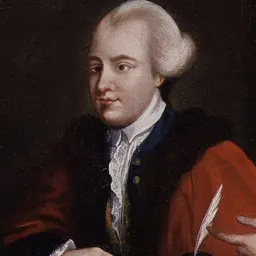

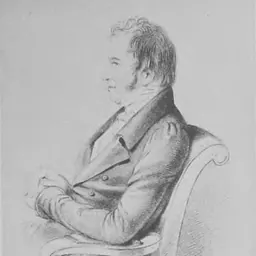
Related people
Same field, nearest in time


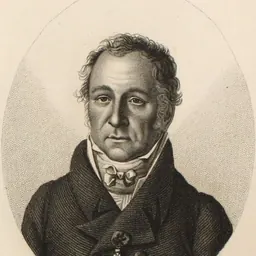

Contemporaries
People whose lives overlapped Henry Luttrell, 2nd Earl of Carhampton's






Frequently asked questions
Who was Henry Luttrell, 2nd Earl of Carhampton?
British Army general (1743-1821)
When was Henry Luttrell, 2nd Earl of Carhampton born?
Henry Luttrell, 2nd Earl of Carhampton was born on 7 August 1743.
When did Henry Luttrell, 2nd Earl of Carhampton die?
Henry Luttrell, 2nd Earl of Carhampton died on 25 April 1821 in London.
What was Henry Luttrell, 2nd Earl of Carhampton's occupation?
Henry Luttrell, 2nd Earl of Carhampton was a politician and military personnel.
What nationality was Henry Luttrell, 2nd Earl of Carhampton?
Henry Luttrell, 2nd Earl of Carhampton was British.
Sources & further reading
· Wikipedia: Henry Luttrell, 2nd Earl of Carhampton
· DBpedia: Henry Luttrell, 2nd Earl of Carhampton
Cite this page
APA: Biography.guide. (2026). Henry Luttrell, 2nd Earl of Carhampton. https://biography.guide/henry-luttrell-2nd-earl-of-carhampton/
MLA: "Henry Luttrell, 2nd Earl of Carhampton." Biography.guide, https://biography.guide/henry-luttrell-2nd-earl-of-carhampton/.
Chicago: "Henry Luttrell, 2nd Earl of Carhampton." Biography.guide. https://biography.guide/henry-luttrell-2nd-earl-of-carhampton/.
Data last updated: 2026-09-21 · Spot an error? Report a correction.
Portrait: Wikimedia Commons · author & licence
Page generated 2026-09-27 05:00 UTC