
About Henry Jones Underwood
Lived 1804 – 1852 (aged 47–48). Henry Jones Underwood was a British architect.
Henry Jones Underwood (1804–1852) was an English architect who spent most of his career in Oxford. He was the brother of the architects Charles Underwood (circa 1791–1883) and George Allen Underwood (dates unknown).
Underwood trained in London as a pupil of Henry Hake Seward and then joined the office of Sir Robert Smirke. In 1830 he moved to Oxford where much of his work involved designing churches or schools. He built Saint Paul's parish church, Walton Street, and the library of the Oxford Botanic Garden in the Greek Revival style but is best known for his Gothic Revival architecture. His church at Littlemore for Newman became a model for other churches.
Underwood designed an extension to Oxford Prison. In 1852 he committed suicide at the White Hart Hotel, Bath, Somerset
Works Saint John the Baptist parish church, Summertown, Oxford, 1831 (demolished 1924) Exeter College, Oxford: buildings on Turl Street and Broad Street, 1833-34 Pembroke College, Oxford: rebuilding of Wolsey's Almshouses, 1834 Saint Mary and Saint Nicholas parish church, Littlemore, Oxfordshire, 1835 Botanic Garden, Oxford: library, 1835 Saint Paul's parish church, Walton Street, Oxford, 1836 (now Freud's bar) Saint Peter's parish church, Bushey Heath, Hertfordshire, 1836-37 All Saints' parish church, Llangorwen, 1839 Holy Trinity parish church, Lower Beeding, West Sussex, 1840 Holy Trinity, Burdrop (Sibford Gower), Oxfordshire, 1840 Saint Giles' parish church, Horspath, Oxfordshire: rebuilt chancel, 1840 Saint Mary's parish, Broughton, Oxfordshire: extension of Rectory, 1842 Saint John the Baptist parish church, Bodicote, Oxfordshire: rebuilt church, 1844 Saint Mary's parish church, Swerford, Oxfordshire: north aisle, 1846 Saint Leonard's parish church, Woodcote, Oxfordshire: rebuilt church, 1846 Littlemore Hospital, Littlemore, Oxfordshire: extension, 1847 Saint Sepulchre's Cemetery, Oxford: chapel, 1848 (demolished circa 1970) Oxford Prison extension, 1848-56 Christ Church Unitarian chapel, Banbury, 1850 (demolished circa 1972) Saint Giles' parish church, Horspath: north aisle and north transept, 1852
His work also includes Holy Trinity Church, Oxford and the north aisle of Saint Thomas's parish church, Oxford. (date uncertain).
Don’t just read it —
keep it.
Full-length biographies made to live with: read them, listen on the way to work, watch them tonight.
- E-book
- Audio
- Video
Instant download · yours to keep · every purchase keeps this site free
Important facts
People in Henry Jones Underwood's life
Named in this biography and alive at the same time

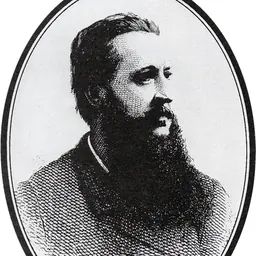
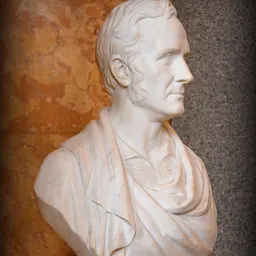


Related people
Same field, nearest in time



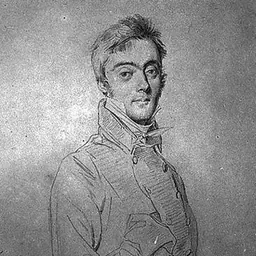

Contemporaries
People whose lives overlapped Henry Jones Underwood's





Frequently asked questions
Who was Henry Jones Underwood?
English architect (1804–1852)
When was Henry Jones Underwood born?
Henry Jones Underwood was born in 1804 in Bristol.
When did Henry Jones Underwood die?
Henry Jones Underwood died in 1852 in Bath.
What was Henry Jones Underwood's occupation?
Henry Jones Underwood was an architect.
What nationality was Henry Jones Underwood?
Henry Jones Underwood was British.
Sources & further reading
· Wikipedia: Henry Jones Underwood
· DBpedia: Henry Jones Underwood
Cite this page
APA: Biography.guide. (2026). Henry Jones Underwood. https://biography.guide/henry-jones-underwood/
MLA: "Henry Jones Underwood." Biography.guide, https://biography.guide/henry-jones-underwood/.
Chicago: "Henry Jones Underwood." Biography.guide. https://biography.guide/henry-jones-underwood/.
Data last updated: 2026-09-20 · Spot an error? Report a correction.
Page generated 2026-09-27 05:09 UTC