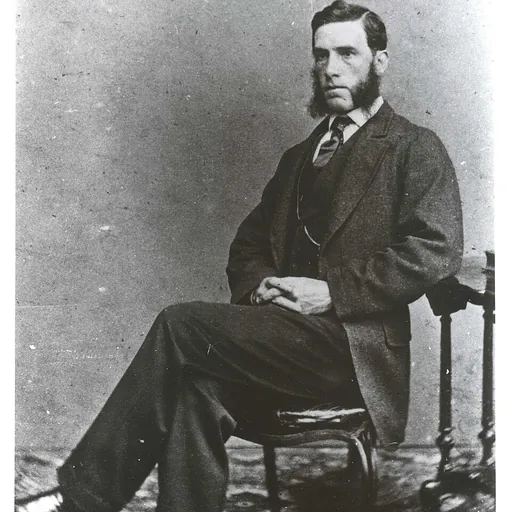
About Henry Hunter
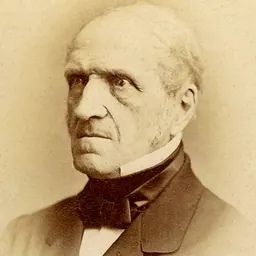
Lived 1832 – 1892 (aged 60). Henry Hunter was an Australian architect.
Henry Hunter (1832–1892) was a prominent architect and civil servant in Tasmania and Queensland, Australia. He is best known for his work on churches. During his life was also at various times a state magistrate of Tasmania, a member of the Tasmanian State Board of Education, the Hobart Board of Health, a Commissioner for the New Norfolk Insane Asylum and President of the Queensland Institute of Architects.
Life Hunter was born in Nottingham, England, son of Walter and Tomasina Hunter. His father was also an architect, and he studied the craft under his father before attending the Nottingham School of Design. He immigrated to Australia in 1848 with his two sisters and parents, originally settling in South Australia before moving to Tasmania. Upon the death of his parents 2–3 years after arrival in Australia, he moved to Tasmania where his older brother George Hunter, Archdeacon of St Joseph's, had already settled.
Hunter spent a short period in the Victorian goldfields on his way to Tasmania, before properly immigrating to the island state. He became engaged in the Huon Valley timber trade for several years, and in 1858 married a Miss Robertson – orphan daughter of an officer. He began work as an architect the same year. During his time in Brisbane he remained a prominent architect, being President of the Queensland Institute of Architects in 1890 and Vice President in 1891. His most notable works in Brisbane were additions made to the All Hallows' School convent and the design of the Queensland Deposit Bank. (demolished) General Hospital, Hobart St Mary's Anglican Church, Hagley (with Richard Cromwell Carpenter) Church of the Apostles, Launceston St James Anglican Church, Jericho St Michael's Catholic Church, Campbell Town St John's Church, Franklin St Mary's Church, Franklin All Saints Anglican Church, South Hobart The Mariners Church (now St Peters, Sandy Bay/Wellspring Anglican) St Peter's Church, New Norfolk Holy Redeemers Church, Deloraine Holy Trinity Catholic Church, Westbury St John's Church, Glenorchy St Mary Our Hope Catholic Church, Dover St Thomas's Catholic Church, Sorell St Matthew's Catholic Church, Brighton St Aloysius' Church, Kingston
Residences Macquarie Manor, Hobart Stonehenge House, Oatlands Ashleigh House, Hobart Glenelg House, Gretna Airlie House, Hobart St John's Church (now Pendragon Hall) Parsonage, Goulburn Street, Hobart 121 Harrington Street, Hobart. Gattonside, Battery Point Maffra, Glebe (former home of Errol Flynn) Maylands, New Town Fairmont, Hobart
Schools Presentation House, Sacred Heart Catholic Primary School, Launceston Macquarie Street State School, Hobart (now former Macquarie St Adult Education building) parts of All Hallows' Convent, Brisbane (with Corrie) Trinity Hill State School, North Hobart (burnt down/demolished) St Columba's School, Hobart (demolished) Convent of St Mary's College, Hobart (now a residence) Campbell Town Public School, Campbell Town (now Campbell Town Online Access Centre)
Other
24 Murray St (Old Masonic Hall), Hobart (erected 1885, demolished 1958) Tasmanian Steam Navigation Company Offices, Hobart AMP Building, Hobart (demolished, entrance arch stands in Royal Hobart Botanical Gardens) Eagle Farm Racecourse, Brisbane (with Corrie and JH Buckeridge) Cornelian Bay Cemetery chapel, superintendents residence and shelter, Cornelian Bay Tomb of Dr Maddox, Launceston
Legacy
The Henry Hunter Prize for Architect is a prize awarded triennially to architectural projects that involve the "recycling or conservation of historic buildings". The Henry Hunter Galleries, the main permanent art exhibition at the Tasmanian Museum and Art Gallery are also named in his honour. A collection of 1800 of his architectural drawings and notes are held by the Tasmanian Museum and Art Gallery.
In 2006 the architectural firm founded by him (presently known as Crawford Padas Shurman Architects) celebrated its 150th anniversary of continuous business.
Several of his apprentices went on to be influential architects in their own right; Alan Cameron Walker went on to construct several other notable Tasmanian landmarks, including the General Post Office, Hobart and Leslie Corrie went on to become a prominent Brisbane architect and later Mayor of Brisbane.
Don’t just read it —
keep it.
Full-length biographies made to live with: read them, listen on the way to work, watch them tonight.
- E-book
- Audio
- Video
Instant download · yours to keep · every purchase keeps this site free
Important facts
People in Henry Hunter's life
Named in this biography and alive at the same time



Related people
Same field, nearest in time


Contemporaries
People whose lives overlapped Henry Hunter's


Frequently asked questions
Who was Henry Hunter?
Australian architect
When was Henry Hunter born?
Henry Hunter was born on 10 October 1832 in Nottingham.
When did Henry Hunter die?
Henry Hunter died on 17 October 1892 in Brisbane.
What was Henry Hunter's occupation?
Henry Hunter was an architect.
What nationality was Henry Hunter?
Henry Hunter was Australian.
Sources & further reading
· DBpedia: Henry Hunter (architect)
Cite this page
APA: Biography.guide. (2026). Henry Hunter. https://biography.guide/henry-hunter-architect/
MLA: "Henry Hunter." Biography.guide, https://biography.guide/henry-hunter-architect/.
Chicago: "Henry Hunter." Biography.guide. https://biography.guide/henry-hunter-architect/.
Data last updated: 2026-09-23 · Spot an error? Report a correction.
Portrait: Wikimedia Commons · author & licence
Page generated 2026-09-27 05:07 UTC