
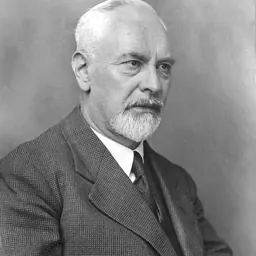
Henry H. Barschall
German-American physicist
About Henry H. Barschall
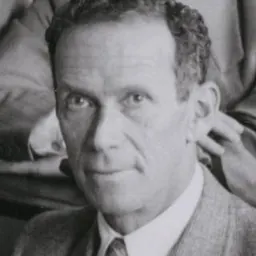
Lived 1915 – 1997 (aged 81). Henry H. Barschall was an American physicist, nuclear physicist and university teacher.
Henry Herman ("Heinz") Barschall (April 29, 1915 – February 4, 1997) was a German-American physicist.
Biography Barschall was born as Heinrich Hermann Barschall in Berlin, Germany; his father was a patent attorney who had received a Ph.D. in chemistry after studying with Nobel Laureates Emil Fischer and Fritz Haber. After beginning study at several universities in Germany, he emigrated to the United States in 1937 during the early Holocaust period; though raised as a Lutheran, he had some Jewish ancestry. He received his Ph.D. from Princeton University in 1940 under the direction of Rudolf Ladenburg; he also worked closely with John A. Wheeler. After a suggestion by Niels Bohr, he carried out in only a few days with fellow graduate student Morton H. Kanner the first demonstration of fission by fast neutrons and thorium and uranium. His thesis was on the interaction of fast neutrons with helium. In a paper with John A. Wheeler he reported the discovery of spin-orbit coupling in neutron scattering.
He worked at the University of Kansas, and then at the Manhattan Project in Los Alamos, New Mexico continuing his work with fast neutrons. In 1946 he joined the University of Wisconsin–Madison, where he remained for most of his career following a program on determining fast neutron cross-sections, directing the doctoral dissertation research of over forty students. His doctoral students include Charles K. Bockelman.
Legacy and other notable works Barschall was the first recipient of the Bonner Prize, an editor of Nuclear Physics Review C, a member of the board of the American Institute of Physics, and a member of the National Academy of Sciences. discussing the cost of scientific journals. In this article he demonstrated the dramatically lower costs associated with publishing in non-profit society journals as compared to those of commercial publishers. This article provoked a lawsuit from Gordon and Breach, one of the publishers discussed—the one with the highest costs. The company sued Barschall, the American Physical Society, and the American Institute of Physics, in the United States and in several countries in Europe. The eventual decision fully supported Barschall.
His autobiography appears at H.H. Barschall, "Reminiscences," Physics in Perspective 1 (1999) 390–444.
Barschall died at age 81 on February 4, 1997 in Madison, WI.
Don’t just read it —
keep it.
Full-length biographies made to live with: read them, listen on the way to work, watch them tonight.
- E-book
- Audio
- Video
Instant download · yours to keep · every purchase keeps this site free
Important facts
People in Henry H. Barschall's life
Named in this biography and alive at the same time



Related people
Same field, nearest in time


Contemporaries
People whose lives overlapped Henry H. Barschall's



Frequently asked questions
Who was Henry H. Barschall?
German-American physicist (1915-1997)
When was Henry H. Barschall born?
Henry H. Barschall was born on 29 April 1915 in Berlin.
When did Henry H. Barschall die?
Henry H. Barschall died on 4 February 1997 in Madison.
What was Henry H. Barschall's occupation?
Henry H. Barschall was a physicist, nuclear physicist and university teacher.
What nationality was Henry H. Barschall?
Henry H. Barschall was American.
Sources & further reading
· Wikipedia: Henry H. Barschall
Cite this page
APA: Biography.guide. (2026). Henry H. Barschall. https://biography.guide/henry-h-barschall/
MLA: "Henry H. Barschall." Biography.guide, https://biography.guide/henry-h-barschall/.
Chicago: "Henry H. Barschall." Biography.guide. https://biography.guide/henry-h-barschall/.
Data last updated: 2026-09-20 · Spot an error? Report a correction.
Page generated 2026-09-27 05:31 UTC