
About Henry Digby Beste
Lived 1768 – 1836 (aged 67). Henry Digby Beste was a British writer.
Henry Digby Beste (1768–1836) was an English writer and aristocrat, who converted to Catholicism. He is seen as a precursor to the Oxford Movement.
Life Beste was born in Lincoln, England on 21 October 1768. His father, Henry Beste, was prebendary of Lincoln Cathedral. His mother, Magdalen, daughter and heiress of Kenelm Digby of North Luffenham in Rutland, claimed to be the representative of the extinct male line of the historic Sir Everard and Sir Kenelm Digby. His father dying in 1782, Henry was sent two years later by his mother to Oxford. He became a commoner of Magdalen College, where he took his B. A. degree in 1788 and his M. A. in 1791. He was afterward elected to a fellowship, which he resigned when the family estates came to him on the death of his mother.
In September 1791, Beste took deacon's orders in the Anglican church, and a little later retired to Lincoln, where he was active as a preacher. Doubts about the spiritual authority of the Established Church sprang up in his mind, which were strengthened by intercourse with Beaumont, then in charge of the small Catholic chapel at Lincoln. As a result, he was received into the Catholic Church by Joseph Hodgson, Vicar-General of the London district, on 26 May 1798.
In 1800, he married Sarah, daughter of Edward Sealy, with whom he became the father of the author John Richard Digby Beste (e. g. Modern Society in Rome. A novel, 1856). He died in Brighton on 28 May 1836.
Works Beste's first works were a treatise entitled The Christian Religion briefly defended against the Philosophers and Republicans of France (octavo, 1793) and in the same year a discourse on Priestly Absolution, which was republished in 1874. The latter anticipated some Tractarian arguments and met with commendation from members of the University of Oxford in 1794. After his conversion, Beste became an occasional contributor to Catholic periodicals. He also travelled abroad and spent several years in France and Italy. Cardinal Wiseman met him at Rome in the Jubilee of 1825, and mentions him in his "Last Four Popes" (Boston, 1858, p. 245). In 1826 Beste's English Family's Residence covers that period, preceded by some account of the author's conversion to Catholicism. Two years later he wrote a similar book on his stay in Italy. Ten years after his death appeared his last work, Poverty and the Baronet's Family, a Catholic Story (12mo, 1846).
Don’t just read it —
keep it.
Full-length biographies made to live with: read them, listen on the way to work, watch them tonight.
- E-book
- Audio
- Video
Instant download · yours to keep · every purchase keeps this site free
Important facts
People in Henry Digby Beste's life
Named in this biography and alive at the same time
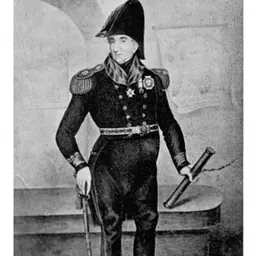

Related people
Same field, nearest in time

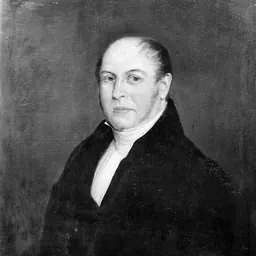

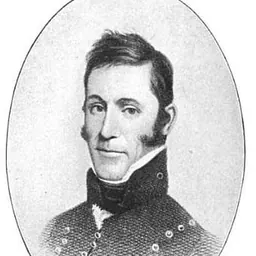

Contemporaries
People whose lives overlapped Henry Digby Beste's




Frequently asked questions
Who was Henry Digby Beste?
English writer
When was Henry Digby Beste born?
Henry Digby Beste was born on 21 October 1768 in Lincoln.
When did Henry Digby Beste die?
Henry Digby Beste died on 28 May 1836 in Brighton.
What was Henry Digby Beste's occupation?
Henry Digby Beste was a writer.
What nationality was Henry Digby Beste?
Henry Digby Beste was British.
Sources & further reading
· Wikipedia: Henry Digby Beste
Cite this page
APA: Biography.guide. (2026). Henry Digby Beste. https://biography.guide/henry-digby-beste/
MLA: "Henry Digby Beste." Biography.guide, https://biography.guide/henry-digby-beste/.
Chicago: "Henry Digby Beste." Biography.guide. https://biography.guide/henry-digby-beste/.
Data last updated: 2026-09-20 · Spot an error? Report a correction.
Page generated 2026-09-27 05:13 UTC