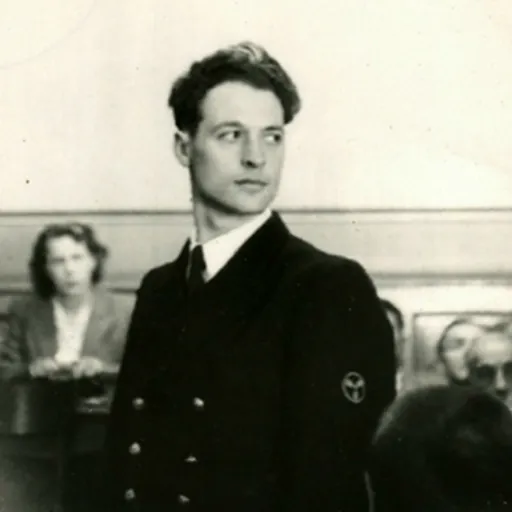
About Henri Martin
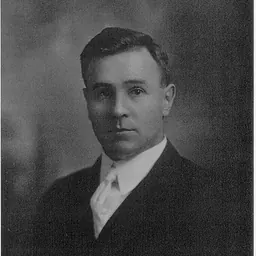
Lived 1927 – 2015 (aged 88). Henri Martin was a French politician and resistance fighter.
Henri Ursin Clément Martin (; 23 January 1927 – 17 February 2015) was a political activist of the French Communist Party and former sailor famous for the political-military scandal called the Henri Martin affair, in which the government of the French Fourth Republic meted out a five-year prison sentence to him for distributing pamphlets in opposition to the First Indochina War. He was born in Lunery, Cher and died in Pantin.
Early life
Family Henri Martin was born Henri Ursin Clement Martin on January 23, 1927, in Rosieres, an industrial part of Lunery a commune in the Loire region in central France. His father worked as a balance-adjuster but later in life became municipal council and deputy mayor of his region. During World War II, Martin entered the French Resistance to liberate France from the Nazis within the ranks of Francs-Tireurs et Partisans (FTP) who were generally oriented around communism. The French were victims of foreign occupation by the Germans leading to the natural rise in anticolonial sentiments. This feeling of momentary pause to the bourgeoisie-proletariat struggle along with convictions against authoritarian foreign powers persuaded young Martin to sign up with the French Navy in 1945 on a five-year contract to fight against the imperial Japanese in the Pacific Theatre during WWII. This was the last straw for young Martin and many other soldiers. Martin was not alone in his distaste for the war in Indochina. The French had experienced personally the effects of colonial conflict and so many soldiers saw their actions in the French military in Indochina as either active or passive involvement in the colonization of a foreign peoples. French statesman Maurice Viollette summarizes the appeal for the war in Indochina by comparing it to that of "Dying for Danzig" during WWII that is to say, it was not highly popular. Soon after, in May 1949, when the PCF had been kicked out of the French government in an official capacity, they began their boisterous campaign slogan, “Not one more man not one more penny for the war in Indochina.” The morning of his trial, there were people everywhere around the courthouse. People were coming in on buses, people were standing on chairs giving impromptu speeches, the city was covered in graffiti and posters, even an effigy of Martin himself. Walkouts were happening at workshops all over the city, car parades, rallies and open air meetings, all for the purpose of political awareness and freeing Henri Martin. When he entered the courtroom, though it was packed with lawyers, journalists, and witnesses, there was an immediate and impressive silence.
The Communist Party The Communist Party had long been on the outside of the French government and so their avenue for political impact was the rally for public causes that hindered the war effort since they were unable to do so with proper legislation. Sartre lead the publication of a compilation of essays by various French intellectuals such as Leiris, Vercors, Francis Jeanson, and Jean-Marie Domenach.
Denouement Martin was arrested March 1950, on trial October 1950, and was given wide support from the French public up until his unexpected early release August 1953. Martin was imprisoned for 3 1/2 years out of his 5-year sentencing. During that time he lost 10 kg due to the harsh conditions of the maritime jail in which he was held for 15 months before being transferred to a more humane prison in Melun. When in the Melun prison, Martin had access to books and magazines and was allowed to marry his fiancé Simone Le Balbe 30 November 1951. Even though they were allowed to marry, they were given only 10 minutes together, supervised by prison guards, as a married couple. 2 August 1952, Vincent Auriol, then president of France, issued Martin's unexpected release quietly. There is film recorded by the French Ministry of Culture of Martin's release and reacceptance into French society where Martin is seen alongside his new wife. The pardon from the president came as the public was becoming increasing agitated and vocal about France's colonial efforts. Under Auriol's presidency, France's participation in imperial pursuits waned and Henri Martin's discreet release was one act of many that Auriol made to ease the growing political tensions.
Political life after 1953 Shortly after his release, Martin helped to produce and acted in a documentary that outlined his experience featuring poems that were written about him, reenactments of the court proceedings, and video recordings of the street protests and civic efforts to free Martin. The documentary was titled D'autres sont seuls au monde (translated: Others are alone in the world) and is available through the PCF film archives.
Martin continued his public relationship with the PCF and his public fight against the Vietnam War. In the summer of 1954, Martin became a leader of the Union of Republican Youth of France (UJRF) or more commonly known as the Mouvement Jeunes communistes de France (MJCF). He was elected national secretary in 1955 then deputy general secretary in 1956. He remained with the MJCF until 1962. During the sixties and early seventies, Martin was involved with the Federation of Seine North-East where he served as secretary then head. From 1967-1979 Martin served as head of the education section of the central committee developing programs and brochures for the schools. From there, Martin became director of the Central School of the PCF. During the 1980s, Martin participated more directly with the PCF and legislative agendas that took a critical position towards the French government. From 1990 until his death 17 February 2015, Martin was active with the problems of French veterans.
Personal life after 1953 Martin married Le Balbe, a municipal employee of Aubervilliers, in 1951 while he was imprisoned. Together they had three children after Martin was released. Annick was born in 1954, Jean-Louis was born in 1955 and Jean-Jacques was born in 1957. Martin and Le Balbe were divorced in 1985. Martin remarried Arlette Boilot 6 October 1986.
Don’t just read it —
keep it.
Full-length biographies made to live with: read them, listen on the way to work, watch them tonight.
- E-book
- Audio
- Video
Instant download · yours to keep · every purchase keeps this site free
Important facts
People in Henri Martin's life
Named in this biography and alive at the same time






Related people
Same field, nearest in time




Contemporaries
People whose lives overlapped Henri Martin's

Frequently asked questions
Who was Henri Martin?
politician (1927-2015)
When was Henri Martin born?
Henri Martin was born on 23 January 1927 in Lunery.
When did Henri Martin die?
Henri Martin died on 17 February 2015 in Pantin.
What was Henri Martin's occupation?
Henri Martin was a politician and resistance fighter.
What nationality was Henri Martin?
Henri Martin was French.
Sources & further reading
· DBpedia: Henri Martin (French politician)
Cite this page
APA: Biography.guide. (2026). Henri Martin. https://biography.guide/henri-martin/
MLA: "Henri Martin." Biography.guide, https://biography.guide/henri-martin/.
Chicago: "Henri Martin." Biography.guide. https://biography.guide/henri-martin/.
Data last updated: 2026-09-22 · Spot an error? Report a correction.
Portrait: Wikimedia Commons · author & licence
Page generated 2026-09-27 05:03 UTC