
About Henri Désiré Landru
Lived 1869 – 1922 (aged 52). Henri Désiré Landru was a French serial killer, subdeacon, accountant, business person, cartographer and roofer.
Marie-Angélique Guillin (c. 3 August 1915) Marie-Angélique Guillin (51), a retired housekeeper living near Gare de Lyon, inherited 22,000 francs and responded to Landru's 1 May 1915 ad. Believing his story of being the next Consul-General to Australia needing a hostess wife, she visited his villa and returned apparently overjoyed. On 2 August, she moved from her apartment to Vernouillet. She vanished two days later, around 3 August. Landru sold her securities and, posing as her brother-in-law authorized to act for her due to paralysis, withdrew 12,000 francs from her bank account. Starting in August, a trunk was left abandoned at a local train station. Months later, in February 1916, station staff noticed a foul odor; the trunk contained the badly decomposed, dismembered remains of an unidentified middle-aged woman.
Murders at Gambais
By late 1915, neighbours in Vernouillet were suspicious. Feeling exposed, Landru sought greater seclusion. In December 1915, he rented the isolated Villa Tric, nicknamed "L'Ermitage" ('The Hermitage'), in the village of Gambais, south of Paris. Situated from the nearest house, it offered privacy. Upon moving in, Landru promptly purchased a large kitchen oven and a large quantity of coal.
Berthe Héon (December 1915 or January 1916) Berthe-Anna Héon (55 ), a widow originally from Le Havre working as a cleaner near Paris, had endured significant personal losses, including her husband, lover, son in the war, and daughter. She responded to Landru's second lonely hearts ad in summer 1915. Landru, posing as a businessman seeking a wife for a move to Tunisia, (44 ), an intelligent, attractive widow working as an insurance company typist, had 10,000 francs saved. She had a partner but seemingly could not marry him. She answered Landru's 1 May 1915 ad (claiming to be 29), perhaps seeking a stepfather for her illegitimate young daughter reportedly placed with nuns in Italy (the child was never found). Landru delayed meeting her until 1916 due to involvement with other victims. Once they met, Collomb quickly preferred Landru to her existing partner. Her family distrusted Landru but could not deter her. Collomb's sister visited the couple at Gambais on 14 December. Anna Collomb disappeared after 27 December 1916.
Andrée Babelay (12 April 1917) Andrée-Anna Babelay (19), described as pretty but poor, worked as a domestic servant or nanny, possibly supplementing her income with casual prostitution. Landru encountered her crying on a Paris Métro platform in early 1917 after she ran away from home following a quarrel with her mother. He invited her to his rented room near Gare du Nord, where they lived for ten days. On 11 March, she visited her mother, announcing she was getting married. On 29 March, Landru took her to Gambais (again, return ticket for him, single for her). She stayed for two weeks, seen learning to ride a bicycle by a game warden. (47, though reported as 44 in one source), a homely, trusting, semi-literate, and reportedly frugal widowed housekeeper, had around 10,000 francs saved from her late husband's hotel business. Lonely after her illegitimate son was mobilized, she answered Landru's 1 May 1915 advertisement. Landru (as "Georges Frémyet") corresponded sympathetically, became "engaged" quickly, but then stalled the marriage for over two years, blaming lost documents and fabricated business trips abroad. He reappeared in July 1917. They grew closer after he assisted with her sister's funeral, and he proposed again. Her family found "Frémyet" evasive and suspicious but could not sway Célestine. Entrusting her son to her half-sister, Marie Lacoste, Buisson moved to Paris with Landru. On 19 August, Landru bought the familiar one return, one single ticket pattern for Gambais. She disappeared after 1 September 1917. Landru's bank balance soon increased by 1,000 francs. He later returned to her apartment, showed the concierge a forged authorization letter, claimed Buisson was running a canteen for US troops in the south, and aggressively removed and sold her furniture.
Louise Jaume (c. 26 November 1917)
Louise-Joséphine Jaume (38), a devout Catholic dress shop assistant, was recently divorced. She met Landru (as "Lucien Guillet", a supposed refugee from the Ardennes) through a marriage bureau in summer 1917. She initially resisted his advances due to her faith but eventually accepted his proposal after attending Mass with him at Sacré-Cœur. Landru took her to Gambais on 15 November 1917, with a single ticket. She disappeared around 24 or 26 November 1917. Landru stole 275 francs from her and withdrew 1,400 francs from her bank account on 30 November.
Anne-Marie Pascal (5 April 1918) Anne-Marie ('Annette') Pascal (36), also divorced, worked as a dressmaker near Père Lachaise Cemetery and possibly engaged in prostitution. Nicknamed "Mme Sombrero" for her hats, she sought a "sugar daddy" and responded to Landru's ad in La Presse in September 1916. (37, though reported as 36 in one source), originally from Bordeaux, ran a small boarding house on Rue Saint-Jacques, Paris, and engaged in prostitution. She was known for walking her two beloved Belgian Griffon dogs. which went as follows
"Landru's bare feet made a light sound on the cold pebbles. His knees seemed not to be doing their job. His face turned red when he saw the terrifying machine, the guillotine... The blade fell in an instant, and Landru's head fell into the basket with a dull thud. An assistant lifted the hinged board and rolled the headless torso into a wicker basket, and a sickening amount of blood gushed out... One of the assistants standing in front of the machine grabbed the basket containing the head, rolled it like a cabbage into another large basket, and quickly loaded it onto a waiting covered cart... When Landru appeared in the prison courtyard, I checked my watch. When the cart left, I looked at my watch again, but only 26 seconds had passed."
Personality and motives Landru presented a paradox: physically unremarkable (short, balding, stout, with a distinctive pointed beard, a far cry from the image of a womanizer), yet possessing an undeniable charm, sophistication, affability, an affected demeanor, and an air of respectability that attracted many women. His age and slightly paternal demeanor, even his baldness, might have appealed to vulnerable women seeking security in uncertain times.
Landru maintained a strict separation between his criminal activities and his family life. A husband and father of four, Landru led a seemingly very ordinary life with them. To his wife and children, he appeared a conventional, albeit often absent, paterfamilias, described as thoughtful and considerate. He provided gifts (bought with stolen funds, such as jewelry for his wife) and financial support, though he never revealed the illicit source of his income.
Landru's conduct during the investigation and trial cemented his public image. He remained calm, polite (consistently maintaining a refined demeanor), witty and unflappable, consistently denying the murders while implicitly admitting the frauds and often making ironic jokes. For example, when a woman who arrived late to the courtroom gallery was having trouble finding a seat, Landru reportedly offered her his own defendant's seat, saying, "If my seat is alright with you," which drew laughter from the attendees. This behavior made Landru a subject of jokes, songs, cartoons and morbid fascination. He earned nicknames like "Bluebeard" (sometimes "Old Man Bluebeard," particularly in vaudeville theaters), "The Lady Killer," and "The Red Man of Gambais." A famous cartoon depicted Landru telling his lawyer, "A woman's place is in the home (foyer)." The word "foyer" in French has the dual meaning of "home/hearth" and "furnace/stove," thus satirizing the widespread belief that Landru had incinerated his victims' bodies in his oven. This public fascination extended to enthusiastic fans sending him gifts like sweets and tobacco, and he received a deluge of marriage proposals. Furthermore, in the 1919 general election, approximately 4,000 voters reportedly wrote Landru's name on their ballots.
Notable quotes Landru's cynicism and evasiveness were evident in his recorded statements: On his notebook: "The police gentlemen would have been more pleased if it had included on the first page, 'I, the undersigned, confess to having killed the ten women named herein.'" On the disappearances: "Is there anyone who goes missing who doesn't fall under suspicion of murder?" When pressed: "That's my secret. French law recognizes the right to remain silent." To sanity experts: "By acknowledging that I am normal, you have, so to speak, proven my innocence." During trial: "Believe me, please, I didn't even know how to light the oven." / "Women don't count their age from birth, but from their confirmation." After conviction, to his lawyer: "If I had gotten off, it would have been thanks to you." / "I've asked you to handle quite a troublesome, or rather, desperate defense. But this isn't the first time an innocent man has been punished... Of course, Counselor, I am innocent." To the priest before execution: "Worry about saving your own soul rather than mine." Final words when asked to confess: "To ask such a question at this point is extremely rude."
Financial motivation Overwhelming evidence points to greed as Landru's primary motive. His monetary desire and avarice are noted characteristics. This is evident in his meticulous categorization of potential victims. For instance, after placing advertisements seeking a spouse and receiving a large number of replies, Landru carefully sorted them, recording classifications such as "reply by general delivery," "no money," "no reply," "reply by general delivery with initials," "probably has property," and "reserve, further investigation needed." He would then reply to women who seemed to have property to gather more information, selecting those who appeared as naive as possible, and explicitly eliminated applicants he marked as "no property".
His habit of buying single train tickets for victims when taking them to Gambais, while purchasing return tickets for himself, further underscores this; he did this to save even minuscule amounts of his own money, not wanting to waste a single franc while intending to steal theirs. Furthermore, his detailed accounting of even the smallest expenses, recorded in a notebook (which was among the evidence seized during the house search after his arrest), highlights his extreme avarice. This notebook included meticulous records of items like bus and subway fares, and train fares for trips between Paris and Gambais, alongside the assets acquired from his victims.
Historical context The backdrop of World War I, both during and after the conflict, was crucial to Landru's success. The immense loss of life created a large pool of lonely, vulnerable widows desperate for security and companionship.
In the era when the horror of the war was still lingering, the prevailing social trend of women seeking partners who could promise a stable future worked in his favor. Every day during the war, many soldiers were killed on the battlefield, creating a continuous stream of new widows, and newspapers carried advertisements from these women seeking companions on a daily basis. Many women, especially war widows overflowing in Paris at the time, faced uncertain futures alone and potentially lacked experience in managing finances or making major decisions without male relatives . Landru, presenting himself as a respectable man spared from the front, exploited this societal vulnerability. Despite his appearance, his skillful conversation and ability to behave in a seemingly serious manner made him appear as a trustworthy suitor.
Furthermore, wartime conditions strained police resources, diverting manpower to tracking deserters and managing wartime exigencies. After the first crime involving Jeanne Cuchet, the police were mostly occupied with tracking deserters during the war and had no capacity to investigate this case. This lack of investigation emboldened Landru, giving him "a taste" for it and leading him to continue his crimes undetected for longer.
The trial's occurrence shortly after the war's devastating conclusion also played a role. The war had killed 1.5 million French people, and the trial provided the French public with a sensational, albeit grim, distraction from national trauma and the difficult political climate surrounding the peace negotiations. For ordinary citizens, Landru's trial was a rare opportunity for a change of pace or mood.
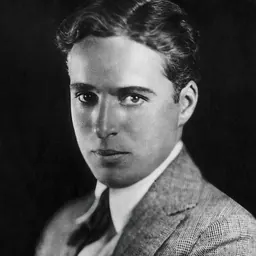
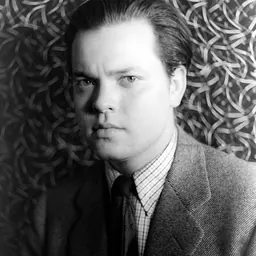
In fiction Charlie Chaplin's dark comedy Monsieur Verdoux (1947) is the most famous work inspired by Landru. Chaplin adapted an Orson Welles script, portraying a man who turns to murdering wealthy women to support his family after losing his job. Claude Chabrol directed the French film Landru (1963), scripted by Françoise Sagan. It presented a blackly comedic version of the case, focusing on the later murders and portraying them as more glamorous.
Don’t just read it —
keep it.
Full-length biographies made to live with: read them, listen on the way to work, watch them tonight.
- E-book
- Audio
- Video
Instant download · yours to keep · every purchase keeps this site free
Important facts
People in Henri Désiré Landru's life
Named in this biography and alive at the same time
Related people
Same field, nearest in time

Contemporaries
People whose lives overlapped Henri Désiré Landru's



Frequently asked questions
Who was Henri Désiré Landru?
sentenced to death in France
When was Henri Désiré Landru born?
Henri Désiré Landru was born on 12 April 1869 in 19th arrondissement of Paris.
When did Henri Désiré Landru die?
Henri Désiré Landru died on 25 February 1922 in Versailles.
What was Henri Désiré Landru's occupation?
Henri Désiré Landru was a serial killer, subdeacon, accountant, business person, cartographer and roofer.
What nationality was Henri Désiré Landru?
Henri Désiré Landru was French.
Sources & further reading
· Wikipedia: Henri Désiré Landru
· DBpedia: Henri Désiré Landru
Cite this page
APA: Biography.guide. (2026). Henri Désiré Landru. https://biography.guide/henri-desire-landru/
MLA: "Henri Désiré Landru." Biography.guide, https://biography.guide/henri-desire-landru/.
Chicago: "Henri Désiré Landru." Biography.guide. https://biography.guide/henri-desire-landru/.
Data last updated: 2026-09-20 · Spot an error? Report a correction.
Page generated 2026-09-27 05:34 UTC