
About Henri Berger
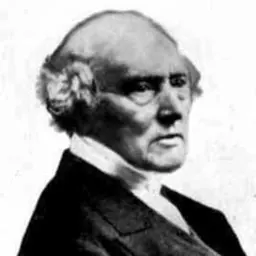
Lived 1844 – 1929 (aged 85). Henri Berger was a German composer, conductor, chapelmaster and military musician.
Henry Berger (sometimes spelled Henri Berger; August 4, 1844 – October 14, 1929) was a Prussian-born Kapellmeister, composer, and royal bandmaster of the Kingdom of Hawaii from 1872 to 1915.
Biography Berger was born Heinrich August Wilhelm Berger in Berlin, and became a first-rate musician as a member of the army band in the 2nd Foot Guards of the Prussian Army. He played in the orchestras of Johann Strauss, Jr. across Europe.
Originally, Kaiser Wilhelm I of Germany loaned Berger from his Potsdam station to King Kamehameha V to conduct the king's band. He arrived in Honolulu in June 1872, fresh from service in the Franco-Prussian War. In 1877, King Kalākaua appointed Berger to full leadership of the Royal Hawaiian Band. In 1879, he became a naturalized citizen of the Kingdom of Hawaii.
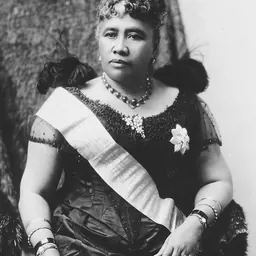
Berger befriended the future Queen Liliʻuokalani, a composer in her own right. Berger arranged the songs she wrote, performed by the brass band. On August 4, 1881, while traveling the world, King Kalākaua reported in a letter from Berlin to Regent Liliʻuokalani, that he had met the mother and sister of Berger and announced the sending of a program whose pieces Berger was to play with the Royal Hawaiian Band upon his return. The queen named Berger the "Father of Hawaiian Music". From 1893 to 1903, the bandmaster worked with the Kamehameha Schools to develop its music program. He also built what is today the Honolulu Symphony.
He led the government band at thousands of public events. Among these were "steamer day," when a ship left the Honolulu docks. The band serenaded the departees with "Auld Lang Syne," or "The Girl I Left Behind Me."
Later in his tenure as royal bandmaster, Berger took it upon himself to record traditional Hawaiian hymns, chants and other Hawaiian music in print to ensure their survival, a task never done before. Berger at the same time composed the classics: "The Hula March", "Hilo March", "Kohala March", “Huki March”, “Ka Mo’i March” and "Sweet Lei Lehua." His arrangement of "Hawaii Ponoī", with text by Kalākaua in honor of Kamehameha became the national anthem. Today, the song serves as the state anthem.
Berger combined German, Austrian and Hawaiian traditions in his unique compositions and performed with the Royal Hawaiian Band thousands of times, making Hawaiian music known and popular in many countries. Berger started the RHB 'Aloha" welcome and farewell greetings at the harbors.
Recognizing his promotion of Hawaiian culture abroad, Kalākaua conferred the Royal Order of the Star of Oceania upon Berger.
He died in Honolulu. His resting-place is the Kawaiahaʻo Church Cemetery.
Robert Louis Stevenson mentioned Berger in his novel The Bottle Imp.
Berger's legacy continues today, celebrated worldwide especially in Hawaii and Germany, as the father of the Royal Hawaiian Band, the oldest municipal band in the United States.
Don’t just read it —
keep it.
Full-length biographies made to live with: read them, listen on the way to work, watch them tonight.
- E-book
- Audio
- Video
Instant download · yours to keep · every purchase keeps this site free
Important facts
People in Henri Berger's life
Named in this biography and alive at the same time




Related people
Same field, nearest in time


Contemporaries
People whose lives overlapped Henri Berger's
Frequently asked questions
Who was Henri Berger?
Composer and royal bandmaster of the Kingdom of Hawaii (1844–1929)
When was Henri Berger born?
Henri Berger was born on 4 August 1844 in Berlin.
When did Henri Berger die?
Henri Berger died on 14 October 1929 in Honolulu.
What was Henri Berger's occupation?
Henri Berger was a composer, conductor, chapelmaster and military musician.
What nationality was Henri Berger?
Henri Berger was German.
Sources & further reading
Cite this page
APA: Biography.guide. (2026). Henri Berger. https://biography.guide/henri-berger/
MLA: "Henri Berger." Biography.guide, https://biography.guide/henri-berger/.
Chicago: "Henri Berger." Biography.guide. https://biography.guide/henri-berger/.
Data last updated: 2026-09-20 · Spot an error? Report a correction.
Page generated 2026-09-27 05:25 UTC