
About Hemanta Kumar Sarkar
Lived 1897 – 1952 (aged 54–55). Hemanta Kumar Sarkar was an Indian politician and writer.
Hemanta Kumar Sarkar (1897 – 3 November 1952) was an Indian philologist, author, biographer, editor, publisher, union leader, leader of the Indian freedom movement and an associate of Subhas Chandra Bose. He was a close friend and the first biographer of Subhas Chandra Bose, the co-founder of Labour Swaraj Party in Bengal along with Muzaffar Ahmed and Kazi Nazrul Islam and led the movement for the Partition of Bengal and formation of Bengali Hindu homeland in 1947.
Early life Sarkar was born in 1897 in the village of Baganchra near Shantipur in the district of Nadia, the fifth of six sons to Madan Mohan Sarkar and Kadambari Devi. His father was the owner of a banking business started by his great-grandfather and his mother was the granddaughter of Raghunandan Mitra, the Dewan of the Nadia Raj. In his childhood, Sarkar attended the Krishnagar Collegiate School. In 1912, Sarkar came under the influence of Beni Madhab Das who had arrived as the new headmaster of the school from Ravenshaw Collegiate School in Cuttack. Das introduced him to his former pupil Subhas Chandra Bose, which culminated in a lifelong friendship between Sarkar and Bose. In May 1913, Bose came to Krishnanagar and stayed with Sarkar during the summer recess. In 1914, Sarkar and Bose ran away from home in search of a spiritual guru and travelled to Ayodhya, Haridwar, Mathura, Vrindavan and Varanasi. At Vrindavan, Baba Ramakrishnadas advised them to give up looking for a guru because they were argumentative and spiritual life was not suitable for them. They returned home after three months. Inspired by the worker's education programmes in Manchester and Birmingham, he along with Sailen Ghosh started the Krishnanagar Workmen's Institute, a night school that offered free education to the working-class people. In 1917, Sarkar earned his BA with First Class Honours in Sanskrit from the Krishnagar Government College. He was awarded the Mohini Mohan Roy Prize for standing first among all the BA and BSc students in his college. After his graduation, Sarkar took admission in the University of Calcutta in a masters programme in Comparative Philology. In 1919, he stood first in the MA in Comparative Philology and received the university gold medal.
Career In 1919, Sarkar was appointed lecturer in Comparative Philology at the University of Calcutta by Ashutosh Mukherjee, then President of the Graduate Council of the university. He taught Vedic Sanskrit, Modern Bengali Poetry and Philology of the Indian Vernaculars. In 1920, his thesis titled, "The Intellectual Laws of Language" was accepted by the Premchand Roychand Scholarship. In the same year, he was also awarded a Government of India Scholarship to study in England for three years. Subhas Chandra Bose, who had already arrived in England a few months back, started making arrangements for Sarkar's admission and lodging at his own college, Fitzwilliam Hall in the University of Cambridge, so that they could be together once again.
At the call of Chittranjan Das, Sarkar declined the scholarship to study in England and gave up his lectureship at the University of Calcutta to join the freedom movement, a decision which he rued later. In 1920, Sarkar started his political career as the private secretary of Das. During this time he stayed at the Das family residence. He attended the 1920 Congress session at Nagpur, the 1921 Congress session at Ahmedabad and the 1922 Congress session at Gaya as a delegate. In 1921, he was instrumentation in organising strikes at the Raniganj Paper Mills and the Bengal Nagpur Railway. He also organised the Press Employees Association strike, one of the largest and longest strikes in British India where around 10,000 employees struck work for two and half months. Das also entrusted him with the responsibility of editing and managing the weekly nationalist paper Banglar Katha. When Bose returned to India, Sarkar introduced him to Das. On 7 December 1921, Sarkar was arrested by the British colonial police and sentenced to six months rigorous imprisonment under the Criminal Law Amendment Act for selling Khadi on College Street in Kolkata. At his trial, Sarkar told the judge "As I consider myself to be a free Indian, I deny the jurisdiction of this court set up by the British falsely in the name of law and order. I hope to be released only when the prison gate is opened by the first President of the free Indian Republic." He was imprisoned at the Alipore Central Jail where he shared his cell with Chiraranjan Das, the son of Chittaranjan Das. Later he was shifted to a larger cell which he shared with Chittaranjan Das, Birendranath Sasmal and Subhas Chandra Bose. At the prison, Sarkar suffered from smallpox when he was nursed back to health by Bose. Recounting the prison days, Sarkar later wrote that the middle class Indians, who went to the jails for the first time, overcame the fear of torture in the jails thus strengthening the Indian independence movement.
Sarkar was released from prison in June 1922. He returned to Nadia and carried on with public work. When Swarajya Party was founded in December 1922, Sarkar became a member of the party. In 1923, Sarkar got elected in the Bengal Legislative Council from Nadia on a Swarajya Party ticket. In 1927, the All Bengal Praja Conference was held at Kushtia in Nadia district presided over by Sarkar himself. Soumendranath Tagore and Philip Spratt spoke at the conference. He wrote a series of articles in Dainik Basumati justifying the need for the partition. He founded a Bengali daily named Paschimbanga Patrika in support of West Bengal.
Bengali নদীয়া ও কলিকাতার কতকগুলি চলিত কথা
English History of the Bengali Language The Intellectual Laws of Language Twelve Years With Subhas My Jail Experiences Reminiscences of Deshbandhu
Don’t just read it —
keep it.
Full-length biographies made to live with: read them, listen on the way to work, watch them tonight.
- E-book
- Audio
- Video
Instant download · yours to keep · every purchase keeps this site free
Important facts
People in Hemanta Kumar Sarkar's life
Named in this biography and alive at the same time
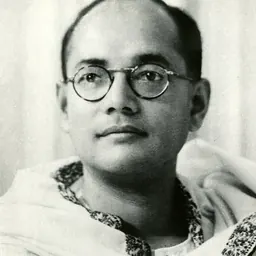
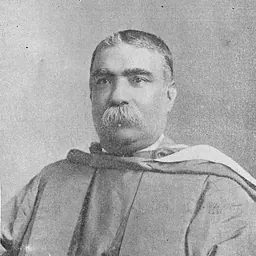
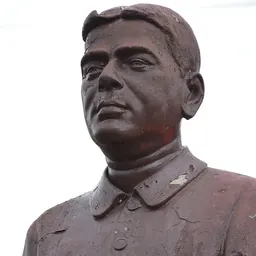
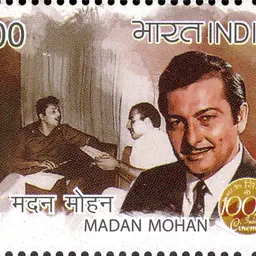


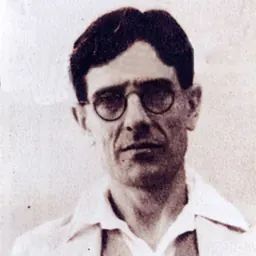

Related people
Same field, nearest in time




Contemporaries
People whose lives overlapped Hemanta Kumar Sarkar's

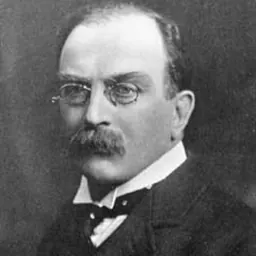
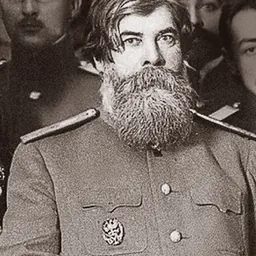
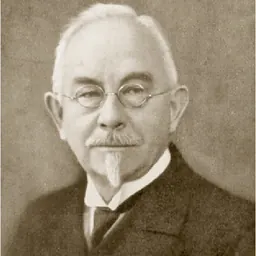

Frequently asked questions
Who was Hemanta Kumar Sarkar?
Indian writer and activist
When was Hemanta Kumar Sarkar born?
Hemanta Kumar Sarkar was born in 1897 in Bengal Presidency, British Raj, Nadia district.
When did Hemanta Kumar Sarkar die?
Hemanta Kumar Sarkar died on 3 November 1952 in Krishnanagar.
What was Hemanta Kumar Sarkar's occupation?
Hemanta Kumar Sarkar was a politician and writer.
What nationality was Hemanta Kumar Sarkar?
Hemanta Kumar Sarkar was Indian.
Sources & further reading
· Wikipedia: Hemanta Kumar Sarkar
· DBpedia: Hemanta Kumar Sarkar
Cite this page
APA: Biography.guide. (2026). Hemanta Kumar Sarkar. https://biography.guide/hemanta-kumar-sarkar/
MLA: "Hemanta Kumar Sarkar." Biography.guide, https://biography.guide/hemanta-kumar-sarkar/.
Chicago: "Hemanta Kumar Sarkar." Biography.guide. https://biography.guide/hemanta-kumar-sarkar/.
Data last updated: 2026-09-22 · Spot an error? Report a correction.
Page generated 2026-09-27 05:17 UTC