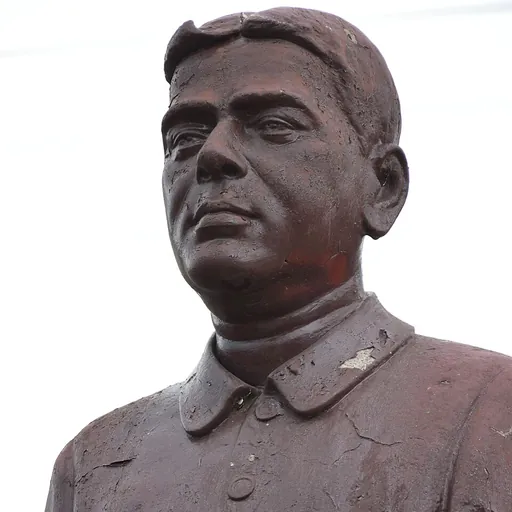
Birendranath Sasmal
Indian politician and nationalist barrister
About Birendranath Sasmal
Lived 1881 – 1934 (aged 53). Birendranath Sasmal was an Indian politician, barrister, writer and lawyer.
Birendranath Sasmal (26 October 1881 – 24 November 1934) was a barrister and a political leader. He was known as "The Uncrowned King of Midnapore" and "Deshapran" (soul of the nation) because of his love and devotion to the country and for his efforts in the Swadeshi movement. thumbHe was the principal representative of the Indian National Congress at Midnapore. He was instrumental in organizing mass uprisings and protests in the Midnapore district on behalf of the Congress and later the Swaraj Party. He was essentially a "people's leader". As a barrister, he represented many of the accused in cases against the British Raj. and along with Das and others, he was a founding member of the Swaraj Party and later worked as its principal organizer in Bengal. He served as the general secretary of the party's Bengal branch. His great-grandfather, Karunakar Sasmal, had purchased rights over a few taluks after the Permanent Settlement of 1793. A few of his family members had also converted to the Brahmo religion prior. His elder brother, Rai Sahib Bipin Bihari Sasmal, was an eminent Zamindar of Midnapore district and the Chairman of the Contai Municipal Board. Metropolitan College, at 39, Sankar Ghosh Lane, Simla, Machuabazar. He was admitted to Contai High School in 1893 and passed the entrance examination in 1900 from the same school; Middle Temple, London. One of the Inns of Court, circa, 1895. After finishing his college education, he left for England in 1902 to study law at the Middle Temple; He returned to India in 1904 after becoming a barrister.
Legal career
After being awarded his degree in law, Sasmal was called to the Bar at the Middle Temple in England in 1904. He returned to Calcutta and started his practice as a barrister at the Calcutta High Court. He became a member of the district board and municipality, and actively engaged in various forms of social welfare and also played a crucial role during the Midnapore floods of 1913, 1920, 1926, and 1933. Deshapran Sasmal as a seasoned and experienced barrister from the Middle Temple. This was taken during his time as a legal practitioner fighting for the cause of the revolutionaries across the various courts of the Bengal Presidency. He was once again arrested in 1930 for the leading role he played during the Civil Disobedience movement. Immediately after his release, he rushed to Chittagong to defend the accused, including Surya Sen, Pritilata Waddedar, and others, in the Chittagong armoury raid case. He managed to acquit 32 revolutionaries, and 12 others were deported to the Andamans, and 2 received only minor three-year prison sentences. He refused to charge any legal fees for this service.
Political activities For political reasons, Midnapore district was proposed to be divided into two by the British Raj, and Deshapran started protesting against it. He toured the region and organised protest movements. The proposal for partition was withdrawn. He started practising law at Calcutta High Court in 1904. In 1913, leaving Calcutta High Court, Birendranath practiced in Midnapore District Court for a few years, but later he again joined the High Court. He along with Subhas Chandra Bose and Jatindra Mohan Sengupta, was regarded as one of the three foremost Lieutenants of C. R. Das in Bengal. In the High Court, he defended the accused in the Chittagong Armed Robbery case. He was jailed for nine months by the British Raj for calling a general strike during the visit of King George V to British India. During his stay at Presidency Jail, he wrote his autobiography named Sroter Trina.
Non-cooperation movement (1920)
Sasmal played a leading role in the 1920 Calcutta Session of the National Congress and supported the Non-cooperation movement of 1921. Sasmal, by then, had joined the Swarajya Party of Chittaranjan Das. He was made Secretary of the Bengal Provincial Congress. During this period he also successfully led the local anti-Union Board agitation in Midnapore. On 17 December 1921, 226 Union Boards were abolished, and the last one was abolished the next year. In a gathering, with loud cheers, people put shoes on the feet of their leader.
Chairman of the Medinipur District Board (1923–1924)
In 1923, with a huge majority, Deshapran Birendranath Sasmal was elected chairman of the Midnapore district board. Prior to his election, Midnapore had been usually politically governed by outsiders from other districts who had previously migrated to Midnapore district for employment or other reasons, which henceforth changed after his grand victory. He worked diligently for the development of Midnapore district. He improved the health department, ensured the supply of water, spread education, and developed the roads. Dispensaries increased by a large number during his tenure as chairman. He also strengthened the primary education in the district, sanctioning a huge sum of 51,000,000 rupees, which was an unprecedented amount for education. He was also instrumental in establishing the innovative National Schools throughout the district, which were one of a kind. These national schools, still continue to serve as the pillars of pre-college education in the rural levels of the district.
Labon Satyagraha (1930) Birendranath was also involved in the civil disobedience movement. His followers took an active part in organizing people. Satyagrahis came to Narghat and Pichhhaboni to break the Salt Law by peaceful means. The Satyagraha assumed the form of a mass movement in the area. Sasmal left the BPCC in thorough disillusionment and displeasure and returned to his law practice and control of local politics in Medinipur district.
Family
While practicing at the Midnapore District Court, he married Hemantakumari Devi, a Kashmiri Pandit lady. To make her familiar with the Bengali language and culture, he made a library in his home. They had two children. A daughter, Ashrukona, and a son, Bimalananda.
Death Deshapran B. N. Sasmal, before his death. This was taken after his return from Kharagpur, a few days before his untimely death. On 19 November 1934, he was returning from Medinipur to Calcutta after a council election and due to a matter related to his legal practice. En route, at Kharagpur, he was purposely misinformed by a miscreant that he had lost the recently held national election of the Burdwan division. The sudden and unexpected news had a hugely negative effect on his health, to the extent that he suffered high blood pressure, which consequently resulted in a brain stroke. Despite having arranged for him immediate medical attention by his co passengers, his health remained unstable. However, after his arrival at the Howrah station, he received the correct information, that in reality he had won the election. He was escorted to his Calcutta house by his well wishers and supporters, who had gathered to congratulate him on his victory.
Legacy and influence
Sasmal was an ardent follower of Mahatma Gandhi and had unflinching faith in Non-Violent movement. He thought, "Violence begets violence". A road in Tollygunge in South Kolkata (Deshparan Sasmal Road) is named after him in 1957. The Deshapran community development block in Kanthi subdivision is named after Sasmal. Deshapran Mahavidyalaya, a college under Vidyasagar University, has been named after him. Also, the Deshapran railway station near Bajkul has been established in his name. Schools, clubs, organisations and streets that bear his name indicate his permanent seat in the heart of people.
Gallery
Don’t just read it —
keep it.
Full-length biographies made to live with: read them, listen on the way to work, watch them tonight.
- E-book
- Audio
- Video
Instant download · yours to keep · every purchase keeps this site free
Important facts
People in Birendranath Sasmal's life
Named in this biography and alive at the same time
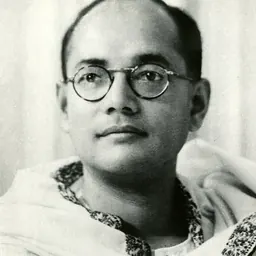
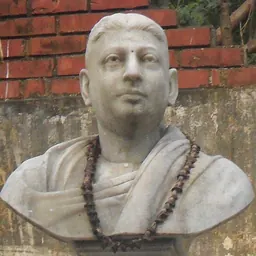
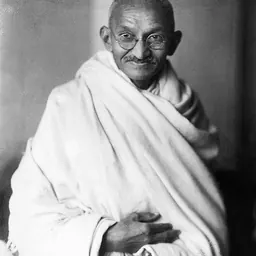


Related people
Same field, nearest in time





Contemporaries
People whose lives overlapped Birendranath Sasmal's




Frequently asked questions
Who was Birendranath Sasmal?
Indian politician and nationalist barrister (1881-1934)
When was Birendranath Sasmal born?
Birendranath Sasmal was born on 26 October 1881 in Contai.
When did Birendranath Sasmal die?
Birendranath Sasmal died on 24 November 1934 in Kolkata.
What was Birendranath Sasmal's occupation?
Birendranath Sasmal was a politician, barrister, writer and lawyer.
What nationality was Birendranath Sasmal?
Birendranath Sasmal was Indian.
Sources & further reading
· Wikipedia: Birendranath Sasmal
· DBpedia: Birendranath Sasmal
Cite this page
APA: Biography.guide. (2026). Birendranath Sasmal. https://biography.guide/birendranath-sasmal/
MLA: "Birendranath Sasmal." Biography.guide, https://biography.guide/birendranath-sasmal/.
Chicago: "Birendranath Sasmal." Biography.guide. https://biography.guide/birendranath-sasmal/.
Data last updated: 2026-09-22 · Spot an error? Report a correction.
Portrait: Wikimedia Commons · author & licence
Page generated 2026-09-27 05:02 UTC