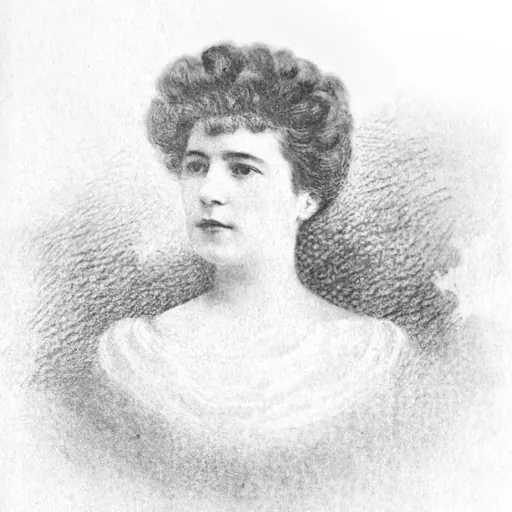
About Hélène Picard
Lived 1873 – 1945 (aged 71). Hélène Picard was a French poet and novelist.
Hélène Picard (born Hélène Dumarc, 1 October 1873 – 1 February 1945) was a French poet.
Hélène Picard first attracted attention in her native region, where she worked with poets and received two prizes from the Académie des Jeux floraux de Toulouse. Settling in Privas, Ardèche, she published her first book in 1903, La Feuille morte, a lyrical drama that went unnoticed on the national literary scene. She came to prominence in 1904, when Femina magazine organized a tournament for women poets, which she won with a poem in homage to George Sand and established her in the public eye. After two successive failures to win national prizes in 1906, she published a collection the following year, L'Instant éternel, which won critical acclaim and the Archon-Despérouses prize. Alongside Lucie Delarue-Mardrus, Renée Vivien, Anna de Noailles, and Marie Dauguet, Picard was one of the most prominent women poets of the time, in a period that saw the publication of many works written by women. Her success was short-lived, however: she published a limited edition collection for her friends in the Ardèche, Petite ville, Beau pays (1907), followed by Fresques (1908) and Souvenirs d'enfance in two volumes (1911 and 1913) with a Parisian publisher, which went unnoticed.
She left Ardèche around 1919 and moved to Paris, where she became Colette's secretary. The two began a close friendship that lasted until Picard's death. Colette had a strong influence on the poet, whom she housed and supported financially and emotionally; but Picard also advised the novelist. She published a novel in 1923, Sabbat, with a preface by Colette. An unrequited passion for Francis Carco inspired her last collection, Pour un mauvais garçon, published in 1927, which broke with the style of her early poems and was praised by critics for its originality.
Depressed and suffering from severe rheumatism, Picard gradually shut herself away, never leaving her apartment. She died on February 1, 1945. In the days following her death, Colette devotes herself to an article in her honor, which appears in La Revue de Paris, then in L'Étoile Vesper. She received several awards during her lifetime, including the Prix Archon-Despérouses, the Prix Botta, and the Prix Renaissance, and was made a Chevalier de la Légion d'Honneur.
Her style can be divided into two periods: while she initially praised country life and its simplicity with poems in classical form, after she arrived in Paris she adopted a more original and innovative style, using the capital's bars and unfriendly neighborhoods as her backdrop. Throughout her career, she also evoked themes of melancholy, idealism, and love, sometimes with an erotic dimension.
Biography
The beginnings of an "Ardèche poet" (1873 - 1903) Alice Julie Pauline Hélène Dumarc was born in Toulouse, François-Frizac Avenue, on October 1, 1873, to Léon Aristide Alphonse Dumarc, an insurance manager, and Charlotte Pauline Capdeville. She was of Ariège origin through her mother, whom she describes as calm and dreamy, and who gave her a taste for poetry; she read avidly in her teens, particularly admiring Alfred de Musset. She began to write poems, sometimes with an erotic slant, in which she expressed her desire for a loving relationship.
Between 1896 and 1898 she frequented the Toulouse poets' circle L'Effort, where she met the lawyer Jean Picard, whom she married on March 30, 1898. During this period, she became close to Pierre Fons, Marc Lafargue, Georges Gaudion, and Armand Praviel, and in 1899 and 1900 received two successive prizes from the Académie des Jeux floraux de Toulouse.
Picard then moved to Privas, where her husband was appointed Secretary General of the Ardèche Prefecture. She published her first book in 1903, La Feuille morte, a lyrical piece, with a publisher in Privas. The work was reviewed by Émile Faguet, who pointed out its "considerable flaws" but considered Picard to have a "gift" for poetry. In January 1903, Femina magazine announced the institution of a poetry tournament open to all female readers of the magazine, with the winner sitting on the jury the following year. The first edition of the tournament took place the same year, and Picard figured prominently among the prizewinning poets. She won the tournament in 1904 for her tribute poem to George Sand. Her verses were published full-page in the magazine and recited by Blanche Barretta during the novelist's centenary celebrations. Joining the jury for the 1905 edition, Picard befriended Anna de Noailles and went on to become a leading poet.
Success of L'Instant éternel In its issues of 15 March and 15 May 1908, the magazine Je sais tout published a portrait of the poet with a book, symbolizing the recognition of her status as a woman of letters. The following year, she competed for the Bourse nationale du voyage littéraire, instituted by the French Ministry of Education and the Société des Gens de Lettres, with an unpublished collection entitled L'Instant éternel. In it, she traces the stages of a love affair in six parts, with poems in alexandrines influenced by Musset. Jules Bois wrote in Gil Blas on July 2, 1906: "Femina et La Vie heureuse ne se préparent-elles pas à couronner de billets de mille le front d'un poète? Mme Hélène Picard is the perfect choice". She received rave reviews from critics and prominent authors, including Victor Margueritte, Catulle Mendès, Gérard d'Houville, and Fernand Gregh. In a collection published in 1908, Fresques, she once again evoked the Ardèche and the simple joys of everyday provincial life, while repressing her desire for a more eventful life. Such desires reappear in the two autobiographical volumes that make up her Souvenirs d'enfance: Nous n'irons plus au bois (1911) and Les Lauriers sont coupés (1913). In them, she expresses her desire for ardor and freedom, in contrast to her simple, monotonous life.
Fresques and Souvenirs d'enfance both went unnoticed, although as the winner of the Femina tournament, Picard remained honored by the magazine - unpublished poems were released in the special issues of December 1, 1908, and 1909, she was chosen as a member of a hypothetical "Académie féminine idéale", a poem in honor of Sarah Bernhardt was commissioned to be recited by the actress Madeleine Roch. She gradually distanced herself from this restricted, bourgeois circle, which no longer matched her literary ambitions. The success of L'Instant éternel enabled her to work as a stringer and secretary, The novelist found her an apartment at 29 Rue d'Alleray, where Picard spent the rest of her life, filling it with objects of curiosity.
Picard seems to have been greatly influenced by Colette, to the point of letting her cut her hair. Her only novel, Sabbat, published in late 1923, was prefaced by Colette and appeared in a collection she edited. From the summer of 1919, Picard accompanied the novelist several times to her secondary villa in Rozven, Brittany, where they were accompanied by Germaine Beaumont, Francis Carco and his wife, Léopold Marchand, and Bertrand de Jouvenel. Picard was often teased for her childish ways, sometimes quite harshly, notably by Carco.
Picard was awarded the Chevalier de la Légion d'Honneur in 1926 for "her poetic work consecrated by the great contemporary critics". Her inquisitive nature, however, enabled her to turn her attention to new literary trends, and Colette's material and emotional support was a great help. Their correspondence shows Colette's concern for her friend, as well as literary exchanges: the novelist asks the poet for advice, notably on the title of Le Pur et l'Impur, and in return helps her find newspapers in which to publish her poems. Hélène Clément, one of the characters in La Naissance du Jour, appears to have been inspired by Hélène Picard.
Death Her passion for Carco seems to have weakened Picard. However, she was ill since 1926, suffering from rheumatism or "a serious bone lesion". According to Colette, she had to visit the hospital often and spent her last years shut away in her apartment. She suffered from bouts of paranoia that prompted her to install locks on her door, and she wrote to Colette: "I have the intuition, the moral proof, that someone is penetrating my home. [...] If I didn't have so many fibers holding me to this house, I'd leave it; I have proof that someone is spying on me." She became a vegetarian out of an aversion to blood and pretended to be absent when someone knocked on her door. When taken to hospital in January 1945, she is quoted as saying: "If I knew that Colette saw me as I am, I would kill myself". She died in hospital on February 1, 1945, without having the strength to open the pneumatic note sent by Colette. Colette, it seems, knew verses by heart: She also dedicated poems to women authors (Élisa Mercœur, Delphine de Girardin, and Loïsa Puget), a rarity among her colleagues. In the big city, you can't taste these things,
These dear, sweet moments,
These silences full of insects and roses,
In springtime days.
- Fresques (1908)The same attraction to the charm of the countryside appears in Petite ville... Beau pays..., in which Picard describes the landscapes of the Ardèche and the banalities of everyday life, the beauty of which she believes is not apparent to most people. In the poem Ma maison, she evokes at length all the warm elements of her personified home: Her style changed markedly after she moved to Paris, as can be seen in her last three books: Province et capucines (1920), Sabbat (1923) and Pour un mauvais garçon (1927). In the first of these, she makes clear her detestation of the province: became "immodest" according to Chandernagor. From her earliest collections, Picard evoked her amorous desires with a sensual and sometimes erotic dimension - which led Émile Faguet to describe her as a "poet of love and desire": Ô vous le dévêtu, vous le nu, je vous vois [...]
O young body of joy where splendor flows
I will glorify you in the wave of wheat [...]
O young flower of life, O pure and sacred flesh.
- L'Instant éternel (1907)
Suffering from my whiteness, from my side, from being a woman to the point of moaning.
To the point of moaning.
- Fresques (1908)In L'Instant éternel, she makes numerous references to famous literary couples: Lucifer and Éloa, Alphonse de Lamartine and Elvire, Petrarch, and Laure de Sade. Jean de Gourmont and Françoise Chandernagor point to a form of man-woman inversion in some of the poems, where her beloved is comparable to "a kind of Beatrix-man" according to Gourmont, and where she frankly praises her lover's body. Tu ne quittas plus les hontes triomphales
That night, my old carnal demon invented.
Loneliness and melancholy
Picard's last years were clouded by depression and isolation. In 1910, Jean de Gourmont noted the melancholy and regret in some of her poems and considered that "for her, perfect adaptation to life is impossible", citing her ode À la mort, where she calls on death to come and take her before old age overwhelms her. He also emphasizes her unfulfilled idealism: It's too much to fall asleep without being consoled,
To be beautiful in all the brilliance of your mirror,
To feel so serious, and suddenly so mad
And so tender that you come to despair.
Ah, yes, it's too cruel to die of one's soul,
And of one's life and heavy-blooded veins,
It's too bitter, oh voluptuous, to be a woman,
A true woman with flanks and love.
- L'Instant éternel (1907)In his review of L'Instant éternel, Émile Faguet notes that the collection - subtitled Poème au singulier - can be divided into three parts, the first and second evoking love dreamt and experienced, then the last expressing the melancholy and anxiety induced by love. For Colette, who describes the total solitude in which Picard spent the end of her life, her other collections are also imbued with a sad, "Baudelairian" atmosphere.
Awards
Poetry prize from the Académie des Jeux floraux de Toulouse, 1899 and 1900. Botta prize, 1920, 2,000 F. Chevalier de la Légion d'honneur, decree of 22 August 1926. Académie prize, 1927, 1,000 F. Renaissance prize, 1928, for Pour un mauvais garçon.
Works
La Feuille morte, Privas, Volle, 1903. Petite ville... Beau pays..., Privas, Volle, 1907. L'Instant éternel, Paris, Sansot, 1907. Les Fresques, Paris, Sansot, 1908. Souvenirs d'enfance : Nous n'irons plus au bois, Paris, Sansot, 1911. Souvenirs d'enfance : Les Lauriers sont coupés, Paris, Sansot, 1913. Le poète et la guerre, 1915, lyrical scene, performed at the Théâtre antique d'Orange. Rameaux, Paris, Fayard, 1919. Province et capucines, Paris, Sansot, 1920. Sabbat (pref. Colette), Ferenczi, 1923. Pour un mauvais garçon, André Delpeuch, 1927.
Don’t just read it —
keep it.
Full-length biographies made to live with: read them, listen on the way to work, watch them tonight.
- E-book
- Audio
- Video
Instant download · yours to keep · every purchase keeps this site free
Important facts
People in Hélène Picard's life
Named in this biography and alive at the same time


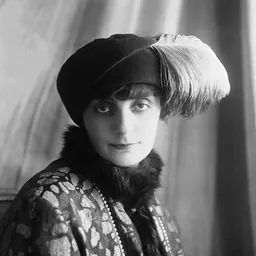
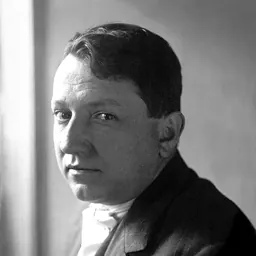
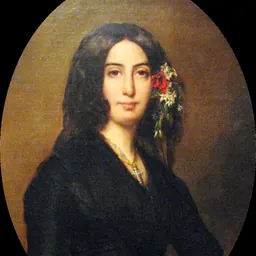


Related people
Same field, nearest in time

Contemporaries
People whose lives overlapped Hélène Picard's


Frequently asked questions
Who was Hélène Picard?
French poet (1873-1945)
When was Hélène Picard born?
Hélène Picard was born on 1 October 1873 in Toulouse.
When did Hélène Picard die?
Hélène Picard died on 1 February 1945.
What was Hélène Picard's occupation?
Hélène Picard was a poet and novelist.
What nationality was Hélène Picard?
Hélène Picard was French.
Sources & further reading
Cite this page
APA: Biography.guide. (2026). Hélène Picard. https://biography.guide/helene-picard/
MLA: "Hélène Picard." Biography.guide, https://biography.guide/helene-picard/.
Chicago: "Hélène Picard." Biography.guide. https://biography.guide/helene-picard/.
Data last updated: 2026-09-20 · Spot an error? Report a correction.
Page generated 2026-09-27 05:10 UTC