
About Émile Faguet
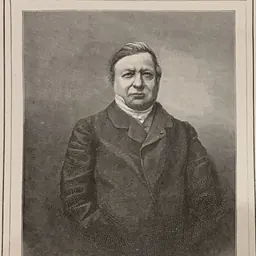
Lived 1847 – 1916 (aged 68). Émile Faguet was a French literary critic, theatre critic, journalist, university teacher, critic and writer.
Auguste Émile Faguet (; 17 December 18477 June 1916) was a French author and literary critic.
Biography Faguet was born at La Roche-sur-Yon, Vendée, and educated at the École normale supérieure in Paris. After teaching for some time in La Rochelle and Bordeaux, he returned to Paris to act as assistant professor of poetry in the university. Faguet became professor in 1897. He was elected to the Académie française in 1900, and received the ribbon of the Légion d'honneur in the next year.
Faguet acted as dramatic critic to the Soleil; from 1892 he was literary critic to the Revue Bleue; and in 1896 took the place of Jules Lemaître on the Journal des débats. Voltaire (1895). Cours de Poésie Française de l'Université de Paris (1897). Drame Ancien, Drame Moderne (1898). Questions Politiques (1899). Flaubert (1899). Discours de Réception de M. Émile Faguet (1901). André Chénier (1902). Propos Littéraires (5 vols., 1902–1910). Zola (1903). Le Libéralisme (1903). Propos de Théâtre (5 vols., 1903–1910). Simplification Simple de l’Orthographe (1905). Pour qu'on Lise Platon (1905). L'Anticléricalisme (1906). Le Socialisme en 1907 (1907). Problèmes Politiques du Temps Présent (1907). Le Pacifisme (1908). Discussions Politiques (1909). La Démission de la Morale (1910). Les Dix Commandements (10 vols., 1909–1910): De l'Amour de Soi De l'Amour. De la Famille. De l'Amitié. De la Vieillesse. De la Profession. La Patrie. De la Vérité. Le Devoir. De Dieu. Études Littéraires (1910). Madame de Sévigné (1910). Le Féminisme (1910). Les Amies de Rousseau (1910). Rousseau Contre Molière (1910). Vie de Rousseau (1911). En Lisant les Beaux Vieux Livres (1911). La Poésie Française (1911). Les Préjugés Nécessaires (1911). Rousseau Penseur (1912). Rousseau Artiste (1912). La Prose Française (1912). Ce que Disent les Livres (1912). L’Art de Lire (1912). De l'Idée de Patrie (1913). Monseigneur Dupanloup: Un Grand Évêque (1914). En Lisant Molière (1914). Chansons d'un Passant (1921).
In English translation Politicians & Moralists of the Nineteenth Century (1899). A Literary History of France (1907). "French Seventeenth Century Literature and its European Influence." In: The Cambridge Modern History (1908). The Cult of Incompetence (1911). Balzac (1914). Flaubert (1914). The Dread of Responsibility (1914). Initiation into Literature (1914). Initiation into Philosophy (1914). On Reading Nietzsche (1918).
Selected articles "Mme de Staël," Revue des Deux Mondes 83, 1887. "M. Ferdinand Brunetière," La Revue de Paris 1, 1894. "Le Livre a Paris," Cosmopolis 5, 1897. "Mesdames, Bientot au Vote!," La Revue des Deux Frances 4, 1898. "Corrections de Flaubert", La Revue Bleue, 3 June 1899. "All About a Hat," The Living Age 8, September 1900. "The Symbolical Drama," The International Quarterly 8, September 1903/March 1904. "Andrew Lang's 'The Mysteries of History'," The Sewanee Review 16, 1908. "Philosophie Scientifique." In: Henri Poincaré: Biographie, Bibliographie Analytique des Écrits, 1909. "La Vie de Nietzsche," Revue des Deux Mondes 58, 1910. "Essais et Notices," Revue des Deux Mondes, LXXXe Année, 1910. "François Maynard," Revue des Pyrénées 23, 1911. "Viele-Griffin," La Revue Bleue, 15 April 1912. "Thiers," Revue des Deux Mondes, XCe Année, 1920. "On the Nature of the Dramatic Emotion," The Tulane Drama Review 3 (2), 1958.
Miscellany Preface to Guillaume Guizot's Montaigne: Études et Fragments (1899). Introduction to Montesquieu's Lettres Persanes (1900). Preface to Édouard Ruel's Du Sentiment Artistique dans la Morale de Montaigne (1901). Preface to Séché & Bertaut's L'Évolution du Théâtre Contemporain (1908). Preface to Joseph Grasset's The Marvels Beyond Science (1910). Preface to André Gayot's Une Ancienne Muscadine, Fortunée Hamelin (1911). Preface to Arthur Meyer's Ce Que Mes Yeux On Vu (1911). Preface to Jean Harmand's A Keeper of Royal Secrets: Being the Private and Political Life of Madame De Genlis (1913). Introduction to Pierre Marivaux's Théâtre (1915). Introduction to Lessage's Gil Blas (n.d.) Introduction to Paul Courier's Lettres et Pamphlets (n.d.) Introduction to Alfred de Musset's Poésies (n.d.)
Don’t just read it —
keep it.
Full-length biographies made to live with: read them, listen on the way to work, watch them tonight.
- E-book
- Audio
- Video
Instant download · yours to keep · every purchase keeps this site free
Important facts
People in Émile Faguet's life
Named in this biography and alive at the same time



Related people
Same field, nearest in time



Contemporaries
People whose lives overlapped Émile Faguet's



Frequently asked questions
Who was Émile Faguet?
French literary critic (1847–1916)
When was Émile Faguet born?
Émile Faguet was born on 17 December 1847 in La Roche-sur-Yon.
When did Émile Faguet die?
Émile Faguet died on 7 June 1916 in Paris, 5th arrondissement of Paris.
What was Émile Faguet's occupation?
Émile Faguet was a literary critic, theatre critic, journalist, university teacher, critic and writer.
What nationality was Émile Faguet?
Émile Faguet was French.
Sources & further reading
Cite this page
APA: Biography.guide. (2026). Émile Faguet. https://biography.guide/emile-faguet/
MLA: "Émile Faguet." Biography.guide, https://biography.guide/emile-faguet/.
Chicago: "Émile Faguet." Biography.guide. https://biography.guide/emile-faguet/.
Data last updated: 2026-09-20 · Spot an error? Report a correction.
Page generated 2026-09-27 05:33 UTC