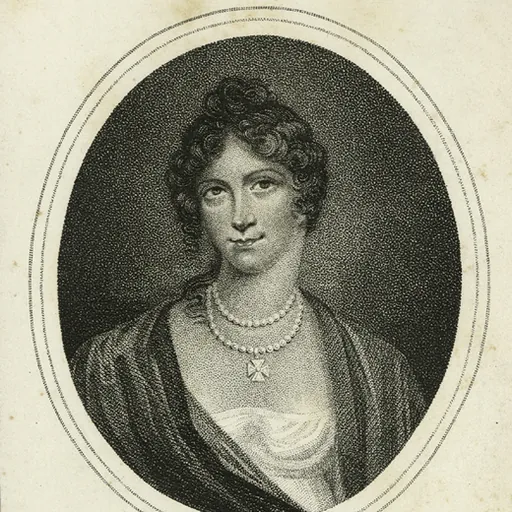
Helen Maria Williams
English novelist, poet, translator, religious dissenter, abolitionist (1759/62-1827)
About Helen Maria Williams
Lived 1759 – 1827 (aged 68). Helen Maria Williams was a British and French poet, translator, writer, novelist, memoirist and reporter.
Helen Maria Williams (17 June 1759 – 15 December 1827 ) was a British novelist, poet, and translator of French-language works. A religious dissenter, she was a supporter of abolitionism and of the ideals of the French Revolution; she was imprisoned in Paris during the Reign of Terror and spent much of the rest of her life in France. A controversial figure in her own time, the young Williams was favourably portrayed in a 1787 poem by William Wordsworth.
Early years and education She was born on 17 June 1759 in London to a Scottish mother, Helen Hay, and a Welsh army officer father, Charles Williams. Her father died in December 1762 when she was two.
Career In 1781, the Williams family moved to London, where Williams met Andrew Kippis, who would have great influence on her literary career and political views and brought her into contact with the leading London intellectuals of her time.
Her 1786 Poems touch on topics ranging from religion to a critique of Spanish colonial practices. She allied herself with the cult of feminine sensibility, deploying it politically in opposition to war ("Ode on the Peace," a 1786 poem about Peru) and slavery (the abolitionist "Poem on the Bill Lately Passed for Regulating the Slave Trade," 1788).
In the context of the Revolution Controversy, she came down on the side of the revolutionaries in her 1790 novel Julia and defied convention by travelling alone to revolutionary France, where she was hosted by Mme. Du Fossé, who had earlier, in London, given her lessons in French. Using her writings to give insight on revolutionary events for an international audience, historians have described Williams as an "early narrator" of the Age of Revolution . Her Letters Written In France marked a turn from being primarily a writer of poetry to one of prose. She enthusiastically attended the Fête de la Fédération on the anniversary of the storming of the Bastille and returning briefly to London in 1791 was a staunch, though not completely uncritical, defender of the Revolution. Returning to France in July 1791, she published a poem "A Farewell for two Years to England"; in fact she briefly visited England again in 1792, but only to persuade her mother and her sisters, Cecilia and Persis, to join her in France just as the country was moving toward the more violent phases of its revolution.
After the September Massacres of 1792, she allied herself with the Girondists; as a saloniere, she also hosted Mary Wollstonecraft, Francisco de Miranda and Thomas Paine. After the violent downfall of the Gironde and the rise of the Reign of Terror, she and her family were thrown into the Luxembourg prison where she was allowed to continue working on translations of French-language works into English, including what would prove to be a popular translation of Bernardin St. Pierre's novel Paul et Virginie, to which she appended her own prison sonnets. Upon her release, she travelled with John Hurford Stone to Switzerland. She was harshly criticised for this since Stone, separated from an unfaithful wife, was still legally a married man; the subsequent history of Williams and Stone's relationship only tended to confirm the rumours. Nonetheless, her few poems from this period continue to express Dissenting piety and were published in volumes with those of other religiously like-minded poets. In 1798, she published A Tour in Switzerland, which included an account of her travels, political commentary, and the poem "A Hymn Written Amongst the Alps."
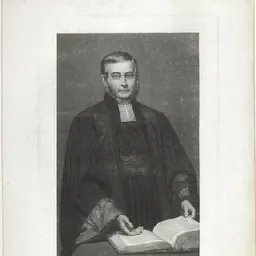
Williams' 1801 Sketches of the State of Manners and Opinions in the French Republic showed a continued attachment to the original ideals of the French Revolution but a growing disenchantment with the rise of Napoleon; as emperor, he would declare her ode "The Peace signed between the French and the English" (also known as the "Ode on the Peace of Amiens") to be treasonable to France. Nonetheless, he proved to be, in this respect, more lenient than the Montagnard government had been to this now-famous international literary figure: she spent a single day in prison and continued to live and write in Paris. After the Bourbon Restoration, she became a naturalised French citizen in 1818; nonetheless, in 1819 she moved to Amsterdam to live with Athanase Laurent Charles Coquerel, a nephew she had helped raise. However, she was unhappy in Amsterdam and soon returned to Paris, where, until her death in 1827, she continued to be an important interpreter of French intellectual currents for the English-speaking world.
Selected works Williams' works consist of poetry, novels, volumes of letters, and translations. The lines are not always clear, as she might include an original poem in the preface of another work, even in a translation of someone else's work.
Poetry
Edwin and Eltruda. A legendary tale, 1782, her first published work
Novels Julia, 1790
Translations Paul and Virginia by Bernardin de Saint Pierre. The political and confidential correspondence of Lewis XVI with observations on each letter. London and New York, 1803. Williams also translated (from French to English) several works of Alexander von Humboldt, who was German but wrote in French. Personal narrative of travels to the equinoctial regions of the New continent during the years 1799–1804, by Alexander de Humboldt and Aimé Bonpland; with maps, plans, etc. Longman, Hurst, Rees, etc., London 1814–1829 Researches concerning the institutions & monuments of the ancient inhabitants of America, with descriptions & views of some of the most striking scenes in the Cordilleras! Longman, Hurst, Rees, etc., London 1814
Don’t just read it —
keep it.
Full-length biographies made to live with: read them, listen on the way to work, watch them tonight.
- E-book
- Audio
- Video
Instant download · yours to keep · every purchase keeps this site free
Important facts
People in Helen Maria Williams's life
Named in this biography and alive at the same time



Related people
Same field, nearest in time

Contemporaries
People whose lives overlapped Helen Maria Williams's





Frequently asked questions
Who was Helen Maria Williams?
English novelist, poet, translator, religious dissenter, abolitionist (1759/62-1827)
When was Helen Maria Williams born?
Helen Maria Williams was born on 17 June 1759 in London.
When did Helen Maria Williams die?
Helen Maria Williams died on 15 December 1827 in Paris.
What was Helen Maria Williams's occupation?
Helen Maria Williams was a poet, translator, writer, novelist, memoirist and reporter.
What nationality was Helen Maria Williams?
Helen Maria Williams was British and French.
Sources & further reading
· Wikipedia: Helen Maria Williams
· DBpedia: Helen Maria Williams
Cite this page
APA: Biography.guide. (2026). Helen Maria Williams. https://biography.guide/helen-maria-williams/
MLA: "Helen Maria Williams." Biography.guide, https://biography.guide/helen-maria-williams/.
Chicago: "Helen Maria Williams." Biography.guide. https://biography.guide/helen-maria-williams/.
Data last updated: 2026-09-22 · Spot an error? Report a correction.
Portrait: Wikimedia Commons · author & licence
Page generated 2026-09-27 05:01 UTC