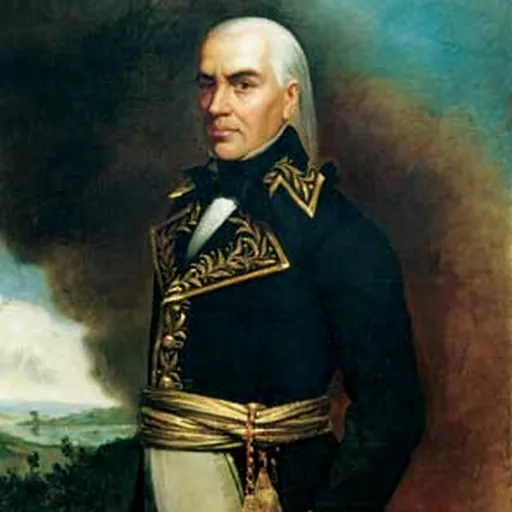
About Francisco de Miranda
Lived 1750 – 1816 (aged 66). Francisco de Miranda was a Spanish and Venezuelan politician, translator, writer, soldier and revolutionary.
Sebastián Francisco de Miranda y Rodríguez de Espinoza (28 March 1750 – 14 July 1816), commonly known as Francisco de Miranda , was a Venezuelan military leader and revolutionary who fought in the American Revolutionary War, the French Revolution and the Spanish American wars of independence. He is regarded as a precursor of South America's liberation from the Spanish Empire, and remains known as the "First Universal Venezuelan" and the "Great Universal American".
Born in Caracas in the Viceroyalty of New Granada into a wealthy family, Miranda left to pursue an education in Madrid in 1771 and subsequently enlisted in the Spanish army. In 1780, following Spain's entry into the American Revolutionary War, he was sent to Cuba and fought the British at Pensacola. Accused of espionage and smuggling, he fled to the United States in 1783. Miranda returned to Europe in 1785 and travelled through the continent, gradually formulating his plans for Spanish American independence. From 1791 on, he took an active part in the French Revolution, serving as a general during the Battle of Valmy and the Flanders campaign. An associate of the Girondins, he became disillusioned by the Revolution and was forced to leave for Britain.
In 1806, Miranda launched an unsuccessful expedition to liberate Venezuela with volunteers from the United States. He returned to Caracas following the outbreak of the Venezuelan War of Independence in 1810 and was granted dictatorial powers after the establishment of the First Republic. In 1812, the republic collapsed and Miranda was forced to finalize an armistice with Spanish royalists. Other revolutionary leaders including Simón Bolívar considered his capitulation treasonous, and allowed his arrest by the Spanish authorities. He was taken to a prison in Cádiz, where he died four years later.
Early life Miranda was born in Caracas, Venezuela Province, in the Spanish colonial Viceroyalty of New Granada, and baptized on 5 April 1750. His father, Sebastián de Miranda Ravelo, was a Spanish immigrant from the Canary Islands who had become a successful and wealthy merchant, and his mother, Francisca Antonia Rodríguez de Espinoza, was a wealthy Venezuelan. Growing up, Miranda enjoyed a wealthy upbringing and attended the finest private schools. However, he was not necessarily a member of high society; his father faced some discrimination from rivals due to his Canarian roots.
Education Miranda's father, Sebastián, always strove to improve the situation of the family, and in addition to accumulating wealth and attaining important positions, he ensured his children an advanced education. Miranda was first tutored by Jesuits, Jorge Lindo and Juan Santaella, before entering the Academy of Santa Rosa.
In 1770, Sebastián proved his family's rights through an official patent, signed by Charles III, which confirmed Sebastián's title and societal standing. The court ruling, however, created an irreconcilable enmity with the aristocratic elite, who never forgot the conflict nor forgave the challenge, which inevitably influenced subsequent decisions by Miranda. The efficiency demonstrated by Miranda in the Bahamas led Cagigal to recommend that Miranda be promoted to colonel under the command of the General Commander of the Spanish forces in Cuba, Bernardo de Gálvez, in St. Domingue, which the Spanish American authorities referred to Guarico. This should not be confused with the current Guárico State located today in central Venezuela.
At that time, the Spaniards were preparing a joint action with the French to invade Jamaica, which was a major British stronghold in the region, and Guárico was the ideal place to plan these operations, being close to the island and providing easy access for troops and commanders. Miranda was seen as the right person to plan operations because he had firsthand knowledge of the disposition of the troops and fortifications in Jamaica. However, the Royal Navy decisively defeated the French fleet at the Battle of the Saintes, so the invasion did not materialise and Miranda remained in Guarico.
Exile in the United States With the failure of the invasion of Jamaica, priorities for the Spanish authorities changed, and the process of the Inquisition against Miranda gained momentum. The authorities sent Miranda to Havana to be arrested and sent to Spain. In February 1783, Minister of the Indies José de Gálvez sent the Captain General of Havana, Don Luis de Unzaga y Amézaga to arrest him. The information of his impending arrest reached Miranda in advance. Aware that he would not be given a fair trial in Spain, Miranda managed, with the help of Cajigal and the American James Seagrove, to slip away on a ship bound for the United States, arriving at New Bern, North Carolina on 10 July 1783. During his time in the United States, Miranda made a critical study of its military defenses, demonstrating extensive knowledge of the development of American conflict and circumstances.
While there, Miranda prepared and fixed a correspondence technique, used for the rest of his journey: he would meet people through the gift or loan of books, and examine the culture and customs of the places through which he passed in a methodical way. Passing through Charleston, Philadelphia, and Boston, he dealt with different characters in American society. In New York City he met the prominent and politically connected Livingston family. Apparently Miranda had a romantic relationship with Susan Livingston, daughter of Chancellor Livingston. Although Miranda wrote to her for years, he never saw her again after leaving New York.
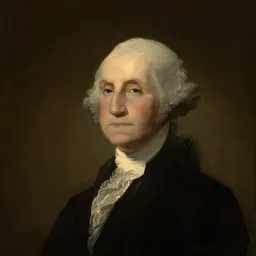
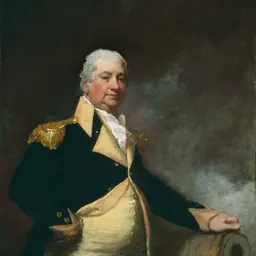
During his time in the United States, Miranda met with many important people. He was personally acquainted with George Washington in Philadelphia. He also met General Henry Knox,
In Europe (1785–1790)
Great Britain Miranda's house in London, where he lived between 1802 and 1810, until he traveled to Venezuela to join the independence movement. On 15 December 1784, Miranda left the port of Boston in the merchant frigate Neptuno for London and arrived in England on 10 February 1785. While in London, Miranda was discreetly watched by the Spanish, who were suspicious of him. The reports highlight that Miranda had meetings with people suspected of conspiring against Spain and people considered among the eminent scholars of the time.
Prussia The first secretary of the U.S. embassy, Colonel William Stephens Smith, whom Miranda knew from his stay in New York, came to England at around the same time.
He did not win support for his cause, but he later published excerpts from his journal about his experiences in Sweden. When visiting Gothenburg he had an affair with Christina Hall, the wife of one of the wealthiest merchants of Gothenburg John Hall. He also visited the family's country retreat, Gunnebo House, on the outskirts of the city.
Then Miranda made his way to Norway and arrived in Denmark in 1787. But in the Danish press he was accused of being a spy for the Empress of Russia. There is talk of extradition to Spain. But the King of Denmark assures him of his support. Francisco Miranda is bored at the Court of Denmark. He decides to go to Germany. Seeing the canal that connects the Baltic to the North Sea, he imagines the possibility of digging one in Panama that would join the Atlantic and the Pacific. He then traveled to Belgium and Switzerland and, on 24 May 1789, Francisco Miranda arrived in Paris.
Russia
Miranda then travelled throughout Europe, including present-day Belgium, Germany, Austria, Hungary, Poland, Greece and Italy, where he remained for over a year. After passing through Constantinople, Turkey, he visited the court of Catherine the Great, who was visiting Kiev and the Crimea. In Crimea, Miranda was received by the influential Prince Grigory Potemkin and later on, when the empress arrived, he was introduced to her. His sojourn in Russia took much longer because of the unexpected hospitality and attention received by the court and the empress. When she realized the dangers surrounding him, particularly the Inquisition order for his apprehension, she decided to protect him at all cost.
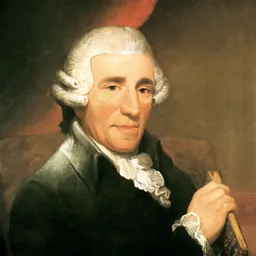
She instructed all Russian ambassadors in Europe to assist him in any form and with great care, in order to protect him from the persecution in place. She extended him a Russian passport. He was also introduced to the king of Poland, Stanisław II August, with whom he exchanged many intellectual and political views on America and Europe. The king invited him to Poland. In Hungary, he stayed in the palace of Prince Nicholas Esterházy, who was sympathetic to his ideas, and wrote him a letter of recommendation to meet the musician Joseph Haydn.
Attempts to abduct Miranda by the diplomatic representatives of Spain failed as the Russian ambassador in London, Semyon Vorontsov, declared on 4 August 1789, to the Secretary of State for Foreign Affairs, Francis Osborne, that Miranda, although a Spanish subject, was a member of the Russian diplomatic mission in London. Miranda made use of the Spanish–British diplomatic row known as the Nootka Crisis in February 1790 to present to some British cabinet ministers his ideas about the independence of Spanish territories in America.
In April 1788 Miranda visited the Dutch Republic and met with merchants on the Caribbean, the scientist Petrus Camper in the Hague and the banker Henry Hope at villa Welgelegen in Haarlem. Miranda was particularly interested in the organization and living conditions of prisons and charitable institutions.
Miranda and the French Revolution (1791–1798)
Starting in 1791, Miranda took an active part in the French Revolution Miranda assumed command.
Miranda subsequently commanded French forces in the Austrian Netherlands, capturing Antwerp. In January 1793, he was consulted about plans for an invasion of the Dutch Republic and recommended a large-scale advance between Nijmegen and Bergen op Zoom rather than the proposed limited invasion of Zeeland. During the subsequent invasion, Dumouriez advanced through Staats-Brabant towards Breda and Moerdijk, while Miranda's army was to protect the eastern flank. Miranda concentrated his forces around Maastricht from 6 February and began the siege later that month. Following the Allied victory at Aldenhoven on 1 March, however, his army was threatened with being cut off. He abandoned the siege on 2 March and withdrew towards Leuven, exposing the eastern flank of the French forces invading the Dutch Republic.
alt=Painting of a determined-looking man who is standing with his left hand on his hip and his right hand on a table. He wears a dark blue double-breasted military coat with red breeches. His hair or wig in the style of the late 18th century, powdered white and curled at the ears.
After the French defeat at the Battle of Neerwinden on 18 March, Dumouriez blamed Miranda for the failure of the French left wing and accused him of disobeying orders. Their relationship had already deteriorated: Dumouriez had attempted to involve Miranda in his political plans, but Miranda refused and threatened to warn his allies in the National Convention. Miranda appeared before the National Convention on 29 March and was subsequently questioned by the War Committee about his conduct at Maastricht and Neerwinden. In his defence, he produced Dumouriez's written orders and maintained that he had acted under the authority of the commander-in-chief. An investigation followed into the military leadership of Miranda.
In May, Miranda was tried before the Revolutionary Tribunal on charges of high treason and complicity with Dumouriez. He was defended by Claude François Chauveau-Lagarde and was unanimously acquitted. On 12 May, Eustace, whose professed love for Miranda had turned into bitter hatred, openly avowed that he considered it an honor to detest the accused, whereupon Fouquier-Tinville promptly announced that his testimony could not be accepted.
However, Marat denounced Chauveau-Lagarde as a defender of the guilty, while opposition to Miranda among the Jacobins continued. On 5 July 1793, the Committee of Public Safety ordered Miranda's arrest along with several of his Girondin friends and supporters. Robespierre personally questioned him before the Committee, where Miranda was accused of being a leading defender of the Girondins. He was subsequently imprisoned in La Force prison without a new trial.
Miranda seems to have survived by a combination of good luck and political expediency: the revolutionary government simply could not agree on what to do with him. He remained in La Force even after the fall of Robespierre in July 1794, and was not finally released until January of the following year. Now convinced that the whole direction taken by the Revolution had been wrong, he started to conspire with the moderate royalists against the Directory, and was even named as the possible leader of a military coup. He was arrested and ordered out of the country, only to escape and go into hiding.
Miranda House, 58 Grafton Way, Fitzrovia, was the London home of Miranda.
He reappeared after being given permission to remain in France, though that did not stop his involvement in yet another monarchist plot in September 1797. The police were ordered to arrest the "Peruvian general", as the said general submerged himself yet again in the underground. With no more illusions about France or the Revolution, he left for England in a Danish boat, arriving in Dover in January 1798. In London he lived at Great Pulteney Street (Soho), in 1800 at Marylebone Road and Tavistock Street, before moving to Grafton Way in 1803.
Expeditions in South America (1804–1808)
Diplomatic negotiations, 1804–1805
In 1804 with informal British help, Miranda presented a military plan to liberate the Captaincy General of Venezuela from Spanish rule.
Downie and 50 men were sent, but he judged the Spanish force to be too strong and withdrew. When 400 Spanish troops came from Maracaibo, Miranda realized that his force was too small to achieve anything further or to hold Santa Ana de Coro for long. On 13 August, Miranda ordered his force to set sail again. Lilly and her squadron then carried him and his men safely to Aruba. In these dire circumstances Miranda was given broad political powers by his government.
Defeat of the Republican army Bolívar lost control of San Felipe Castle of Puerto Cabello along with its ammunition stores on 30 June 1812. Deciding that the situation was lost, Bolívar effectively abandoned his post and retreated to his estate in San Mateo. By mid-July Monteverde had taken Valencia and Miranda also saw the republican cause as lost. He started negotiations with royalists that finalised an armistice on 25 July 1812, signed in San Mateo. Then Colonel Bolívar and other revolutionary officers claimed his actions as treasonous.
Miranda's arrest Bolívar and others arrested Miranda and handed him over to the Spanish Royal Army in La Guaira port. For his apparent services to the royalist cause, Monteverde granted Bolívar a passport, and Bolívar left for Curaçao on 27 August. Miranda went to the port of La Guaira intending to leave on a British ship before the royalists arrived, although under the armistice there was an amnesty for political offenses. Bolívar claimed afterwards that he wanted to shoot Miranda as a traitor but was restrained by the others; Bolívar's reasoning was that, "if Miranda believed the Spaniards would observe the treaty, he should have remained to keep them to their word; if he did not, he was a traitor to have sacrificed his army to it."
By handing over Miranda to the Spanish, Bolívar assured himself a passport from the Spanish authorities (passports which, nevertheless, had been guaranteed to all republicans who requested them by the terms of the armistice), which allowed him to leave Venezuela unmolested, and Miranda thought that the situation was hopeless.
Last years (1813–1816) Miranda never saw freedom again. His case was still being processed when he died in a prison cell at the Penal de las Cuatro Torres at the Arsenal de la Carraca, outside Cádiz, aged 66, on 14 July 1816. He was buried in a mass grave, making it impossible to identify his remains, so an empty tomb has been left for him in the National Pantheon of Venezuela.
Miranda's ideals Comparative maps of the envisioned nation of Colombia, according to Miranda (1798, left) and Bolívar (1826, right).
Political beliefs Miranda has long been associated with the struggle of the Spanish colonies in Latin America for independence. He envisioned an independent empire consisting of all the territories that had been under Spanish and Portuguese rule, stretching from the Mississippi River to Cape Horn. This empire was to be under the leadership of a hereditary emperor called the "Inca", in honor of the great Inca Empire, and would have a bicameral legislature. He conceived the name Colombia for this empire, after the explorer Christopher Columbus.
Freemasonry Miranda was often in the company of Freemasons, however "there is no proof whatsoever he was ever initiated in a masonic lodge." Also, "Miranda himself never claims to be a freemason."
Personal life After fighting for Revolutionary France, Miranda finally made his home in London, where he had two children, Leandro (1803 – Paris, 1886) and Francisco (1806 – Cerinza, Colombia, 1831), with his housekeeper, Sarah Andrews, whom he later married. He had a friendship with the painter James Barry, the uncle of the surgeon James Barry; Miranda helped to keep the secret that the latter was biologically female.
According to historian Linda de Pauw, "Miranda was an ardent feminist, named women as his literary executors, and published an impassioned plea for female education a year before Mary Wollstonecraft published her famous Vindication of the Rights of Women." Miranda's library was sold at auction by R. H. Evans. The first part was sold on 22 July 1828 (and two following days) in London and a copy of the catalogue is at Cambridge University Library (shelfmark Munby.c.132(12)).
Legacy and honours
An oil painting by the Venezuelan artist Arturo Michelena, Miranda en la Carraca (1896), which portrays the hero in the Spanish jail where he died, has become a graphic symbol of Venezuelan history, and has immortalized the image of Miranda for generations of Venezuelans. The Order of Francisco de Miranda was established in 1939 destined to reward the services done to science, to the progress of the country and to outstanding merit. In 2006, Venezuela's Flag Day was moved to 3 August, in honor of Miranda's 1806 landing at La Vela de Coro. Miranda's life was portrayed in the Venezuelan film Francisco de Miranda (2006), as well as in the unrelated film (2007). The best-known work of Venezuelan composer José Antonio Calcaño is the ballet Miranda en Rusia. There are statues of Miranda in Ankara, Bogotá, Caracas, Cádiz (Spain), Havana, London, Paris, Patras (Greece), Pensacola (USA), Philadelphia, Funchal, San Juan (Puerto Rico), São Paulo (Brazil), Saint Petersburg (Russia), Puerto de La Cruz (Spain), and Valmy (France). In France, the name of Miranda remains engraved on the Arc de Triomphe of Paris, which was built during the First Empire, and his portrait is in the Palace of Versailles. His statue is in the Square de l'Amérique-Latine in the 17th arrondissement. The house where Miranda lived in London, 27 Grafton Street (now 58 Grafton Way), Bloomsbury, has a blue plaque that bears his name, and functions today as the Consulate of Venezuela in the United Kingdom. The Miranda archive rests in the National Archives of Venezuela. In 2007, UNESCO added this collection of 63 volumes to its Memory of the World international register. In 2016 the Municipal Council of Caracas agreed to pardon Miranda by acquitting him of charges of treason, piracy, including the death penalty, imposed by the colonial councillors in 1806 after the failed attempt to liberate Venezuela from Spanish rule. At the commemoration of the bicentennial anniversary of his death, the Executive posthumously conferred on him the title of Chief Admiral.
Miranda's name has been honored several times, including in the name of the Venezuelan state, Miranda (created in 1889), a Venezuelan harbour, Puerto Miranda, a subway station and an important main avenue in Caracas, as well as a number of Venezuelan municipalities named "Miranda" or "Francisco de Miranda". One of the Bolivarian missions, Mission Miranda, is named after him. Other things named after him include a Caracas airbase, a Caracas park; a square in Pensacola, Florida; and the Venezuelan Remote Sensing Satellite-1 (VRSS-1 also known as "Satellite Francisco Miranda"), launched in 2012.
Gallery
Don’t just read it —
keep it.
Full-length biographies made to live with: read them, listen on the way to work, watch them tonight.
- E-book
- Audio
- Video
Instant download · yours to keep · every purchase keeps this site free
Important facts
People in Francisco de Miranda's life
Named in this biography and alive at the same time

Related people
Same field, nearest in time
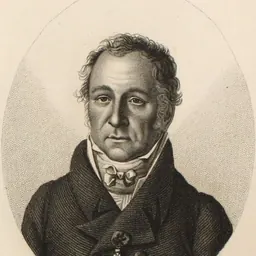


Contemporaries
People whose lives overlapped Francisco de Miranda's





Frequently asked questions
Who was Francisco de Miranda?
Venezuelan military leader (1750–1816)
When was Francisco de Miranda born?
Francisco de Miranda was born on 28 March 1750 in Caracas.
When did Francisco de Miranda die?
Francisco de Miranda died on 14 July 1816 in Cádiz.
What was Francisco de Miranda's occupation?
Francisco de Miranda was a politician, translator, writer, soldier and revolutionary.
What nationality was Francisco de Miranda?
Francisco de Miranda was Spanish and Venezuelan.
Sources & further reading
· Wikipedia: Francisco de Miranda
· DBpedia: Francisco de Miranda
Cite this page
APA: Biography.guide. (2026). Francisco de Miranda. https://biography.guide/francisco-de-miranda/
MLA: "Francisco de Miranda." Biography.guide, https://biography.guide/francisco-de-miranda/.
Chicago: "Francisco de Miranda." Biography.guide. https://biography.guide/francisco-de-miranda/.
Data last updated: 2026-09-20 · Spot an error? Report a correction.
Page generated 2026-09-27 05:09 UTC