
About Helen Gray Crotwell
Lived 1925 – 2006 (aged 80). Helen Gray Crotwell was a university teacher.
Helen Gray Crotwell (October 8, 1925 – April 9, 2006) served as the Associate Minister to Duke University from 1973 to 1979. She had previously served as the associate director of the Duke Methodist campus ministry. During her time at Duke, she published a compilation of sermons written by women and participated as a campus minister in the Silent Vigil at Duke University. Crotwell was the first woman appointed as a district superintendent in the United Methodist Church in North Carolina and one of the first in the Southeast. She served as the chairperson of the Commission on the Status and Role of Women in the United Methodist North Carolina Conference and advocated for inclusivity and female empowerment in the church. Her major interests included women and the church, women and theology, counseling, and the church and social justice.
Early life and education
Helen Crotwell was born on October 8, 1925, in Newberry, South Carolina, the daughter of James Calvin Crotwell and Mary Helen Gray Crotwell. She grew up in Leesburg, Georgia, where she and her family attended Leesburg Methodist, a small rural church.
Crotwell graduated from high school when she was sixteen years old. She went on to the Georgia State College for Women, now known as Georgia College & State University, in Milledgeville.
Early career
After leaving Lisle, Crotwell decided to pursue work in the church. Because the Methodist churches did not ordain women at the time, Crotwell obtained a master's degree in religious education from the Candler School of Theology at Emory University. There she was director of the Wesley Foundation, the Methodist ministry which served over 300 students. Crotwell found ministry at Winthrop to be dynamic and interesting, and she engaged with her students in discussions linking theology and social justice.
Wesley Foundation at Duke University
As the associate director of the Wesley Foundation at Duke University, Crotwell became a leader for students eager to become involved in the civil rights movement. Twice she travelled with students to protests in Washington, D.C. Faculty members joined in, and President Knight invited the crowd into his home. Students called for a campus minister, and so Crotwell joined the sit-in. She stayed the night, sleeping on a landing at the top of a stairwell and offering conversation, counsel, and companionship. The action, later known as the Silent Vigil at Duke University, was one of the earliest of the mass student protests that emerged around the world in the weeks following King’s assassination. The vigil lasted from April 5 to 11, 1968, and resulted in Duke’s recognition of a nonacademic employees’ union and a raise in worker’s salaries. She signed a statement written by Duke's Religious Life Council recommending the discontinuation of the university's Reserve Officers' Training Corps (ROTC), arguing that it perpetuated military interests. Crotwell also aided the Christmas Fund Committee at Duke in 1969, which organized funds to purchase gifts for American draft deserters who were living in Canada.
Ordination
After her work with the Wesley Foundation, Crotwell left Duke and moved to St. Mary’s College of Maryland, where she was an administrator in the residential halls. She and Crotwell were the first two women ordained as elders in the North Carolina Conference of the United Methodist Church, the highest order of ordained ministers in the church.
At the North Carolina Conference, Crotwell used her position as an elder to make gender equality a central concern. She served as the chairperson of the Commission on the Status and Role of Women.
Duke Chapel
Crotwell was asked to become the associate minister of Duke Chapel in 1973. At the time of her appointment, she was the only woman on the religious life staff at the chapel.
At Duke, she also worked with the Duke University Parish Ministry, the Sexuality Counseling Center, and various women’s groups. Along with teaching classes at the Divinity School, including one called "Women and Ministry," she also counseled students and staff members in the Duke community.
During her time at Duke, Crotwell also published a compilation of sermons written by a diverse group of both ordained and lay women from a variety of political and theological backgrounds. Her compilation, titled Women and the Word, was published by Fortress Press in 1978. She viewed the book as a refutation of the notion that women in ministry are not suited for the pulpit. She wrote that churches that invite female preachers “may well hear the word of God come to them in a new and different way”, but also observed that no major pulpit in the country was at that time filled by a woman. Some of Crotwell's sermons are available for perusal in the Duke Archives.
Crotwell brought her experiences as a female minister to bear in arenas outside the university as well. In August 1977, she was named as a trustee of the Resource Center for Women and Ministry of the South, founded by her close friend Jeanette Stokes, a Presbyterian minister. She spoke at various events outside of Durham as well. For example, in 1977 she presented a lecture at the University of North Carolina at Pembroke titled "What Values Will Have to Change for the American Woman?", and in 1978 she participated in a panel in Chapel Hill, North Carolina, for the American Association of University Women, in which she discussed her experience as a woman in a traditionally male profession. In 1977, Crotwell also served as a principle speaker at a United Methodist conference at the University of San Diego, where she delivered a talk on gender inclusivity in Christian theology.
Dismissal
In October 1978, the Reverend Robert Young, Duke University minister, informed Crotwell that her contract at Duke Chapel would not be renewed. He explained that the university had recently adopted an "unwritten policy in which junior positions are changed regularly to provide new and creative thought." The decision upset faculty and students across the campus. Some felt that Crotwell would not have been dismissed had she been male, and suspected that Young may have felt threatened by her popularity on campus. Crotwell was widely seen as one of the most visible female leaders on campus.
A student group called the “Coalition on Chapel Policy” formed in response and circulated a petition calling for Crotwell’s reinstatement. They were troubled not just by her dismissal, but also the precedent it set. In the Duke student newspaper, Charlotte Dickson, a member of the Coalition on Chapel Policy, wrote, “If women are confined to junior positions which are subject to frequent turnover, their chances of advancing are slim.”
Other groups also acted on Crotwell’s behalf. Members of the Duke Chapel Choir circulated a petition of their own. Female faculty and staff members in a group called “The Women’s Network” partnered with students to petition to have Young reverse his decision and suggest alternate hiring and contractual procedures. They also wrote to several universities to collect information about their associate ministers' contracts. Their efforts prompted Duke's trustees to ask for a plan for a Duke Religious Affairs Council. In response, Duke's president, Terry Sanford, released a statement expressing concern and calling for the creation of an administrative body called the University Council on Religious Life. Young, however, did not revoke the dismissal.
In 1980, as per the recommendation of both the network and President Sanford, the university established the Religious Life Council to advise the chapel minister on policy and personnel decisions. After Crotwell's dismissal, the Religious Life Council remained to improve transparency and accountability in chapel administrative procedure.
James B. Craven III, Duke class of 1967, wrote in the Chronicle on June 18, 1979, that Crotwell's dismissal “Upset just about everybody connected with Duke—men and women, whites and blacks, faculty and students. Helen’s two new churches are to be congratulated, but Duke has suffered a real loss.”
Later career
In June 1979, Crotwell was appointed minister of two rural churches in Granville County, North Carolina: Banks Church, and Grove Hill Church. She preached at both churches each Sunday morning. Under her ministry, church attendance and tithing increased.
At Banks and Grove Hill, Crotwell instituted small changes to make the institutions more inclusive of women. She incorporated gender-inclusive language, sometimes discarding masculine pronouns for God and encouraging her parishioners to use terms like "chairperson" rather than "chairman".
On July 1, 1986, Crotwell was appointed Fayetteville District Superintendent in the United Methodist Church while serving as pastor at the Wake Forest United Methodist Church.
In 1992, she was asked to run for the position of bishop by women of the southeastern jurisdiction of the nationwide United Methodist Church governing body. Her candidacy made her the first woman endorsed as a nominee for the episcopacy of the United Methodist Church. Crotwell did not win the election and the bishops remained all-male. Her ministry was highlighted at the United Methodist Annual Conference on June 15, 2006, during the celebration of the 50th anniversary of women’s full ordination in the United Methodist Church.
Don’t just read it —
keep it.
Full-length biographies made to live with: read them, listen on the way to work, watch them tonight.
- E-book
- Audio
- Video
Instant download · yours to keep · every purchase keeps this site free
Important facts
People in Helen Gray Crotwell's life
Named in this biography and alive at the same time
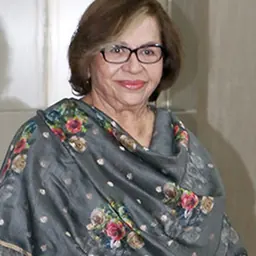

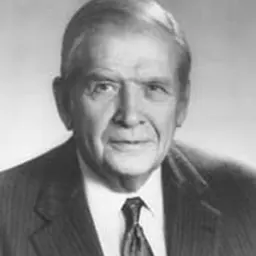


Related people
Same field, nearest in time

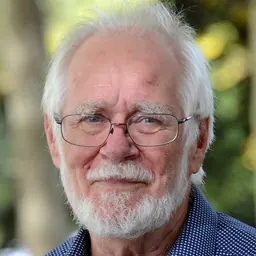
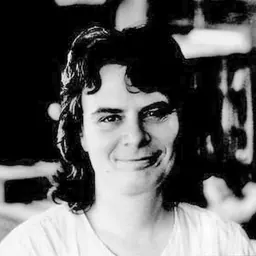


Contemporaries
People whose lives overlapped Helen Gray Crotwell's



Frequently asked questions
Who was Helen Gray Crotwell?
American campus minister (1925–2006)
When was Helen Gray Crotwell born?
Helen Gray Crotwell was born on 8 October 1925 in Newberry.
When did Helen Gray Crotwell die?
Helen Gray Crotwell died on 9 April 2006 in Cordele.
What was Helen Gray Crotwell's occupation?
Helen Gray Crotwell was a university teacher.
Sources & further reading
· Wikipedia: Helen Gray Crotwell
· DBpedia: Helen Gray Crotwell
Cite this page
APA: Biography.guide. (2026). Helen Gray Crotwell. https://biography.guide/helen-gray-crotwell/
MLA: "Helen Gray Crotwell." Biography.guide, https://biography.guide/helen-gray-crotwell/.
Chicago: "Helen Gray Crotwell." Biography.guide. https://biography.guide/helen-gray-crotwell/.
Data last updated: 2026-09-22 · Spot an error? Report a correction.
Page generated 2026-09-27 05:32 UTC