
About Heinrich Vogt
Lived 1890 – 1968 (aged 77). Heinrich Vogt was a German astronomer, astrophysicist and university teacher, known for Vogt-Russell theorem.
Heinrich Vogt (October 5, 1890 – January 23, 1968) was a German astronomer.
Early life
Vogt was born on October 5, 1890, in Gau-Algesheim, Rhineland-Palatinate, Germany to Philipp Vogt, a farmer, and his wife Margaretha.
Education
In 1911, after graduating from high school in Mainz, Vogt enrolled at the University of Heidelberg to study astronomy, mathematics, and physics, where he was under the tutelage of Max Wolf. His studies were interrupted due to World War I, but he continued his scientific career and earned a PhD in 1919 with a dissertation on the topic "On the theory of Algol variables". In 1921, he completed a Habilitation on "Photometric studies and brightness measurements in the cluster h and χ Persei".
Work and academic appointments
In 1926, Vogt was appointed as an associate professor at the University of Heidelberg as well as the chief observer at Heidelberg State Observatory. In 1929 he was appointed as a full professor at the University of Jena as well as director of Jena Observatory.
In 1931, he became a member of the Nazi Party and rose to become a Politischer Leiter and the Nazi Party's liaison at the university. In 1933, he became a member of the Sturmabteilung, the paramilitary branch of the Nazi Party, and rose to the rank of Obersturmführer.
Vogt became a full professor at the University of Heidelberg in 1933, succeeding Max Wolf. From 1933 to 1945 he was the director of Heidelberg State Observatory.
On 9 December 1912 Vogt discovered an asteroid, 735 Marghanna, which he named in honor of his mother. The minor planet 1439 Vogtia, discovered by astronomer Karl Wilhelm Reinmuth in 1937 was named after him.
Personal life
Vogt married Margarete Braun and had a son and a daughter.
Don’t just read it —
keep it.
Full-length biographies made to live with: read them, listen on the way to work, watch them tonight.
- E-book
- Audio
- Video
Instant download · yours to keep · every purchase keeps this site free
Important facts
People in Heinrich Vogt's life
Named in this biography and alive at the same time



Related people
Same field, nearest in time
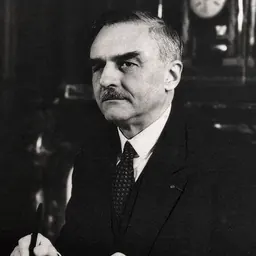





Contemporaries
People whose lives overlapped Heinrich Vogt's
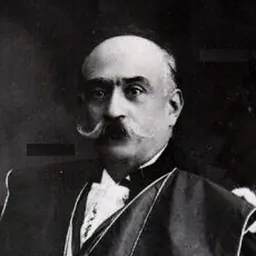
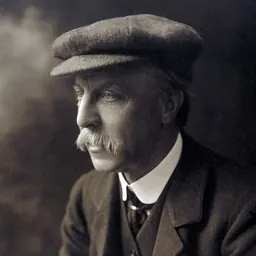



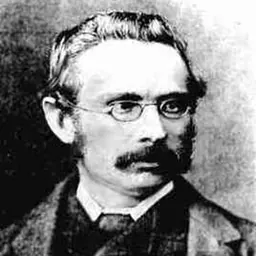
Frequently asked questions
Who was Heinrich Vogt?
German astronomer (1890–1968)
When was Heinrich Vogt born?
Heinrich Vogt was born on 5 October 1890 in Gau-Algesheim.
When did Heinrich Vogt die?
Heinrich Vogt died on 23 January 1968 in Heidelberg.
What was Heinrich Vogt's occupation?
Heinrich Vogt was an astronomer, astrophysicist and university teacher.
What was Heinrich Vogt known for?
Heinrich Vogt was known for Vogt-Russell theorem.
What nationality was Heinrich Vogt?
Heinrich Vogt was German.
Sources & further reading
· DBpedia: Heinrich Vogt (astronomer)
Cite this page
APA: Biography.guide. (2026). Heinrich Vogt. https://biography.guide/heinrich-vogt-astronomer/
MLA: "Heinrich Vogt." Biography.guide, https://biography.guide/heinrich-vogt-astronomer/.
Chicago: "Heinrich Vogt." Biography.guide. https://biography.guide/heinrich-vogt-astronomer/.
Data last updated: 2026-09-20 · Spot an error? Report a correction.
Page generated 2026-09-27 04:59 UTC