
About Heinrich Laufenberg
Lived 1872 – 1932 (aged 60). Heinrich Laufenberg was a German historian, journalist, politician and editing staff.
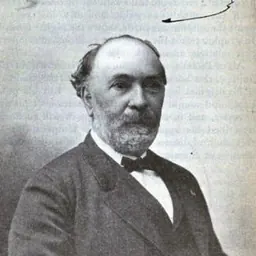
Heinrich Laufenberg (19 January 1872 – 3 February 1932) was a leading German communist and one of the first to develop the idea of National Bolshevism. Laufenberg was a history academic by profession and was also known by the pseudonym Karl Erler.
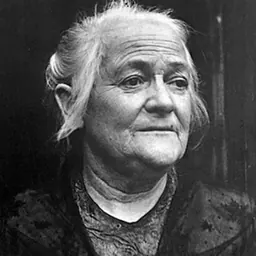
SPD activism Initially a member of the Centre Party, Laufenberg joined the Social Democratic Party of Germany (SPD) in the early 1900s. He became associated with a faction on the left of the party led by Wilhelm Schmitt and Peter Berten and when this group gained the upper hand within the Düsseldorf party in 1904 Laufenberg was appointed editor of the party organ Volkszeitung. Laufenberg also worked as an educationalist within the party, offering basic courses on socialism to party members of Düsseldorf. At this point in his career Laufenberg endorsed orthodox Marxism and supported Clara Zetkin in her ideological struggles with revisionists like Gerhard Hildebrand. He left the city in 1908 when he moved to Hamburg, leaving the Düsseldorf group without their leading intellectual.
Hamburg leadership In Hamburg Laufenberg continued to work on the left of the SPD before becoming a member of the Independent Social Democratic Party of Germany (USPD), which broke from the SPD following the SPD's support for German involvement in the First World War. Laufenberg's popularity grew as the war dragged on and people began to tire of involvement in the conflict.
On 30 November 1918, during the German Revolution, he was elected President of the Council of the Workmen and Soldiers of Hamburg. As head of this group Laufenberg oversaw the dissolution of Hamburg's Senate and Bürgerschaft and their replacement with Workers' Council government. Before long however he agreed to bring the two institutions back in what was seen as a concession to the city's business interests. Indeed, the banks in the city had threatened to withdraw credit to the city authorities if these institutions were not re-established. Hamstrung by his reliance on the banks and criticism from the SPD Laufenberg's stock fell dramatically and he faced widespread demonstrations against his leadership. Unable to sustain his position, Laufenberg resigned on 19 January 1919 and handed leadership of the Council over to the SPD. Following the war, in October 1919, the pair made contact with Karl Radek and suggested a policy to him that they were already calling 'National Bolshevism' ). They sought a dictatorship of the proletariat which would harness German nationalism and place the country back on a war footing against the occupying Allied armies in alliance with the Soviet Union. The idea initially met with some enthusiasm amongst members of the Spartacus League.
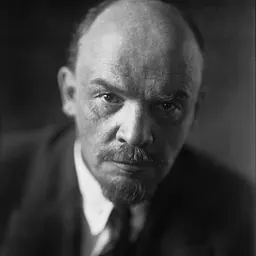
Such support soon ebbed however when Vladimir Lenin publicly denounced the policy, claiming that Laufenberg was seeking a war coalition with the German bourgeoisie, before branding him as "absurd". Radek, after showing initial enthusiasm, soon also denounced Laufenberg's National Bolshevism vehemently.
Later years Laufenberg went on to become a founder member of the Communist Workers' Party of Germany (KAPD), joining Wolffheim at the Heidelberg conference establishing the party. By 1920 however he had been expelled from the party, with his national Bolshevism the official reason for his departure. Laufenberg became persona non grata in German communist circles and Radek, who had earlier been a critic, was accused of following his ways when he made a speech praising Albert Leo Schlageter in 1923. Unlike his ally Wolffheim, who became involved in groups on the fringes of the Nazi Party, he retired from politics and in 1932 was mourned as a pioneer of National Bolshevism by Ernst Niekisch who wrote that "in 1919 Laufenberg already thought in terms of continents".
Don’t just read it —
keep it.
Full-length biographies made to live with: read them, listen on the way to work, watch them tonight.
- E-book
- Audio
- Video
Instant download · yours to keep · every purchase keeps this site free
Important facts
People in Heinrich Laufenberg's life
Named in this biography and alive at the same time



Related people
Same field, nearest in time
Contemporaries
People whose lives overlapped Heinrich Laufenberg's



Frequently asked questions
Who was Heinrich Laufenberg?
German politician (1872-1932)
When was Heinrich Laufenberg born?
Heinrich Laufenberg was born on 19 January 1872 in Cologne.
When did Heinrich Laufenberg die?
Heinrich Laufenberg died on 3 February 1932 in Hamburg.
What was Heinrich Laufenberg's occupation?
Heinrich Laufenberg was a historian, journalist, politician and editing staff.
What nationality was Heinrich Laufenberg?
Heinrich Laufenberg was German.
Sources & further reading
· Wikipedia: Heinrich Laufenberg
· DBpedia: Heinrich Laufenberg
Cite this page
APA: Biography.guide. (2026). Heinrich Laufenberg. https://biography.guide/heinrich-laufenberg/
MLA: "Heinrich Laufenberg." Biography.guide, https://biography.guide/heinrich-laufenberg/.
Chicago: "Heinrich Laufenberg." Biography.guide. https://biography.guide/heinrich-laufenberg/.
Data last updated: 2026-09-25 · Spot an error? Report a correction.
Page generated 2026-09-27 05:12 UTC