
Heinrich Bongartz
German flying ace
About Heinrich Bongartz
Lived 1892 – 1946 (aged 53). Heinrich Bongartz was a German fighter pilot.
Heinrich Bongartz PlM, HOH, IC (31 January 1892 – 23 January 1946), was a German World War I fighter pilot and flying ace credited with 33 confirmed victories and one unconfirmed. He also served as a night fighter commander in World War II.
Early life Heinrich Bongartz was born in Gelsenkirchen, Westphalia, on 31 January 1892. In civilian life, Bongartz was a schoolteacher. He transferred to the Luftstreitkräfte (German Air Service) for pilot training with Flieger-Abteilung (Flier Detachment) 5 and was commissioned a Leutnant in March, 1916. From there, he had a short lived tour with Kampfstaffel (Tactical Bomber Squadron) 27; a unit that was soon to be recast as Schutzstaffel (Protection Squadron) 8. Bongartz was finally assigned to flying fighter aircraft with Royal Prussian Jagdstaffel 36 in April 1917. Possibly because of this wound, he did not score again until 26 September. Also in September 1917, he succeeded to command of Jasta 36. In October, he scored eight times, raising his count to 20. In November 1917, he was wounded again, but still managed to down another five enemy aircraft, with one more unconfirmed. On 24 November 1917, he was awarded the Royal House Order of Hohenzollern. The airplane, so badly shot about that it had 28 bullet holes in the cowling alone, was scrapped.
After he recovered from his wound, he became the commander of the Aircraft Test Center at Aldershof. While serving as test pilot there, he wrote a report on the Dornier-Zeppelin D.I fighter prototype, which was the first plane to use a stressed skin/torsion box structure. Bongartz's estimate of it was, "Doesn't possess characteristics of a modern fighter. Ailerons too heavy." Nevertheless, the engineering originated by Claudius Dornier is still in use today.
Between the wars Once the war ended, he served as a postwar Director of the German Aeroplane Inspectorate. After helping deactivate the air service in which he had served so gallantly, he went on to fight against the Spartakists who were attempting to overthrow the German government. The leg wound he suffered in this fight finally ended his military career.
World War II and beyond During World War II, he originally served as an Oberstleutnant in supply during 1941 to 1942 at Pleskau on the Eastern Front. 1943 found him as a night fighter commander at Grove in Denmark. In 1944, he transferred to command of night fighter efforts in Finland. He transferred once more, and served through war's end.
He survived World War II, only to die of a heart attack on 23 January 1946, while in Rheinberg.
Inline citations
Don’t just read it —
keep it.
Full-length biographies made to live with: read them, listen on the way to work, watch them tonight.
- E-book
- Audio
- Video
Instant download · yours to keep · every purchase keeps this site free
Important facts
People in Heinrich Bongartz's life
Named in this biography and alive at the same time

Related people
Same field, nearest in time
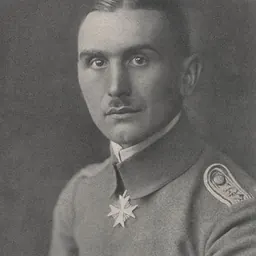
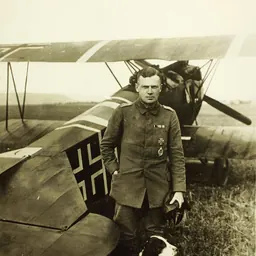



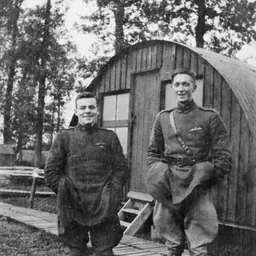
Contemporaries
People whose lives overlapped Heinrich Bongartz's
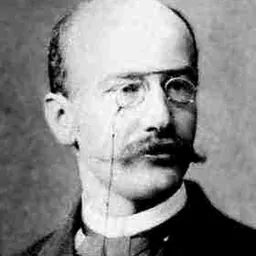


Frequently asked questions
Who was Heinrich Bongartz?
German flying ace (1892–1946)
When was Heinrich Bongartz born?
Heinrich Bongartz was born on 31 January 1892 in Gelsenkirchen.
When did Heinrich Bongartz die?
Heinrich Bongartz died on 23 January 1946 in Rheinberg.
What was Heinrich Bongartz's occupation?
Heinrich Bongartz was a fighter pilot.
What nationality was Heinrich Bongartz?
Heinrich Bongartz was German.
Sources & further reading
· Wikipedia: Heinrich Bongartz
Cite this page
APA: Biography.guide. (2026). Heinrich Bongartz. https://biography.guide/heinrich-bongartz/
MLA: "Heinrich Bongartz." Biography.guide, https://biography.guide/heinrich-bongartz/.
Chicago: "Heinrich Bongartz." Biography.guide. https://biography.guide/heinrich-bongartz/.
Data last updated: 2026-09-20 · Spot an error? Report a correction.
Page generated 2026-09-27 05:17 UTC