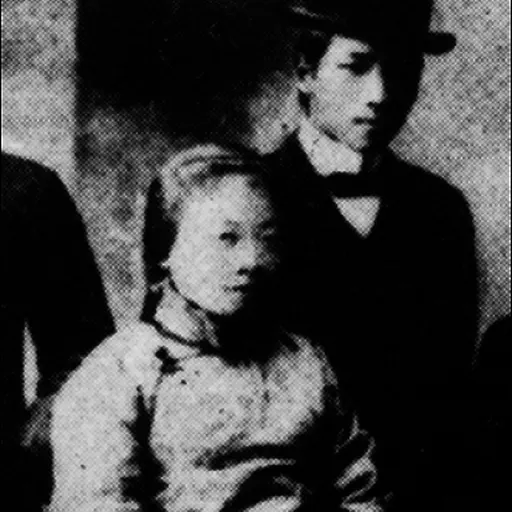
About He Zhen
Lived 1884 – 1920 (aged 35–36). He Zhen was a Chinese women's rights activist and anarchist.
He-Yin Zhen (, ) was an early 20th-century Chinese feminist and anarchist.
She was born as He Ban in Yizheng, Jiangsu, but took the name He Zhen (何震, He "Thunderclap") when she married the noted scholar Liu Shipei in 1903. Despite this, she signed her published writings as He-Yin Zhen (何殷震) to include her mother's maiden name. She published a number of strong attacks in anarchist journals on male social power, arguing that society could not be free without the liberation of women.
Biography He-Yin was born into a prosperous Jiangsu family and received a good education in the Confucian classics, despite being female. She married Liu Shipei in 1903 and moved with him to Shanghai, where she continued her education at the Patriotic Women's School run by Cai Yuanpei.
She and Liu fled from the Manchu government to Tokyo in 1907, where she became an active member of a Chinese anarchist group and a major contributor to several journals. She contributed to Tianyi bao (Natural Justice), which published from 1907 to 1908, as well as to the Paris-based journal Xin Shiji (New Century or New Era), edited by the anarchist group led by Li Shizeng and Wu Zhihui. She and her husband both wrote under pen names, and many of her articles were misattributed to Liu.
He-Yin also founded the Women's Rights Recovery Association (Nüzi Fuquan Hui), which called for the use of force to end the male oppression of women, and advocates resistance to the ruling class and capitalists, while endorsing traditional values such as perseverance and respect for the larger community.
In 1909, after a falling-out with the conservative but strongly anti-Manchu scholar Zhang Taiyan, she and Liu returned to China to work with the Manchu government. After the 1911 Revolution, Liu worked with the new government and was a faculty member at Peking University.
The end of He-Yin's life remains uncertain. Following Liu's death from tuberculosis in 1919, there was a rumor that she became a Buddhist nun and ordained under the name Xiao Qi. However, there were also reports that she died of heartbreak or a mental disorder.
Philosophy
He-Yin had a different approach to the "Women Question" and women's oppression that were raised in China in the late 19th century. She believed that gender and social class were inseparable, and analyzed the misery endured by Chinese women for millennia from the perspective of labor. She distinguished herself from contemporary feminist thinkers in that she considered anarchy the one condition in which women could be fully liberated. Unlike many of her contemporaries, such as Liang Qichao, who viewed the liberation of women as a means to revive China, He-Yin made resolving women's oppression her ultimate goal.
He-Yin's feminism was also formed through her critiques of capitalism, especially of inhumanity. In her opinion, women would never be free if capitalism persisted. This line of critique provided a logical and powerful philosophy against mainstream western feminism of the time, which prioritized women's suffrage as the ultimate liberation of women. He-Yin criticized not only the social forms women were subjected to but also the political and cultural suppression that limited the freedom of women.
Labor Theory According to He-Yin, the organization of capital around the wage relation relied on less visible forms of social production, such as the unwaged reproductive labor in which women engaged. Approaching the concept of labor theory from a historical point of view, she argued that throughout history, Chinese women were relegated to closed quarters, such as the home and family, and prohibited from connecting with the outside world. They could not provide for themselves, which made them dependent on their husbands, and thus subject to their power and authority. She argued against male thinkers who denounced women for dependence on their husbands and their inferiority to men, criticizing their hypocrisy. She pointed out that since women were not allowed to leave their inner quarters, it was unthinkable for them to find a job to support themselves. Although lower-class women were part of the workforce, they were forced into labor because they had to subsidize their family income, thus whose labor was not viewed as their own production but something insignificant in a male-dominated society.
One popular proposal to solve the purported problem of women's lack of productivity was to call women into the labor force. However, He-Yin saw the flaws in this solution promulgated by male feminists of the time. She pointed out that under capitalism, women remained exploited even if they achieved professional independence in factories as workers or in offices as secretaries. In workplaces, women had to obey their superiors and follow orders since they depended on them for wages. The capitalist system put women into a situation where their work was undervalued: even if women received their full wages, the wages were still low to benefit the capitalists. Women would never rise up and earn a fair share in a capitalist society. He-Yin also observed that modern machinery reorganized technological knowledge that "Western skills are being transmitted as specializations in schools" but "poor women have no money for tuition."
Feminism He-Yin's critique focused on two aspects of Chinese patriarchy at that time. First is directly against traditional Chinese Confucianism, which oppressed women for thousands of years in China's history. Traditional Chinese Confucianism defines women's duty and life purpose, which restrain women's basic human rights like working, attending imperial exams (Keju), studying, and equal domestic status. Other Chinese feminists at that time also upheld similar objections against Confucianism. The second aspect is against the resignification of women in late nineteenth- and early twentieth-century Chinese liberal feminist circles. Although society and most Chinese scholars at that time widely judged and rethought the flaws and backwardness of Confucianism, only women in the urban areas gained more rights to improve their social status and living condition. The resignification of women still did not equalize the power gap between men and women. In He-Yin's ideals. the true liberation had not been realized yet.
He-Yin's 1907 article On the Question of Women's Liberation sharply pointed out facts about marriage in China and the western world. She first mentioned that women in the western world have the freedom to divorce, get an education, and stay single. Apparently, women in the western world are free, but she defined such freedom as physical and unreal liberation. She emphasized that Chinese women's imitation and Chinese feminism that following the western path is wrong. She suggested that "吾决不望女子仅获伪自由、伪平等也,吾尤望女子取获真自由、真平等也" ("I absolutely do not want women to gain only false freedom and equality, I especially hope that women gain true freedom and true equality"). She closed the essay by writing, "Labor is a natural calling for women. But everyone, not just poor women. When labor is borne only by some poor women, then it is a kind of subservient labor. So, in our opinion, if there were the implementation of a system of communalized property, then everyone, whether man or woman, would labor equally..."
"On Feminist Antimilitarism", He-Yin partnered with her husband, Chinese anarchist and activist Liu Shipei, to publish the journal. In it, many anarchists, including He-Yin herself, published articles challenging early 20th century values. He-Yin edited the journal as well. The journal itself was antigovernment and heavily influenced by questions regarding women and their roles in society. Many other topics were addressed that particularly encouraged revolution. The founder of Tianyi Bao argued that social revolution needs "the destruction of established society and the realization of human equality," a goal that includes not only women's revolution but also racial, political, and economic revolutions. He-Yin is often considered to have encouraged the radicalism that occurred post-publication, as her writings were interpreted as radicalized. She was also one of the few feminist writers at the time who wrote from a female perspective. During the early 20th century, many of the feminist writers of Chinese society were men, which made He-Yin's perspective much more radical, as she advocated reform through complete overturn of government and capitalist systems. Throughout the years however, He-Yin published fewer articles in Tianyi bao, but these articles, in addition to her own published essays, are some of the few accounts credibly written on He-Yin's behalf. Underneath He-Yin's guidance and publication, it was heavily concerned with feminism, but as He-Yin began to publish less, the journal soon became more geared to anarchism.
But despite He-Yin's attempt to balance anarchism and feminism, the journal soon focused on anarchism. This also demonstrated the overall change in Chinese society, which at first focused on addressing women's roles in society, but soon became more interested in anarchy and government institutions, and preventing Asia from falling into the western Capitalist model.
Don’t just read it —
keep it.
Full-length biographies made to live with: read them, listen on the way to work, watch them tonight.
- E-book
- Audio
- Video
Instant download · yours to keep · every purchase keeps this site free
Important facts
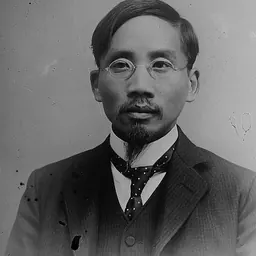
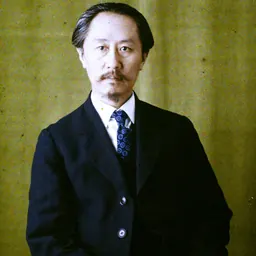
People in He Zhen's life
Named in this biography and alive at the same time

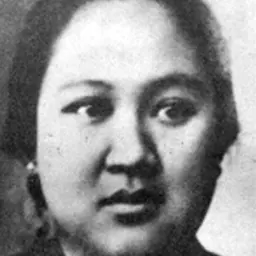
Related people
Same field, nearest in time



Contemporaries
People whose lives overlapped He Zhen's



Frequently asked questions
Who was He Zhen?
Chinese feminist, anarchist, revolutionary
When was He Zhen born?
He Zhen was born in 1884 in Jiangsu.
When did He Zhen die?
He Zhen died in 1920.
What was He Zhen's occupation?
He Zhen was a women's rights activist and anarchist.
What nationality was He Zhen?
He Zhen was Chinese.
Sources & further reading
Cite this page
APA: Biography.guide. (2026). He Zhen. https://biography.guide/he-zhen-women-s-rights-activist/
MLA: "He Zhen." Biography.guide, https://biography.guide/he-zhen-women-s-rights-activist/.
Chicago: "He Zhen." Biography.guide. https://biography.guide/he-zhen-women-s-rights-activist/.
Data last updated: 2026-09-23 · Spot an error? Report a correction.
Portrait: Wikimedia Commons · author & licence
Page generated 2026-09-27 05:05 UTC