
Cai Yuanpei
Chinese educator, Esperantist and the president of Peking University
About Cai Yuanpei
Lived 1868 – 1940 (aged 72). Cai Yuanpei was a Chinese politician, esperantist, philosopher, university teacher, scholar and educator.
Cai Yuanpei (; 1868–1940), spelt Ts'ai Yuan-p'ei during his lifetime, was a Chinese philosopher and politician who was an influential figure in the history of Chinese modern education. He made contributions to education reform with his own education ideology. He was the president of Peking University, and founder of the Academia Sinica. He was known for his critical evaluation of Chinese culture and synthesis of Chinese and Western thinking, including anarchism. He got involved in the New Culture, May Fourth Movements, and the feminist movement. His works involve aesthetic education, politics, and education reform.
Biography
Born in Shanyin County, Shaoxing, Zhejiang, Cai was appointed to the Hanlin Academy at 26. In 1898, he became involved in administering institutes and became: Superintendent of Shaoxing Chinese-Western School (紹興中西學堂監督) Head of Sheng District Shanshan College (嵊縣剡山書院院長) Director-Teacher of the Special Class (特班總敎習) of Nanyang Public School (predecessor of Shanghai Jiao Tong University)
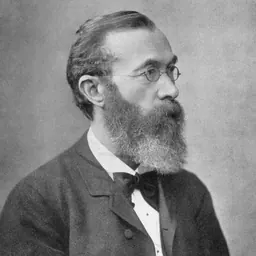
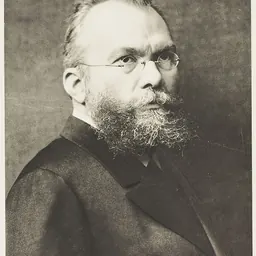
He established Guangfuhui in 1904 and joined Tongmenghui in Paris the next year, and became a member of the Chinese anarchist group led by Wu Zhihui, and Li Shizeng. He studied philosophy, psychology, and art history in the Universität Leipzig of Germany in 1907 under Karl Lamprecht and Wilhelm Wundt.
He became Minister of Education in the new Republic of China in 1912. As Minister of Education, Cai advocated that film should be used to support public education.
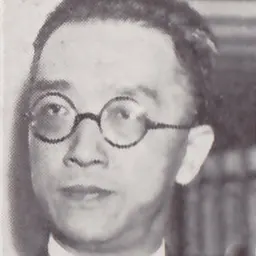
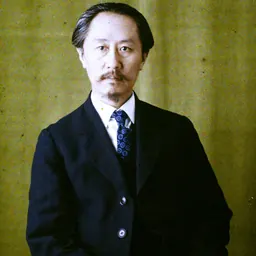
Cai returned to China in 1916 and served as the President of Peking University the following year. There he resumed his support, begun in his Paris years with Li Shizeng, for the Diligent Work-Frugal Study Movement, which sent worker-students to France. It was during his tenure at Peking University that he recruited such famous thinkers to the school as future Chinese Communist Party leaders Chen Duxiu and Li Dazhao, as well as thinkers like Hu Shih, a close friend, Liang Shuming and the painter Xu Beihong.
In 1919, after the student leaders of the May Fourth demonstrators were jailed, Cai resigned in protest (returning to office in September). Meanwhile, he and Xu Beihong wrote regularly for the Daily University of Peking University that dealt with broader issues than just campus politics. Xu addressed issues of Art and Art History and in 1920 a university art journal called Painting Miscellany was published. He had his own unique insights into aesthetics which he associated aesthetics with Chinese traditional virtues. He connected aesthetics with education and politics, which is influenced by his experiences. He emphasized the importance of aesthetics for social stability and development. They played an important role in Cai's reform of women's education at Peking University, which was a breakthrough in the history of Chinese education.
May Fourth movement
New Civil Religion Cai Yuanpei, Chen Duxiu, and Hu Shih put forward their own views on social values and were committed to solving the impact of the Revolution of 1911 on social systems and beliefs during the May Fourth Movement.
Consistent with the New Culture Movement, Cai contended that divine authorities and superstitions should be overthrown. He also viewed religious aesthetics as containing major potential for achieving transcendence through appreciation of beauty. he also defended the written use of the spoken language (Pe̍h-ōe-jī, in which he himself also had written a novel (新年夢) ) to replace the classical Chinese language of the early 20th century. This was one of the main demands of the May 4th Movement (1919).
Representative works
New Year's Dream New Year's Dream (新年夢) is a short story based on Cai's own life, reflecting his ideal society. It is influenced by Liang Qichao's utopian stories. The writing style is "painful, even violent, and struggle". Cai wrote the story while China was suffering from the war with Japan, and was also influenced by the Russo-Japanese War.
Don’t just read it —
keep it.
Full-length biographies made to live with: read them, listen on the way to work, watch them tonight.
- E-book
- Audio
- Video
Instant download · yours to keep · every purchase keeps this site free
Important facts
more
cai zhen, zhong shenFamily & relationships
People in Cai Yuanpei's life
Named in this biography and alive at the same time


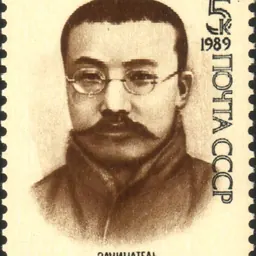

Related people
Same field, nearest in time





Contemporaries
People whose lives overlapped Cai Yuanpei's


Frequently asked questions
Who was Cai Yuanpei?
Chinese educator, Esperantist and the president of Peking University (1868-1940)
When was Cai Yuanpei born?
Cai Yuanpei was born on 11 January 1868 in Shaoxing.
When did Cai Yuanpei die?
Cai Yuanpei died on 5 March 1940 in Hong Kong Sanatorium and Hospital.
What was Cai Yuanpei's occupation?
Cai Yuanpei was a politician, esperantist, philosopher, university teacher, scholar and educator.
What nationality was Cai Yuanpei?
Cai Yuanpei was Chinese.
Sources & further reading
Cite this page
APA: Biography.guide. (2026). Cai Yuanpei. https://biography.guide/cai-yuanpei/
MLA: "Cai Yuanpei." Biography.guide, https://biography.guide/cai-yuanpei/.
Chicago: "Cai Yuanpei." Biography.guide. https://biography.guide/cai-yuanpei/.
Data last updated: 2026-09-25 · Spot an error? Report a correction.
Page generated 2026-09-27 05:12 UTC