
About Harvey Littleton
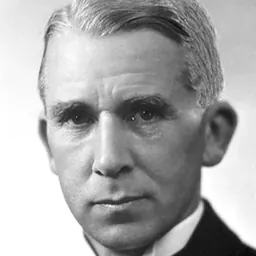
Lived 1922 – 2013 (aged 91). Harvey Littleton was an American artist, designer, photographer and glass artist.
Harvey Littleton (June 14, 1922 – December 13, 2013) was an American glass artist and educator, one of the founders of the studio glass movement; he is often referred to as the "Father of the Studio Glass Movement". Born in Corning, New York, he grew up in the shadow of Corning Glass Works, where his father headed Research and Development during the 1930s. Expected by his father to enter the field of physics, Littleton instead chose a career in art, gaining recognition first as a ceramist and later as a glassblower and sculptor in glass. In the latter capacity he was very influential, organizing the first glassblowing seminar aimed at the studio artist in 1962, on the grounds of the Toledo Museum of Art. Imbued with the prevailing view at the time that glassblowing could only be done on the factory floor, separated from the designer at his desk, Littleton aimed to put it within the reach of the individual studio artist.
In his role as an educator, Littleton was an "... outspoken and eloquent advocate of university education in the arts." He initiated the first hot glass program at an American university (the University of Wisconsin–Madison) and promoted the idea of glass as a course of study in university art departments in the United States. Littleton's students went on to disseminate the study of glass art and establish other university-level hot glass programs throughout the U.S.
Littleton retired from teaching in 1977 to focus on his own art.
Littleton attended high school at Corning Free Academy. His interest in art developed during this time, and he took life drawing and sculpture courses through an extension program at Elmira College. to study physics. His choice of major was influenced by his father, who wanted one of his children to follow him in his profession (Littleton's oldest sibling Martha was an industrial psychologist; his oldest brother Jesse chose medicine as a career; and his brother Joe became a Vice President of Corning's Technical Products Division).
Following the Pearl Harbor attack, Littleton tried to volunteer in the Coast Guard, the Air Force, and the Marines, but was rejected because of his poor eyesight. In the fall of 1942, he was drafted into the Army, interrupting his continued study. He was assigned to the Signal Corps, and served in North Africa, France, and Italy.
Upon his return to the university and his Verona, Wisconsin studio Littleton began melting small batches of glass in his ceramics kiln, using hand-thrown stoneware bowls as crucibles. By the time the ACC convened its fourth conference in 1961, Littleton not only presented a paper on his own work in glass but also exhibited a sculpture made of three faceted pieces of cullet that he had melted, formed and carved in the previous year. By this time, Littleton was applying for grants to get his vision of a hot glass studio program at the university off the ground. Littleton provided a small pot furnace he had built. In the first couple of days, the participants spent much of the time trying to find a workable glass formula and getting batches of glass melted, leaving very little time to experiment with actual blowing. Labino suggested converting the furnace to a day tank, which would have a larger capacity, and provided some borosilicate marbles to melt instead of mixing a formula. This glass proved easy to work for glass blowing, and the workshop participants experimented with it in shifts for the remainder of the week. On the final day of the workshop, Harvey Leafgreen, a retired glassblower from the Libbey glass plant in Toledo, happened in to see the public display of the workshop products, and presented an unexpected two-hour demonstration of the craft.
University of Wisconsin 1962–1977: glass development
In the summer of 1962 Littleton once again traveled to Europe, this time to research how glass was taught in universities there. He found nothing that he could bring back to the U.S. to help him educate art students at the University of Wisconsin. At that time, European glass programs were geared solely toward industrial production. Students were not taught hands-on techniques with the material; the craft of working with hot glass was still taught at the factories, under the apprenticeship system. What Littleton did find in Europe was a kindred spirit in glass art, the German Erwin Eisch, who is recognized today as a founder of European studio glass. Eisch had set up a small work area in his family's glass factory in Frauenau for the production of his own glass art. Trained as a fine artist in the academies of Germany, he was largely self-taught as a glass blower and at the time produced his work with the help of the factory's craftsmen. The friendship begun when Littleton visited Eisch in Frauenau in 1962 lasted for the rest of Littleton's life, and had profound influence on the work of each. The two spent some of almost every summer together for the next thirty years. became the first book to be written about the studio glass movement. It was followed in 1971 by Glassblowing: A Search for Form, by Harvey K. Littleton. Christopher Ries; Michael Taylor, who headed the glass program at the Rochester Institute of Technology for almost 20 years; Kent Ipsen, one of Littleton's first students who taught at Mankato State College and later chaired the crafts department and founded the highly respected glass program at the Virginia Commonwealth University School of Arts; Michael Whitley, initiator of a glass program at Central Washington State College.
"Technique is cheap"
In 1972 Littleton was at the Seventh National Sculpture Conference in Lawrence, Kansas when he uttered the words, "Technique is cheap."
This was a question that Littleton had evidently been thinking about for some time. In his 1971 book, Glassblowing: A Search for Form, he wrote:
The method used by the contemporary artist is a constant probing and questioning of the standards of the past and the definitions of the present to find an opening for new form statements in the material and process. It is even said that this search is an end in itself. Although knowledge of chemistry or physics as they apply to glass will broaden the artist's possibilities, it cannot create them. Tools can be made, furnaces and annealing ovens can be built cheaply. But it is through the insatiable, adventurous urge of the artist to discover the essence of glass that his own means of expression will emerge.
For Littleton, the epitome of technique vs. content was to be found in factory-made art glass, where the division of labor was inflexible. Traditionally the art glass designer was a draftsman who made a conceptual drawing for a glass object, and then passed it along to industry craftsmen for execution. According to Littleton, the factory designer "... is frustrated by the peculiar misplacement of his skill, and his inclusion in a process where little experimentation or interference is permitted.
Work in glass
alt="Littleton's Yellow Ruby Sliced Descending Form, c. 1983 Harvey Littleton, Yellow Ruby Sliced Descending Form (c. 1983) This four-part glass sculpture is typical of the artist's "Arc" forms
In 1962 Littleton's first pieces in blown glass were, like his earlier works in pottery, functional forms: vases, bowls and paperweights. His breakthrough to non-functional form came in 1963 when, with no purpose in mind, he remelted and finished a glass piece that he had earlier smashed in a fit of pique. The object lay in his studio for several weeks before he decided to grind the bottom. As Littleton recounts in his book Glassblowing: A Search for Form, he brought the object into the house where "it aroused such antipathy in my wife that I looked at it much more closely, finally deciding to send it to an exhibition. Its refusal there made me even more obstinate, and I took it to New York ... I later showed it to the curators of design at the Museum of Modern Art. They, perhaps relating it to some other neo-Dada work in the museum, purchased it for the Design Collection." (printmaking using glass plates). He received a research grant from the university in 1975 to continue this work, and his first prints from this process were shown in a show at the Madison Art Center. When he left Wisconsin in 1977 and established his own studio in Spruce Pine, North Carolina, he designated one room in the studio for printmaking. By 1981, he had hired a part-time printmaker, and in 1983 he built a separate facility for the presses. He regularly invited artists in various media to explore the possibilities. Littleton's own prints were often simple geometric shapes, and sometimes made from shotgun-shattered safety glass. When back problems forced him to stop working in hot glass in 1990, Littleton continued his printmaking. The couple had five children, one of whom died in her early youth. The surviving four all work in the field of glass art. Daughter Carol L. Shay is the curator at Littleton Studios; Tom Littleton owns and manages Spruce Pine Batch Company (founded by his father), which supplies batch (the dry ingredients of which glass is made) and colors to artists and art departments around the U.S.; Maurine Littleton is the owner and director of Maurine Littleton Gallery which specializes in glass art, in Washington, DC.
Public collections Sources: Bergstrom-Mahler Museum of Glass (Neenah, WI) Chrysler Museum of Art (Norfolk, VA) Corning Museum of Glass (NY) Detroit Institute of Arts (MI) Glasmuseet Ebeltoft (Denmark) Frauenau Glass Museum (Germany) High Museum of Art (Atlanta, GA) Hokkaido Museum of Modern Art (Sapporo, Japan) Indianapolis Museum of Art (IN) Kunstgewerbemuseum Berlin (Germany) Kunstmuseum der Veste Coburg (Coburg, Germany) Leigh Yawkey Woodson Art Museum (Wausau, WI) Los Angeles County Museum of Art (CA) Memphis Brooks Museum of Art (TN) Metropolitan Museum of Art (New York, NY) Milwaukee Art Museum (WI) Morris Museum (Morristown, NJ) Museum Angewandte Kunst (Frankfurt, Germany) Museum of Applied Arts, Vienna (Austria) Museum of Arts & Design (New York, NY) Museum Boijmans van Beuningen (Rotterdam, Netherlands) Museum of Decorative Arts, Prague (Czech Republic) Museum of Design Zürich (Switzerland) Museum of Fine Arts, Houston (TX) Museum für Kunst und Gewerbe Hamburg (Germany) Museum of Modern Art (New York, NY) National Museum of Modern Art, Kyoto (Japan) New Orleans Museum of Art (LA) Smithsonian American Art Museum (Washington, DC) Toledo Museum of Art (OH) Victoria and Albert Museum (London, England)
Don’t just read it —
keep it.
Full-length biographies made to live with: read them, listen on the way to work, watch them tonight.
- E-book
- Audio
- Video
Instant download · yours to keep · every purchase keeps this site free
Important facts
People in Harvey Littleton's life
Named in this biography and alive at the same time
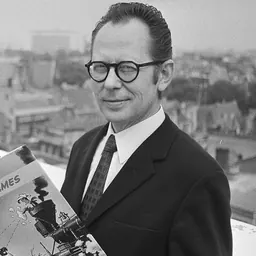



Related people
Same field, nearest in time




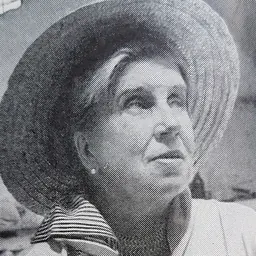
Contemporaries
People whose lives overlapped Harvey Littleton's

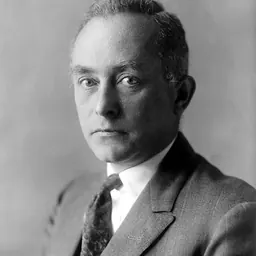
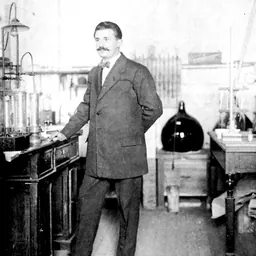

Frequently asked questions
Who was Harvey Littleton?
Artist, educator (1922-2013)
When was Harvey Littleton born?
Harvey Littleton was born on 14 June 1922 in Corning.
When did Harvey Littleton die?
Harvey Littleton died on 13 December 2013 in Spruce Pine.
What was Harvey Littleton's occupation?
Harvey Littleton was an artist, designer, photographer and glass artist.
What nationality was Harvey Littleton?
Harvey Littleton was American.
Sources & further reading
Cite this page
APA: Biography.guide. (2026). Harvey Littleton. https://biography.guide/harvey-littleton/
MLA: "Harvey Littleton." Biography.guide, https://biography.guide/harvey-littleton/.
Chicago: "Harvey Littleton." Biography.guide. https://biography.guide/harvey-littleton/.
Data last updated: 2026-09-22 · Spot an error? Report a correction.
Page generated 2026-09-27 05:25 UTC