
About Harry Suhl
Lived 1922 – 2020 (aged 97). Harry Suhl was a German and American physicist.
Harry Suhl (October 18, 1922 — March 3, 2020) was a German-American physicist who specialized in statistical mechanics, non-equilibrium thermodynamics, and solid-state physics, and in particular superconductivity. Various phenomena in his field of work have been named after him, such as the Suhl instability, Suhl–Nakamura interaction and Abrikosov–Suhl resonance. He died in March 2020 at the age of 97.
Early life and career Suhl was born in Leipzig, Germany, on October 18, 1922. He received a B.Sc. degree from the University of Wales in 1943, and a Ph.D. degree in theoretical physics from Oriel College of the University of Oxford, in 1948.
In 1948, he joined the Bell Telephone Laboratories at Murray Hill, New Jersey. In 1960, he was appointed professor of physics at the University of California, San Diego (UCSD) and was promoted to professor emeritus in 1991. He was chairman of the Physics Department of UCSD from 1965 to 1968 and again from 1972 to 1975, and was director of the university's Institute for Pure and Applied Physical Sciences from 1980 to 1991.
Suhl served on the board of editors for Physical Review ('55-'76) and Solid State Communications ('61-'90), and was coeditor of several standard treatises: Magnetism, a Treatise on Modern Theory and Materials (with G.T. Rado, Academic Press, New York, 5 volumes, '63-'72), Superconductivity in d- and f-Band Metals (with M.B. Maple, Academic Press, New York, 1980) and Many Body Phenomena at Surfaces (with D.C. Langreth, Academic Press, New York, 1984).
Scientific contributions Several phenomena Suhl discovered or explained have been named after him. His explanation of nonlinear effects in ferromagnetic resonance is known as the Suhl instability, and one of the major sources of broadening of nuclear magnetic resonance lines in magnetically ordered media is known as the Suhl–Nakamura interaction. A particular divergence in the calculated properties of dilute magnetic alloys is known as the Abrikosov–Suhl resonance.
Honors and awards Suhl was awarded a Guggenheim Fellowship in 1968. He was later inducted as a member of the National Academy of Sciences in 1976.
Selected publications
Don’t just read it —
keep it.
Full-length biographies made to live with: read them, listen on the way to work, watch them tonight.
- E-book
- Audio
- Video
Instant download · yours to keep · every purchase keeps this site free
Important facts
People in Harry Suhl's life
Named in this biography and alive at the same time
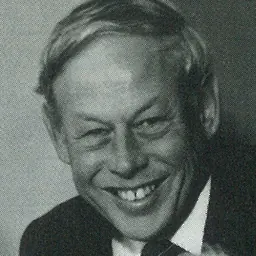
Related people
Same field, nearest in time


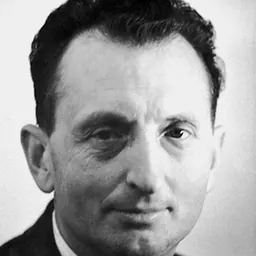
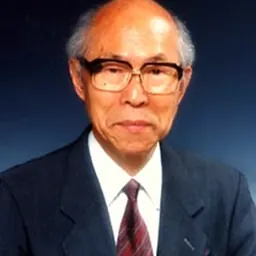


Contemporaries
People whose lives overlapped Harry Suhl's

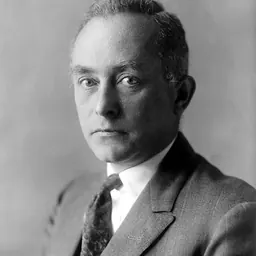
Frequently asked questions
Who was Harry Suhl?
American physicist (1922-2020)
When was Harry Suhl born?
Harry Suhl was born on 8 October 1922 in Leipzig.
When did Harry Suhl die?
Harry Suhl died on 3 March 2020 in California, San Diego.
What was Harry Suhl's occupation?
Harry Suhl was a physicist.
What nationality was Harry Suhl?
Harry Suhl was German and American.
Sources & further reading
Cite this page
APA: Biography.guide. (2026). Harry Suhl. https://biography.guide/harry-suhl/
MLA: "Harry Suhl." Biography.guide, https://biography.guide/harry-suhl/.
Chicago: "Harry Suhl." Biography.guide. https://biography.guide/harry-suhl/.
Data last updated: 2026-09-20 · Spot an error? Report a correction.
Page generated 2026-09-27 05:08 UTC