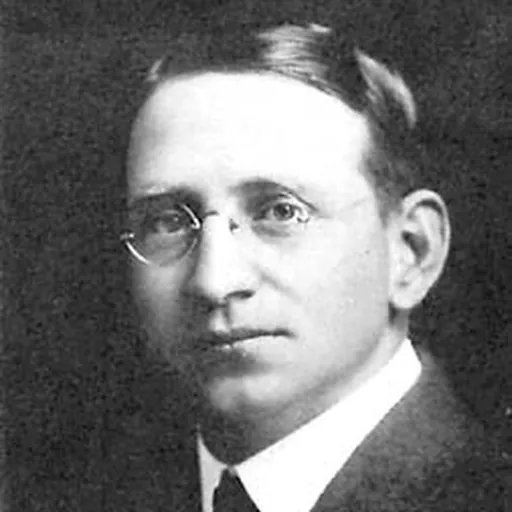
About Harry M. Wegeforth
Lived 1882 – 1941 (aged 59). Harry M. Wegeforth was an American physician and surgeon, known for San Diego Zoo and San Diego Zoo Global.
Harry Milton Wegeforth (born Harry Milton Wegefarth, January 7, 1882 – June 25, 1941) was an American physician who founded the Zoological Society of San Diego and the San Diego Zoo. As a doctor he operated a thriving practice in San Diego, served briefly as president of the City Board of Health and as a surgeon for the San Diego and Arizona Railway, and established a hospital and clinic in the city's downtown district. He is best known, however, for founding the Zoological Society, which grew out of his involvement with the Panama–California Exposition in 1916, and for being the driving force behind the creation and early growth of the zoo.
As president of the Zoological Society from its inception in 1916 until his death in 1941, Wegeforth planned much of the zoo's layout and many of its early exhibits. He convinced several wealthy San Diegans to contribute to the zoo's construction and development, and campaigned for ballot measures to secure its lands and finances. He networked and traded animals with many other zoos across the country, creating the National Association of Zoological Executives which later evolved into the Association of Zoos and Aquariums. After a heart attack in 1931 forced him to abandon his medical practice, he spent his remaining years traveling the world, collecting and trading animals for the zoo. An amphitheatre at the zoo and an elementary school and day care facility in San Diego's Serra Mesa community are named in his honor.
Early life Harry Wegefarth was born in Baltimore, one of seven children born to Conrad Wegefarth—a German immigrant and oil prospector for whom Wegefarth County, Texas was named—and his third wife, Mary Elizabeth MacArthur, who was of Scotch-Irish descent. Harry had twelve siblings: Brothers Arthur, George, Paul, and Charles; sisters Emma and Ellen; and six older half-brothers from his father's previous marriages. Harry showed an interest in animals from childhood, reading books on their habits and characteristics, playing at circus using toy ones, searching for crabs in Chesapeake Bay, and hunting for snakes in nearby woods and then selling them to neighbors. After his second winter of practice he went out on tour with them as part of their act, but was brought home by his elder brother Charles. Charles drowned while Harry was still a boy, instilling in him an aversion to swimming; Harry never swam, and urged family members against it.
Education Following his older brothers into the study of medicine, Wegefarth earned a position with the Baltimore Health Department at age fifteen. After contracting influenza during a snowstorm, he diagnosed himself with acute tuberculosis and, on the advice of one of his brothers, moved to Colorado for his respiratory health at age sixteen. Having recovered from his tuberculosis, he returned to Baltimore and enrolled at Baltimore Medical College, supporting himself by working in drug stores and teaching anatomy during the winters, and working on a sister-in-law's farm in the summers. He earned his Doctor of Medicine degree in May 1906, and took postgraduate training at Johns Hopkins University, specializing in surgery. He took a position as assistant bacteriologist for the city of Baltimore, and then became first surgeon of the Baltimore Northeastern Dispensary. Ralph Granger, the building's owner, had become a millionaire by staking two German miners who discovered the "Last Chance" silver mine near Creede, Colorado in 1890; moving to San Diego in 1892, he bought and became vice president of the Merchants National Bank and built the Granger Building, with the bank occupying the ground floor. Wegefarth married Granger's daughter Rachel on November 14, 1913; he was 31 years old, she 20. Around this time Harry changed the spelling of his family name to Wegeforth.
During his first few months in San Diego, Wegeforth was often called upon by Sheriff Fred M. Jennings to treat prisoners at the county jail (Jennings' daughter, Belle Benchley, would later work under Wegeforth as Executive Secretary of the San Diego Zoo). Wegeforth's sister Emma soon moved to San Diego and became his housekeeper and medical secretary. Feeling that mayor James E. Wadham and the San Diego City Council did not back these attempted reforms, he criticized them in newspapers and was promptly fired.
In 1916 Harry and Paul Wegeforth served as surgeons for the second year of the Panama–California Exposition held in Balboa Park. Harry also served on the Exposition's board of directors, and had the idea to start a zoo using exotic animal exhibits that would be left over following the Exhibition's closure. Hearing the roaring of lions from one of the Exposition's exhibits, Harry remarked to his brother "Wouldn't it be splendid if San Diego had a zoo! You know ... I think I'll start one." Joined by naturalist Frank Stephens and doctors Fred Baker and Joseph Cheesman Thompson, they held the first organizational meeting of the Zoological Society of San Diego on October 2, 1916 in the Wegeforths' offices; Harry served as the founding president, Paul as secretary. The Articles of Incorporation and by-laws for the Society were executed on December 11, 1916.
The San Diego Zoo began as a long row of cages along Park Boulevard, described by Wegeforth as "little more than Menagerie Row", featuring lions, bears, ducks, lynxes, golden eagles, rails, a badger, a gray fox, a coyote, a whip snake, a white goose, and groups of buffalo, deer, and elk. Most of these animals had been rented for the Exhibition from a menagerie at the Wonderland Amusement Park in nearby Ocean Beach, which had since gone out of business; others were scattered in various exhibits throughout Balboa Park and turned over to the fledgling zoo by the Park Department, while some were donated to the Society or acquired through trade. To feed the collection, Wegeforth himself went along the San Diego waterfront asking fishermen to donate fish, traveled to outlying ranches to convince farmers to donate hay, and collected second-grade fruits and vegetables from produce markets.
Upon American entry into World War I in mid-1917, Paul Wegeforth resigned from the Zoological Society's Board of Directors to accept a commission in the United States Army. The Society faced financial challenges in maintaining its growing animal collection and had run out of funds by October 1917, so Wegeforth organized a track and field meet between the Navy and Marine Corps, generating enough revenue from ticket sales to maintain the Society through the end of the year. Negotiating with the Balboa Park Commission for a permanent location for the zoo, in 1918 he agreed to an arrangement in which the City of San Diego would legally own all of the zoo's animals, equipment, and property, but the Zoological Society would have exclusive jurisdiction over and management of them. Reapplying to the Army Medical Corps, Wegeforth was commissioned as a captain in July 1918 and assigned to the Neuro-Surgical Institute of New York for training. He resigned from the Zoological Society's Board of Directors and was replaced as president by Joseph Sefton, Jr.
1923–41: Continued zoo work and founding of hospital-clinic As the zoo grew, so did the demands of Wegeforth's medical practice. He spent many weekends and vacations at the zoo, and would also spend his lunch breaks there, dictating letters and conferring with the small staff.
In 1927, after several other equally short-lived zoo directors, Wegeforth appointed the zoo's bookkeeper, Belle Benchley, to the top position in the zoo, that of executive secretary. He soon realized that she was functioning as the zoo's director so he gave her that title. For the next 15 years the two of them worked together to transform the zoo from a small collection of animals to an innovative, world-class zoo.
He and Neil Morgan co-wrote a history of the San Diego Zoo called It Began With a ROAR!
Wegeforth continued to serve as president and chief promoter of the zoo until he died of a heart attack in his home on June 25, 1941
Other civic activities In 1926 he was a key mover in the decision to purchase and bring to San Diego the sailing ship Star of India, now a museum ship in San Diego Bay.
Personal life Galápagos tortoise at the San Diego Zoo in 2013. Wegeforth had a fondness for turtles and tortoises, and traded for them frequently to build up a large collection for the zoo. Wegeforth married Rachel Granger, daughter of millionaire Ralph Granger, in 1913. The house, designed for them by architect William Henry Wheeler in the American Foursquare style, is now designated as a Historical Landmark by the City of San Diego. They later lived in a larger home in the Marston Hills neighborhood. They had two sons, Lester and Milton. A fan of music, he often researched details on the latest phonographs and record changers.
Of the many animals he helped acquire for the zoo, he had a particular passion for turtles and tortoises. In 1936 the zoo's amphitheatre was named the Wegeforth Bowl in his honor; at the unveiling of a commemorative plaque dedicated to him, Wegeforth expressed gratitude but told the assembled officials that the money for the plaque would have been better spent to buy an animal.
Harry M. Wegeforth Elementary School opened in San Diego in 1957. The site was dedicated on February 9, 1959 with Mrs. Harry Wegeforth and family in attendance.
Don’t just read it —
keep it.
Full-length biographies made to live with: read them, listen on the way to work, watch them tonight.
- E-book
- Audio
- Video
Instant download · yours to keep · every purchase keeps this site free
Important facts
Family & relationships
People in Harry M. Wegeforth's life
Named in this biography and alive at the same time




Related people
Same field, nearest in time



Contemporaries
People whose lives overlapped Harry M. Wegeforth's




Frequently asked questions
Who was Harry M. Wegeforth?
American physician; founder of San Diego Zoo (1882-1941)
When was Harry M. Wegeforth born?
Harry M. Wegeforth was born on 7 January 1882 in Baltimore.
When did Harry M. Wegeforth die?
Harry M. Wegeforth died on 25 June 1941 in San Diego.
What was Harry M. Wegeforth's occupation?
Harry M. Wegeforth was a physician and surgeon.
What was Harry M. Wegeforth known for?
Harry M. Wegeforth was known for San Diego Zoo and San Diego Zoo Global.
What nationality was Harry M. Wegeforth?
Harry M. Wegeforth was American.
Sources & further reading
· Wikipedia: Harry M. Wegeforth
Cite this page
APA: Biography.guide. (2026). Harry M. Wegeforth. https://biography.guide/harry-m-wegeforth/
MLA: "Harry M. Wegeforth." Biography.guide, https://biography.guide/harry-m-wegeforth/.
Chicago: "Harry M. Wegeforth." Biography.guide. https://biography.guide/harry-m-wegeforth/.
Data last updated: 2026-09-22 · Spot an error? Report a correction.
Portrait: Wikimedia Commons · author & licence
Page generated 2026-09-27 05:01 UTC