
About Harry Levinson
Lived 1922 – 2012 (aged 89–90). Harry Levinson was an American psychologist.
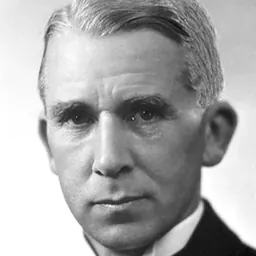
Harry Levinson (1922 – June 26, 2012) was an American psychologist and consultant in work and organizational issues. He was a pioneer in the application of psychoanalytic theory to management and leadership.
Biography Levinson was born in Port Jervis, New York on January 16, 1922. His parents were both immigrants. His father was a tailor, and his mother was a homemaker.
In 1968 he moved to the Harvard Graduate School of Business, and simultaneously established The Levinson Institute which he headed until he retired in 1992. Levinson was known for his insightful and practical approach to the workplace, and he was responsible for raising awareness about the emotional well-being of workers.
His contributions, especially to the psychoanalytic study of organizations, are summarized by Diamond (2003). The concept of "emotional first aid" had earlier been developed by the Metropolitan Life Insurance Company's staff psychiatrist, Lydia Giberson, to denote interventions for employees suffering from relatively minor emotional problems. The Psychological Contract : The concept of a psychological contract is useful for understanding the expectations that workers and organizations have of each other. Levinson's definition includes conscious and unconscious dimensions of the investment that employees make in their relationships with the organizations that they work for. Understanding of the psychological contract is an important function of management and crucial for avoiding detachment and poor performance by workers. The concept is a useful tool for understanding management failure. The notion of the psychological contract was influenced by psychoanalytic thinking including the ego ideal. is clear in his emphasis on immersion and participant observation in psychoanalytic organizational consultation. He believed that to know an organization a researcher/consultant must have knowledge and experience from inside of it. Organizational fieldwork includes observing, participating, and interviewing. The goal is to understand how workers and organizations relate to one another in the course of doing work. Psychoanalytic concepts such as transference and countertransference contribute to an understanding of relational dynamics, workplace culture, and worker effectiveness. Ministration is the need for support and guidance. Maturation needs center on creativity and reality testing. Mastery needs are focused on achievement and ambition. Awareness of these needs can help managers improve their dialogue with and responsiveness to workers. is perhaps his most significant contribution to the theory and practice of psychoanalytic organizational diagnosis and change. It is an integration of systems and clinical models. The notion of organizational diagnosis places emphasis on understanding the manifest and latent aspects of organization's culture and practices before initiating change efforts or other interventions. Of particular importance is the emphasis on analyzing the transference dynamics between consultants and organizational members. Loss in Organizational Change : Levinson drew attention to loss as a part of organization change. He suggested that workers experience loss and grief in response to changes, even when they are positive. He equated resistance to change to the process of mourning, promoting a more compassionate and mindful approach to change efforts. Management attention to the pain experienced by workers during change is important for identifying and addressing conscious and unconscious sabotage of organizational change. The Great Jackass Fallacy (1973) : A psychoanalytic approach to understanding motivation in the workplace illuminates the problems associated with a management style that relies on carrots and sticks to motivate workers. Specifically, Levinson points out that such an approach relies on the "rational economic man" model, ignoring the complex and often unconscious nature of human motivation. It also ignores the "sentient" field of work (see also Czander, 1993, The Psychodynamics of Work and Organizations: Theory and Application).
Contemporaries Harry Levinson's contemporaries are influential organizational theorists in their own right. At Harvard, Levinson interacted with Abraham Zaleznik (Harvard Business School), Chris Argyris (Education and Business Schools), and Michael Maccoby (Project on Character, Work, and Technology). Levinson also interacted with Edgar Schein, Donald Schon, and John Van Maanen at MIT. Rodney L. Lowman and Richard R. Kilburg worked with Levinson in association with the APA and in particular the division on Consulting Psychology.
The integration of organizational and psychoanalytic theory was the primary aim of the International Society for the Psychoanalytic Study of Organizations (ISPSO) which was founded in the early 1980s. Many of the psychoanalytic theorists who were Levinson's contemporaries were at the Tavistock Institute of Human Relations in London including Isabel Menzies Lyth, Otto Kernberg, John Bowlby, Elliott Jaques, and Harold Bridger.
Harold Bridger, Abraham Zaleznik, and Harry Levinson were active in the ISPSO in its first decade during the time that Michael Diamond was president. Leopold Gruenfeld of Cornell University sponsored the first two meetings of what became ISPSO in the early 1980s. Levinson and Zaleznik were seen as the pioneers or patriarchs of the psychoanalytic approach to studying organizations. Levinson's intellect and sharp criticisms challenged and inspired a new generation of organizational theorists including Manfred F.R. Kets de Vries, Larry Hirschhorn, Laurence Gould, Tom Gilmore, James Krantz, Howard Schwartz, Seth Allcorn, Shelley Reciniello, Gilles Amado, Michael A Diamond, and Donald M. Levine.
Major publications Men, Management, and Mental Health (1962) Emotional Health in the World of Work (1964) Executive (1968, 1981) Organizational Diagnosis (1972) The Great Jackass Fallacy (1973) Psychological Man (1976)
Don’t just read it —
keep it.
Full-length biographies made to live with: read them, listen on the way to work, watch them tonight.
- E-book
- Audio
- Video
Instant download · yours to keep · every purchase keeps this site free
Important facts
People in Harry Levinson's life
Named in this biography and alive at the same time







Related people
Same field, nearest in time


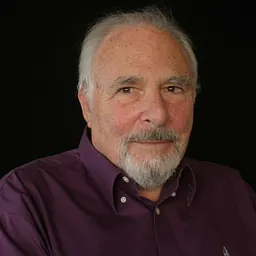

Contemporaries
People whose lives overlapped Harry Levinson's
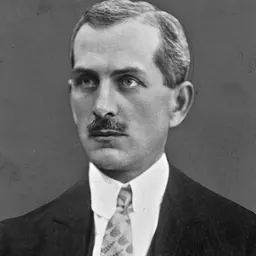
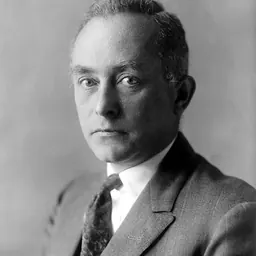
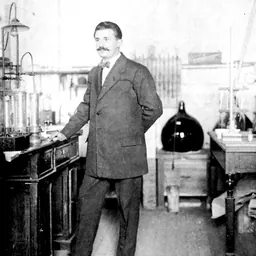

Frequently asked questions
Who was Harry Levinson?
American psychologist (1922–2012)
When was Harry Levinson born?
Harry Levinson was born in 1922 in Port Jervis.
When did Harry Levinson die?
Harry Levinson died on 26 June 2012 in Delray Beach.
What was Harry Levinson's occupation?
Harry Levinson was a psychologist.
What nationality was Harry Levinson?
Harry Levinson was American.
Sources & further reading
Cite this page
APA: Biography.guide. (2026). Harry Levinson. https://biography.guide/harry-levinson/
MLA: "Harry Levinson." Biography.guide, https://biography.guide/harry-levinson/.
Chicago: "Harry Levinson." Biography.guide. https://biography.guide/harry-levinson/.
Data last updated: 2026-09-20 · Spot an error? Report a correction.
Page generated 2026-09-27 05:12 UTC