
About Harry Haywood
Lived 1898 – 1985 (aged 86). Harry Haywood was an American politician, trade unionist, political activist and communist.
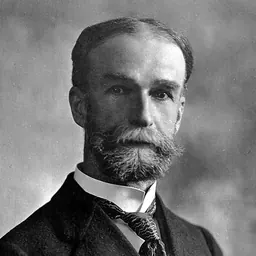
Harry Haywood (born Haywood Hall Jr; February 4, 1898 – January 4, 1985) was an American political activist and a leading figure in the Communist Party of the United States (CPUSA). He was principally known for his efforts "to bring the political philosophy of the Party in line with issues of race."
In 1926, he joined with other African-American communists and traveled to the Soviet Union as a student. While there he became a Communist International (Comintern) delegate. He stayed four years and studied the Marxist-Leninist theory of the "national question" regarding how to unify ethnic nationalities within a country's dominant culture. Haywood's work in the USSR resulted in his being selected to head the CPUSA's "Negro Department". In the 1930s he organized a movement to defend the Scottsboro boys in Alabama. He made theoretical contributions to the African-American national question. He argued that blacks represented an oppressed nation inside the U.S. and had the right to self-determination. His doctrine was known as the Black Belt thesis, i.e., blacks should be able to form their own nation-state in the Black Belt South. In the 1950s as the CPUSA platform moved away from black nationalism and separatism and towards integration, Haywood lost standing in the Party until he was expelled in 1959.
Haywood fought in three wars: World War I, the Spanish Civil War, and World War II. He authored several books and pamphlets, including Negro Liberation in 1948, and "For a Revolutionary Position on the Negro Question" in 1957. After his expulsion from the CPUSA, he remained a left-wing activist. In the 1960s, he became involved in the Maoist New Communist movement. In 1978, his autobiography Black Bolshevik was published.
Early years Harry Haywood was born Haywood Hall Jr., on February 4, 1898, in South Omaha, Nebraska, to former slaves Harriet and Haywood Hall, from Missouri and West Tennessee, respectively. They had migrated to Omaha because of jobs with the railroads and meatpacking industry, as did numerous other Southern blacks. South Omaha also attracted white immigrants, and ethnic Irish had established an early neighborhood there. Haywood was the youngest of three sons.
In 1913 after Haywood Hall Sr. was attacked by whites, the Hall family moved to Minneapolis, Minnesota. Two years later in 1915 they moved to Chicago. The younger Hall's education was limited. He never went beyond the eighth grade and had to self-educate afterward. At age sixteen, he began working as a dining car waiter on the Chicago and North Western Railway line.
During World War I, he served with the Eighth Regiment, a black U.S. regiment. Upon his return to Chicago, he was radicalized by the bitter Red Summer of 1919, especially the Chicago race riot, in which mostly ethnic Irish attacked blacks on the South Side. Hall was influenced by his older brother Otto, who joined the Communist Party in 1921 and invited him to enter the secret African Blood Brotherhood. During World War II, Haywood was involved with the National Maritime Union in San Pedro, California. This led to his enlisting in 1943 in the U.S. Merchant Marines.
Political career Communist Party USA
Hall began his revolutionary career by joining the African Blood Brotherhood in 1922, followed by the Young Communist League in 1923. Two years later he joined the Communist Party, USA (CPUSA), recruited by Robert Minor. Soon thereafter, Hall was sent to Moscow to "train as a revolutionary". At the time, he and his CPUSA friends believed they were targets of FBI scrutiny. When he applied for a passport, he chose to use an alias, "Harry Haywood". He said it was derived from his mother's first name (Harriet) and father's first name (Haywood), and that it would "stick with me the rest of my life."
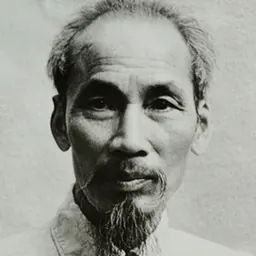
In Moscow, Haywood studied first at the Communist University of the Toilers of the East in 1926, then at the International Lenin School in 1927. The anticolonial revolutionaries he met while in Moscow included Vietnamese leader Ho Chi Minh. He began to advocate for the concerns of African-Americans, arguing that they were captives in the U.S. and "must embrace nationalism in order to avoid the harmful effects of integration." He stayed in the USSR until 1930 as a delegate to the Communist International (Comintern).
Haywood was General Secretary of the League of Struggle for Negro Rights, but was active in issues affecting working-class whites as well. In the early 1930s, while head of the CPUSA Negro Department, he led the movement to support the Scottsboro Boys, organized miners in West Virginia with the National Miners Union, and was a leader in the struggles of the militant Sharecroppers' Union in the Deep South. In 1935 he led the "Hands off Ethiopia" campaign in Chicago's Black South Side to oppose Italy's invasion of Ethiopia. In the 1936 House of Representatives elections, he was the CPUSA's candidate for the First Congressional District (encompassing the South Side of Chicago), but garnered only 899 votes.
Haywood served on the CPUSA's Central Committee from 1929 to 1938, and on its Politburo from 1931 to 1938. He was engaged in the Party's internal factional struggles against Jay Lovestone and Earl Browder, regularly siding with William Z. Foster. In 1949, when eleven Communist leaders were tried under the Smith Act, Haywood was assigned the task of performing research for their defense.
Comintern and the Black Belt nation Map of the Black Belt Nation from Haywood's Negro Liberation, 1948.
During his four-year stay in the Soviet Union (1926–1930), Haywood traveled extensively in the Crimea, the Caucasus, and other autonomous republics. He got married in the USSR and became proficient in the Russian language. He participated in the struggles against both the Left Opposition headed by Leon Trotsky and the Right Opposition led by Nikolai Bukharin. In these struggles and in others, Haywood was on the side of Joseph Stalin. While working as a Comintern delegate, Haywood served on commissions drafting the "Native Republic Thesis" for the South African Communist Party, as well as addressing the plight of Negroes in the U.S. He helped craft the "Comintern Resolutions on the Negro Question" of 1928 and 1930, which stated that African Americans in the South made up an oppressed nation, and therefore had the right to self-determination up to and including secession. Instead, Haywood argued that blacks deserved full equality in their own "national territory", which historically was the South. He stated that only with genuine political power—which in a Marxist sense included control of the land and other productive forces—could African Americans obtain genuine equality, which was a prerequisite for broader working-class unity.
Most CPUSA members who disagreed with Haywood considered the question of African-American oppression a matter of racial prejudice with moral roots, rather than an economic and political question of national oppression. They saw it as a problem to be solved under Socialism and in no need of special attention until after the institution of the revolutionary "dictatorship of the proletariat". They criticized Haywood for falling "into the bourgeois liberal trap of regarding the fight for equality as primarily a fight against racial prejudices of whites." To this charge, he countered that the category of "race" is a mystification. He believed that relying on race and ignoring economic questions could only alienate African Americans and inhibit working-class unity.
Following the Great Migration of millions of blacks to the U.S. Northeast, Midwest, and West, accompanied by their urbanization, critics attempted to use statistics to counter the Black Belt thesis and show that there no longer was a black nation centered in the South. In his 1957 article, "For a Revolutionary Position on the Negro Question", Haywood responded that the question of an oppressed nation in the South was not "mere nose counting".
Haywood's 1948 book Negro Liberation was described at the time as "the first comprehensive volume on the Negro question in the United States by a leading Negro Marxist". He argued that the root of the oppression of blacks was the unsolved agrarian question in the South. He believed that the unfinished bourgeois democratic revolution of Reconstruction had been betrayed in the Hayes-Tilden Compromise of 1877. It abandoned African Americans to plantations as tenant farmers and sharecroppers, faced with the Redeemer governments, the system of Jim Crow laws, and the terror of the Ku Klux Klan and other paramilitary groups. According to Haywood, the rise of imperialism left blacks frozen as "landless, semi-slaves in the South." According to Haywood's autobiography, Paul Robeson subsidized his work on the book by offering $100 a month. Negro Liberation was translated and published in Russian, Polish, German, Czech and Hungarian. It was reissued in 1976 by Liberator Press, the publishing arm of the October League. Haywood argued that: Haywood added that "What was new in the book was the thorough analysis of the concrete conditions of Black people in the post-war period. I made extensive use of population data; the 1940 census, the 1947 Plantation Count and other sources, in order to show that the present day conditions affirmed the essential correctness of the position we had formulated years before." Because of this and other works, Robert F. Williams called Haywood "one of the modern pioneers in the Black liberation struggle."
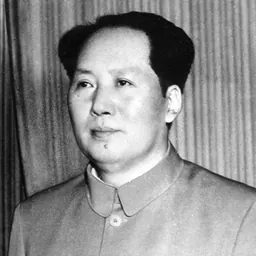
Expulsion from the CPUSA Following the death of Stalin in 1953 and Nikita Khrushchev's rise to power, the CPUSA embraced Khrushchev's policy of destalinization and "peaceful coexistence". Long an admirer of Mao Zedong, Haywood was an early champion of the anti-revisionist movement born out of the growing Sino-Soviet split. He was driven out of the CPUSA in the late 1950s along with many others who took firm anti-revisionist or pro-Stalin positions. Next, Haywood left for Mexico for a short time before returning permanently to the U.S. in 1970. He had been invited by Vincent Harding, Director of the Institute for the Black World in Atlanta, Georgia.
In 1964, Haywood began his involvement with the New Communist Movement. Its goal was to found a vanguard Communist Party on an anti-revisionist basis, believing the CPUSA to have deviated irrevocably from Marxism-Leninism. He later worked in one of the newly formed Maoist groups of the New Communist Movement, the October League, which became the Communist Party (Marxist-Leninist) (CPML). Haywood served on its Central Committee.
In 1978, he published his autobiography, Black Bolshevik, although some of his important writings and political life during the 1960s were edited out. For example, the manuscript he had written in acknowledged collaboration with Gwendolyn Midlo Hall, and dedicated to Robert F. Williams, was not mentioned. This work, which circulated in mimeographed form from early 1964 throughout California and in the Deep South, influenced the armed self-defense movement against the Ku Klux Klan during 1964 and 1965, and projected a slogan widely picked up throughout the South that leftists must pose their own challenge to order and stability to counter the challenge posed by the "massive resistance" of Southern politicians and racist terrorists. Black Bolshevik became an important book cited by scholars and read by the wider public. Through it and his other writings, Haywood provided ideological leadership far beyond the New Communist Movement. His theoretical contributions had an impact on the warring factions of the left, including the League of Revolutionary Struggle (Marxist-Leninist), the early Revolutionary Communist Party, the Revolutionary Workers Headquarters and the Communist Workers Party. Nonetheless, lack of experience, sectarianism, and voluntarism were a major factor in keeping the young Maoist groups from taking a leadership role. In his last published article, Haywood wrote that the New Communist Movement spent too much time and energy seeking the "franchise" of governments and parties outside the U.S. without validating itself among the people of its own country.
Haywood's theoretical innovations have been influential in many areas including historical materialism, geography, Marxist education, and social movement theory. His contributions to questions of African-American national oppression and national liberation were highly valued by (1) the Ray O. Light Group, which developed out of an anti-revisionist split from the CPUSA in 1961, (2) the Freedom Road Socialist Organization, which was formed from the mergers of several New Communist Movement groups in the 1980s, (3) the Maoist Internationalist Movement, and (4) other black revolutionaries and activists. His role in 1960s–1980s black protest movements can be studied in the Harry Haywood Papers at the Manuscript, Archives, and Rare Books Division of the Schomburg Center for Research in Black Culture in New York City, and in the Harry Haywood Collection at the University of Michigan's Bentley Historical Library. In December 1926 in the USSR, he met Ekaterina (known as "Ina"), a ballet student and English interpreter. They married the following year, but the marriage did not last beyond his stay in the country, as he was unable to obtain an exit visa for her to return with him to the U.S. In Los Angeles in 1940, while recovering from a heart attack he had suffered the previous year, Haywood reconnected with Belle Lewis, whom he had worked with during a National Miners Union strike in Kentucky in 1931. They married in 1940 and divorced in 1955. In 1959, shortly before his expulsion from the Communist Party, Haywood and his family moved to Mexico City where they stayed through the 1960s. After late 1964, Haywood and Midlo Hall were mostly living apart, although they remained married until his death. She did not follow him into the New Communist Movement.
Death Haywood had a service-related disability and spent the last year of his life at a Veterans Administration medical facility. He died on January 4, 1985 of cardiac arrest, after a prolonged battle against a severe form of asthma. He was buried in Arlington National Cemetery in Arlington, Virginia. (Columbarium Court 1, Section LL, Column 7, 2nd Row from bottom. Interred under birth name "Haywood Hall.")
Legacy The Harry Haywood papers are housed at the Bentley Historical Library, University of Michigan, and at the Manuscript, Archives, and Rare Books Division of the Schomburg Center for Research in Black Culture in New York City.
In Richard Wright's autobiographical novel Black Boy (American Hunger), the rigid CPUSA leader Buddy Nealson is said to represent Haywood; it is an unflattering portrayal that was a source of conflict between Haywood and Wright.
Selected works The Communist Position on the Negro Question. With Earl Browder and Clarence Hathaway. New York: Workers Library Publishers, 1931. Co-authored with Milton Howard.
Reissued by Liberator Press, Chicago, 1976. Reissued by Liberator Press, Chicago, 1977. Articles from Soulbook, 1965–1967. Black Bolshevik: Autobiography of an Afro-American Communist. Chicago: Liberator Press, 1978.
Don’t just read it —
keep it.
Full-length biographies made to live with: read them, listen on the way to work, watch them tonight.
- E-book
- Audio
- Video
Instant download · yours to keep · every purchase keeps this site free
Important facts
Family & relationships
People in Harry Haywood's life
Named in this biography and alive at the same time



Related people
Same field, nearest in time





Contemporaries
People whose lives overlapped Harry Haywood's



Frequently asked questions
Who was Harry Haywood?
American politician (1898-1985)
When was Harry Haywood born?
Harry Haywood was born on 6 February 1898 in South Omaha.
When did Harry Haywood die?
Harry Haywood died on 4 January 1985 in New York City.
What was Harry Haywood's occupation?
Harry Haywood was a politician, trade unionist, political activist and communist.
What nationality was Harry Haywood?
Harry Haywood was American.
Sources & further reading
Cite this page
APA: Biography.guide. (2026). Harry Haywood. https://biography.guide/harry-haywood/
MLA: "Harry Haywood." Biography.guide, https://biography.guide/harry-haywood/.
Chicago: "Harry Haywood." Biography.guide. https://biography.guide/harry-haywood/.
Data last updated: 2026-09-22 · Spot an error? Report a correction.
Page generated 2026-09-27 05:25 UTC