
About Harry Harper
Lived 1895 – 1963 (aged 67). Harry Harper was an American baseball player.
Harry Clayton Harper (April 24, 1895 – April 23, 1963) was an American professional baseball pitcher, businessman, and politician. He played in Major League Baseball for the Washington Senators, Boston Red Sox, New York Yankees, and Brooklyn Robins between 1913 and 1923. Harper started Game 6 of the 1922 World Series for the Yankees.
Harper was from Hackensack, New Jersey, and was often called "Hackensack Harry" during and after his baseball career. Harper invested his salaries in his business career while he was a baseball player. After retiring from baseball, Harper entered politics, and won election as sheriff of Bergen County as a Republican. He served in the cabinets of Governors Walter Evans Edge and Alfred E. Driscoll, as the Commissioner of Labor and Industry. He also lost elections to the New Jersey Legislature and United States Congress.
Early life Harper was born on April 24, 1895, in Hackensack, New Jersey, to Elizabeth (née Van Saren) and Henry Clay Harper. He was the second of three sons born to the couple. He started earning money through selling newspapers, coffee, and tea when he was ten years old. Harper's father died when he was 13 years old, and he dropped out of school after the eighth grade to work in a factory in New York City, earning $7 per week ($ in current dollar terms).
Baseball career Washington Senators Harper also earned money by playing in semi-professional baseball in Hackensack. Former Major League Baseball (MLB) player George Davis watched Harper throw a no-hitter in 1913, when Harper was 18 years old, They convinced his mother to give permission for Harper to join the team. He played in four games during the 1913 season, with a 3.55 earned run average (ERA) in innings pitched.
Harper signed a contract with the Senators in 1914 that contained a clause barring him from pitching on Sundays. He had a 2–1 win–loss record and a 3.47 ERA in 57 innings in 1914, but also committed three errors in 14 total chances. He threw a no-hitter for Minneapolis in May, and had a 7–9 record with a 2.81 ERA in 154 innings, while issuing 127 walks. He had a 4–4 record and a 1.77 ERA in 19 games, 10 games started, for Washington in 1915.
Throughout his career, Harper was a bad-luck pitcher either due to injury or playing on a bad baseball team. He played for the Senators for seven seasons. His most productive season came in 1916 with Washington, when he posted career numbers in wins (14), strikeouts (149) and innings pitched , while recording a 2.45 ERA. Harper had a 11–12 record and a 3.01 ERA in 31 games, all starts. In 1918, Harper went 11–10 in 244 innings, His 2.18 ERA ranked him sixth between the American League pitchers, while his 13 wild pitches led the league. He had a 6–21 record with a 3.72 ERA for the Senators in 1919; his 21 losses led the league.
Later career After the 1919 season, the Senators traded Harper, Eddie Foster and Mike Menosky to the Boston Red Sox for Braggo Roth and Red Shannon. He had a 5–14 record with a 3.04 ERA for the Red Sox in 1920, which was seventh-best in the league. After the 1920 season, the Red Sox traded Harper, Waite Hoyt, Mike McNally, and Wally Schang to the New York Yankees for Del Pratt, Muddy Ruel, Hank Thormahlen, and Sammy Vick. In his first start for the Yankees, on May 13, his thumb was broken by a line drive hit by Eddie Ainsmith. He did not return to the Yankees until August. He started six games for the Yankees in September, finishing the season with a 4–3 record and a 3.76 ERA. The Yankees won the American League pennant and Harper started Game 6 of the 1921 World Series, but did not earn a decision. He pitched for a semi-professional team in Hackensack after he was released. Harper signed with the Brooklyn Robins for the 1923 season. He pitched in one game for Brooklyn before he was released, and he returned to playing semi-professional baseball. In May 1924, he joined the Reading Keystones of the Class AA International League. He continued to pitch and manage in semi-professional baseball for a team based in Hackensack.
In a 10-season career, Harper posted a 57–76 record with 623 strikeouts and a 2.87 ERA in 219 appearances, including 171 games started, 66 complete games, 12 shutouts, five saves in 1,256 innings pitched.
Political and business career With the salary that he drew from the Senators in 1913, Harper purchased a truck and opened a garbage collection business. His fiancé compelled him to sell the business before they married. Harper formed a trucking business in 1922, and requested a leave of absence from the Yankees to pursue it. The company expanded into construction, helped build the Holland Tunnel and moved pipe that was laid from the Catskill Mountains to New York City. He entered local politics in 1927 with a campaign for sheriff of Bergen County as a Republican. He defeated Mort O'Connell, the political boss of the Bergen County Democratic Party by around 10,000 votes. He served a three-year term as sheriff, and ran in a special election for the New Jersey Senate in 1931, following the expulsion of Ralph W. Chandless. Harper won the Republican nomination by defeating County Judge John Zabriskie with 61% of the vote. Harper lost the general election to William H. J. Ely, a Bergen County District Judge, 52%–48%, during what was a difficult year for Republicans due to the unpopularity of President Herbert Hoover's economic policies.
In 1934, Governor Harold G. Hoffman appointed Harper to serve on the New Jersey Civil Service Commission. He remained in that role for a decade, until Governor Walter Evans Edge appointed him Commissioner of Labor and Industry in 1944. Alfred E. Driscoll kept Harper in the position after he was elected governor in 1946.
Personal life and family Throughout his baseball career, Harper refused to play on Sundays; he held out from the Red Sox after his trade there in part to ensure that clause was added to his contract.
Harper became engaged to Bessie (née Brewster) of Hackensack, daughter of Sheriff George Brewster, in October 1917. They were married on February 26, 1918. They had a son, George, and a daughter, Elizabeth.
Harper had surgery at St. Vincent's Hospital in New York, and died in the hospital on April 23, 1963.
Don’t just read it —
keep it.
Full-length biographies made to live with: read them, listen on the way to work, watch them tonight.
- E-book
- Audio
- Video
Instant download · yours to keep · every purchase keeps this site free
Important facts
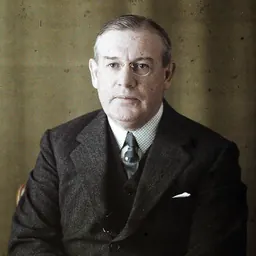
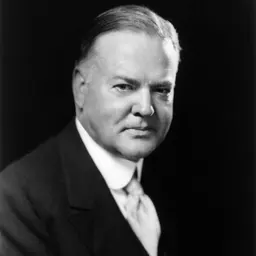
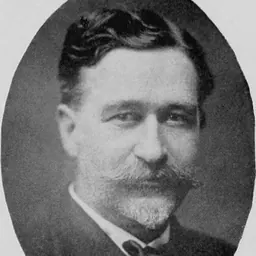
People in Harry Harper's life
Named in this biography and alive at the same time





Related people
Same field, nearest in time

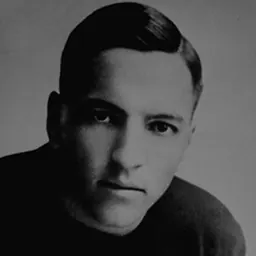


Contemporaries
People whose lives overlapped Harry Harper's

Frequently asked questions
Who was Harry Harper?
American baseball player
When was Harry Harper born?
Harry Harper was born on 24 April 1895 in Hackensack.
When did Harry Harper die?
Harry Harper died on 23 April 1963 in New York City.
What was Harry Harper's occupation?
Harry Harper was a baseball player.
What nationality was Harry Harper?
Harry Harper was American.
Sources & further reading
Cite this page
APA: Biography.guide. (2026). Harry Harper. https://biography.guide/harry-harper/
MLA: "Harry Harper." Biography.guide, https://biography.guide/harry-harper/.
Chicago: "Harry Harper." Biography.guide. https://biography.guide/harry-harper/.
Data last updated: 2026-09-26 · Spot an error? Report a correction.
Page generated 2026-09-27 05:15 UTC