
About Harry Harlow
Lived 1905 – 1981 (aged 76). Harry Harlow was an American psychologist, university teacher and ethologist.
Harry Frederick Harlow (October 31, 1905 – December 6, 1981) was an American psychologist best known for his maternal-separation, dependency needs, and social isolation experiments on rhesus monkeys, which manifested the importance of caregiving and companionship to social and cognitive development. He conducted most of his research at the University of Wisconsin–Madison, where humanistic psychologist Abraham Maslow worked with him for a short period of time.
Harlow's experiments were ethically controversial; they included creating inanimate wire and wood surrogate "mothers" for the rhesus infants. Each infant became attached to its particular mother, recognizing its unique face. Harlow then investigated whether the infants had a preference for bare-wire mothers or cloth-covered mothers in different situations: with the wire mother holding a bottle with food, and the cloth mother holding nothing, or with the wire mother holding nothing, while the cloth mother held a bottle with food. The monkeys overwhelmingly chose the cloth mother, with or without food, only visiting the wire mother that had food when needing sustenance.
Later in his career, he cultivated infant monkeys in isolation chambers for up to 12 months, from which they emerged intensely disturbed. Some researchers cite the experiments as a factor in the rise of the animal liberation movement in the United States. A Review of General Psychology survey, published in 2002, ranked Harlow as the 26th most cited psychologist of the 20th century.
Biography Harry Harlow was born on October 31, 1905, to Mabel Rock and Alonzo Harlow Israel. Harlow was born and raised in Fairfield, Iowa, the third of four brothers. Little is known of Harlow's early life, but in an unfinished autobiography he recollected that his mother was cold to him and he experienced bouts of depression throughout his life. After a year at Reed College in Portland, Oregon, Harlow obtained admission to Stanford University through a special aptitude test. After a semester as an English major with nearly disastrous grades, he declared himself as a psychology major.
Harlow attended Stanford in 1924, and subsequently became a graduate student in psychology, working directly under Calvin Perry Stone, a well-known animal behaviorist, and Walter Richard Miles, a vision expert, who were all supervised by Lewis Terman. The change was made at Terman's prompting for fear of the negative consequences of having a seemingly Jewish last name, even though his family was not Jewish.
Harlow received numerous awards and honors, including election to the United States National Academy of Sciences (1951), the Howard Crosby Warren Medal (1956), election to the American Philosophical Society (1957), the National Medal of Science (1967), election to the American Academy of Arts and Sciences (1961), and the Gold Medal from the American Psychological Foundation (1973). He served as head of the Human Resources Research branch of the Department of the Army from 1950 to 1952, head of the Division of Anthropology and Psychology of the National Research Council from 1952 to 1955, consultant to the Army Scientific Advisory Panel, and president of the American Psychological Association from 1958 to 1959.
Harlow married his first wife, Clara Mears, in 1932. One of the select students with an IQ above 150 whom Terman studied at Stanford, Clara was Harlow's student before becoming romantically involved with him. The couple had two children together, Robert and Richard. Harlow and Mears divorced in 1946. That same year, Harlow married child psychologist Margaret Kuenne. They had two children together, Pamela and Jonathan. Margaret died on August 11, 1971, after a prolonged struggle with cancer, with which she had been diagnosed in 1967. Her death led Harlow to depression once more, for which he was treated with electro-convulsive therapy. In March 1972, Harlow remarried Clara Mears. The couple lived together in Tucson, Arizona, until Harlow's death in 1981. after obtaining his doctorate under the guidance of several distinguished researchers, including Calvin Stone and Lewis Terman, at Stanford University. He began his career with nonhuman primate research. He worked with the primates at Henry Vilas Zoo, where he developed the Wisconsin General Test Apparatus (WGTA) to study learning, cognition, and memory. It was through these studies that Harlow discovered that the monkeys he worked with were developing strategies for his tests. What would later become known as metalearning, Harlow described as "learning to learn" or "learning sets". At the time, the two competing theories of learning were Hull-Spence, which stated that learning was via trial and error, and Gestalt, which stated learning was via moments of sudden insight. The learning sets showed that there was no real conflict between the two, as learning begins by trial and error, but if a new problem resembles more and more previous problems, then it is more and more likely to be solved suddenly and insightfully.
In order to study the development of these learning sets, Harlow needed access to developing primates, so he established a breeding colony of rhesus macaques in 1932. Due to the nature of his study, Harlow needed regular access to infant primates and thus chose to rear them in a nursery setting, rather than with their protective mothers.
Noticing their attachment to the soft cloth of their diapers and the psychological changes that correlated with the absence of a maternal figure, Harlow sought to investigate the mother–infant bond. such as René Spitz's and his own surveys on children raised in a variety of settings. In 1953, his colleague James Robertson produced a short and controversial documentary film, titled A Two-Year-Old Goes to Hospital, demonstrating the almost-immediate effects of maternal separation. Bowlby's report, coupled with Robertson's film, demonstrated the importance of the primary caregiver in human and non-human primate development. Bowlby de-emphasized the mother's role in feeding as a basis for the development of a strong mother–child relationship, but his conclusions generated much debate. It was the debate concerning the reasons behind the demonstrated need for maternal care that Harlow addressed in his studies with surrogates. Physical contact with infants was considered harmful to their development, and this view led to sterile, contact-less nurseries across the country. Bowlby disagreed, claiming that the mother provides much more than food to the infant, including a unique bond that positively influences the child's development and mental health.
To investigate the debate, Harlow created inanimate surrogate mothers for the rhesus infants from wire and wood. In an experiment called the "open-field test", an infant was placed in a novel environment with novel objects. When the infant's surrogate mother was present, it clung to her, but then began venturing off to explore. If frightened, the infant ran back to the surrogate mother and clung to her for a time before venturing out again. Without the surrogate mother's presence, the monkeys were paralyzed with fear, huddling in a ball and sucking their thumbs.
Some of Harlow's final experiments explored social deprivation in the quest to create an animal model for the study of depression. This study is the most controversial, and involved isolation of infant and juvenile macaques for various periods of time. Monkeys placed in isolation exhibited social deficits when introduced or re-introduced into a peer group. They appeared unsure of how to interact with their conspecifics, and mostly stayed separate from the group, demonstrating the importance of social interaction and stimuli in forming the ability to interact with conspecifics in developing monkeys, and, comparatively, in children.
Critics of Harlow's research have observed that clinging is a matter of survival in young rhesus monkeys, but not in humans, and have suggested that his conclusions, when applied to humans, overestimate the importance of contact comfort and underestimate the importance of nursing.
Harlow first reported the results of these experiments in "The Nature of Love", the title of his address to the sixty-sixth Annual Convention of the American Psychological Association in Washington, D.C., August 31, 1958.
Partial and total isolation of infant monkeys Beginning in 1959, Harlow and his students began publishing their observations on the effects of partial and total social isolation. Partial isolation involved raising monkeys in bare wire cages that allowed them to see, smell, and hear other monkeys, but provided no opportunity for physical contact. Total social isolation involved rearing monkeys in isolation chambers that precluded any and all contact with other monkeys.
Harlow et al. reported that partial isolation resulted in various abnormalities such as blank staring, stereotyped repetitive circling in their cages, and self-mutilation. These monkeys were then observed in various settings.
In the total isolation experiments, baby monkeys would be left alone for three, six, 12, or 24 months of "total social deprivation". The experiments produced monkeys that were severely psychologically disturbed. Harlow wrote:
No monkey has died during isolation. When initially removed from total social isolation, however, they usually go into a state of emotional shock, characterized by ... autistic self-clutching and rocking. One of six monkeys isolated for 3 months refused to eat after release and died 5 days later. The autopsy report attributed death to emotional anorexia. ... The effects of 6 months of total social isolation were so devastating and debilitating that we had assumed initially that 12 months of isolation would not produce any additional decrement. This assumption proved to be false; 12 months of isolation almost obliterated the animals socially ... The rehabilitation attempts met with limited success. Harlow wrote that total social isolation for the first six months of life produced "severe deficits in virtually every aspect of social behavior". Isolates exposed to monkeys the same age who were reared normally "achieved only limited recovery of simple social responses". The findings were confirmed by other researchers, who found no difference between peer-therapy recipients and mother-reared infants, but found that artificial surrogates had very little effect.
Since Harlow's pioneering work on touch, recent researches have found evidence to support that touch during infancy is very important to health and touch deprivation can be harmful.
Pit of despair
Harlow was well known for refusing to use conventional terminology, instead choosing deliberately outrageous terms for the experimental apparatus he devised. This came from an early conflict with the conventional psychological establishment in which Harlow used the term "love" in place of the popular and archaically correct term "attachment". Such terms and respective devices included a forced-mating device he called the "rape rack", tormenting surrogate-mother devices he called "Iron maidens", and an isolation chamber he called the "pit of despair", developed by him and a graduate student, Stephen Suomi.
In the last of these devices, alternatively called the "well of despair", baby monkeys were left alone in darkness for up to one year from birth, or repetitively separated from their peers and isolated in the chamber. These procedures quickly produced monkeys that were severely psychologically disturbed, which were used as models of human depression.
Harlow tried to rehabilitate monkeys that had been subjected to varying degrees of isolation using various forms of therapy. "In our study of psychopathology, we began as sadists trying to produce abnormality. Today, we are psychiatrists trying to achieve normality and equanimity."
Analysis of experiments Influences Harlow's work influenced Bruno Bettelheim, director of the Sonia Shankman Orthogenic School in Chicago. This was a home for "disturbed" children—Bettelheim studied autism in children. He was very fascinated with Harlow and his study with monkeys. He thought that he could use what Harlow learned in his own work.
Reactive attachment disorder
Reactive attachment disorder (RAD) forms when a child has experienced maltreatment, sexual and emotional abuse, or other forms of neglect, and manifests as behavioral problems. The treatment for reactive attachment disorder is very complex. By the time a child has been seen and diagnosed with reactive attachment disorder, several different mental health, medical, and developmental conditions need to be treated. While more children are being diagnosed with RAD, most are first mis-diagnosed with other behavioral problems. Children diagnosed with RAD need to be in intensive therapy, and so should their caregivers. The confusing path to a diagnosis often leaves children and families suffering for longer periods of time.
Harlow believed that the relationship between a mother and child was created by the mother providing tactile comfort, meaning infants have a natural need to touch and cling to something for emotional support. Harry Harlow helped further research that contributed to the discovery of RAD. He believed, and his study results showed, that the bond between mother and child in the first few years of life is extremely important for the mental health and development of the child. The ideas that he put into the psychology field of study helped discover what we know as RAD today.
Criticism Many of Harlow's experiments are now considered unethical—in their nature as well as Harlow's descriptions of them—and they both contributed to heightened awareness of the treatment of laboratory animals, and helped propel the creation of today's ethics regulations. The monkeys in the experiment were deprived of maternal affection, potentially leading to what are now known as panic disorders. University of Washington professor Gene Sackett, one of Harlow's doctoral students, stated that Harlow's experiments provided the impetus for the animal liberation movement in the U.S. has said that Harlow "kept this going to the point where it was clear to many people that the work was really violating ordinary sensibilities, that anybody with respect for life or people would find this offensive. It's as if he sat down and said, 'I'm only going to be around another ten years. What I'd like to do, then, is leave a great big mess behind.' If that was his aim, he did a perfect job." Mason also published articles where he attempted to work through the issue between a scientist's wish to understand the natural world and the "rights" of animals to life and autonomy.
Stephen Suomi, a former Harlow student and supporter who now conducts maternal deprivation experiments on monkeys at the National Institutes of Health, has been criticized by PETA and members of the U.S. Congress.
Deborah Blum, a science journalist, criticized Harlow's work; criticisms by her and by his colleagues, collected by Blum, mentioned almost exclusively the negative impact on the public of his untamed language. Blum reported in her own writing that even Suomi felt that he had to wait until Harlow retired from the University of Wisconsin before he could shut down his unethical "pit of despair" projects; they had been causing him "nightmares".
Harlow commented to an interviewer in 1974, "The only thing I care about is whether the monkeys will turn out a property I can publish. I don't have any love for them. Never have. I really don't like animals. I despise cats, I hate dogs. How could you like a monkey?".
In popular culture A theatrical play, The Harry Harlow Project, based on the life and work of Harlow, has been produced in Victoria and performed nationally in Australia.
Writer and animal-rights proponent Grant Morrison has cited Harry Harlow and his experiments as partial inspiration behind the creation (with Andy Kubert and Frazer Irving) of Batman villain Professor Pyg.
Don’t just read it —
keep it.
Full-length biographies made to live with: read them, listen on the way to work, watch them tonight.
- E-book
- Audio
- Video
Instant download · yours to keep · every purchase keeps this site free
Important facts
People in Harry Harlow's life
Named in this biography and alive at the same time


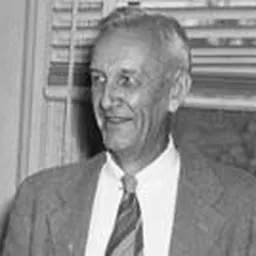





Related people
Same field, nearest in time



Contemporaries
People whose lives overlapped Harry Harlow's




Frequently asked questions
Who was Harry Harlow?
American psychologist (1905–1981)
When was Harry Harlow born?
Harry Harlow was born on 31 October 1905 in Fairfield.
When did Harry Harlow die?
Harry Harlow died on 6 December 1981 in Tucson.
What was Harry Harlow's occupation?
Harry Harlow was a psychologist, university teacher and ethologist.
What nationality was Harry Harlow?
Harry Harlow was American.
Sources & further reading
Cite this page
APA: Biography.guide. (2026). Harry Harlow. https://biography.guide/harry-harlow/
MLA: "Harry Harlow." Biography.guide, https://biography.guide/harry-harlow/.
Chicago: "Harry Harlow." Biography.guide. https://biography.guide/harry-harlow/.
Data last updated: 2026-09-20 · Spot an error? Report a correction.
Page generated 2026-09-27 05:30 UTC