
About Harry Harcourt
Lived 1895 – 1970 (aged 75). Harry Harcourt was a British military personnel.
First World War Harcourt was born in Westcliff-on-Sea, in Essex, England, on 13 February 1895. In 1914, he entered the British Army as a second lieutenant with a Regular commission. Initially, he served with the 1st Battalion, Royal Dublin Fusiliers, taking part in the disastrous Gallipoli campaign Despite holding these acting ranks, he was not substantively promoted to lieutenant until mid-1918, although when it was announced his seniority was backdated to November 1917. At one point he held three different ranks, a substantive rank of second lieutenant, a temporary rank of lieutenant and an acting rank of major. For his service during the war, Harcourt received a Distinguished Service Order, a Military Cross, and was mentioned in despatches three times.
Russian Civil War In early 1919, Harcourt was attending a staff course in the United Kingdom when he heard about the deteriorating situation in North Russia. Hoping to secure a position on the Relief Force that was being sent, Harcourt went to the War Office where he offered his services. Due to his experience with the Machine Gun Corps, he was offered command of a machine gun unit with the acting rank of major. However, the unit had not been formed and Harcourt was told that it was up to him to carry out his own recruiting. although in the end only about 150–300 Australians completed the process.
These men formed part of the North Russia Relief Force (NRRF), This offensive was initially focused upon the railways and river systems and Harcourt was ordered to move his unit along the Archangel–Vologda railway line and to engage any Bolshevik forces encountered. The unit carried out patrols and probing raids in their area of operations and Harcourt was tasked with planning an attack on Bolshevik positions around Emtsa. As the situation continued to deteriorate for the Allies plans were made for the force to begin withdrawing. The citation reads:
The engagement ended with the surrender of the Bolshevik forces, however, as Harcourt prepared his men for an advance south to Vologda he received orders to pull back to Archangel and eventually they were evacuated back to England where the men were demobilised and Harcourt returned to the Royal Dublin Fusiliers.
Inter-war years During the 1920s Harcourt continued to serve with the British Army and was stationed in India. It was while he was on the subcontinent that he discovered an alternative route between India and Burma. He also became involved in the Boy Scouts and in 1933 he served as secretary and organiser of the first World Scout Jamboree to be held in Australia, taking place over Christmas 1933–34.
Second World War When the Second World War broke out in September 1939 Harcourt sought to return to the United Kingdom to rejoin the British Army. As his job was considered vital to the war effort, the Australian government prevented him from leaving, however, he was eventually allowed to join the Militia. On 3 August 1940, he reported for war service and was appointed as a lieutenant. A short time later he was officially promoted to major and taken on the strength of the headquarters of the 6th Military District (Tasmania) as the brigade major of the 12th Infantry Brigade based at Brighton. In February 1941 Harcourt was allowed to transfer to the Second Australian Imperial Force (2nd AIF)—thus allowing him to serve overseas —and after undergoing training at Puckapunyal he was subsequently posted to the 2/9th Armoured Regiment in August 1941, as the officer commanding 'C' Squadron. that had been set up at Wilsons Promontory in Victoria to begin training independent companies in irregular warfare techniques based on the recommendations of the British Military Mission in Australia, headed by Lieutenant Colonel J.C. Mawhood. In order to prove himself fit for active service with the independent companies Harcourt was required to pass a rigorous physical fitness and endurance program that was said to have tested even the instructors at the school, many of whom were a lot younger than Harcourt, who was 47 at the time. A shortage of stores and equipment initially hampered the company's training, however, in mid July they entrained and were moved north to Queensland where they were initially based at Yandina before moving to Townsville on 28 July 1942. On 2 August 1942, the company embarked on the MS Tasman bound for New Guinea.
On 6 August 1942, the 2/6th Independent Company disembarked in Port Moresby and shortly afterwards it was placed directly under the command of the headquarters of the 7th Division. As the Japanese began to advance over the Owen Stanley Range towards Port Moresby the company began patrolling operations to the west of Port Moresby and Harcourt was given responsibility for advising divisional headquarters of Japanese movements around the Kokoda Track and to provide protection for the division's flanks.
Later, in November and December 1942 the company fought alongside the 126th and 128th Infantry Regiments around Buna, where they were used mainly in the reconnaissance role, but also as assault troops where necessary. During this time, Harcourt reported directly to the 32nd Division's commander, Major General Edwin Harding on the location of Japanese forces, as well as the progress and disposition of US forces in the region. At the end of the fighting around Buna Harcourt was decorated with the Silver Star for gallantry by General MacArthur, who later singled the 2/6th Independent Company out for special praise in his Order of the Day on 9 January 1943. The award was later reported in Hobart's The Mercury newspaper on 21 January 1943.
In writing the official history of the Australian involvement in the early campaigns in the Pacific, Dudley McCarthy described Harcourt as being "an intrepid officer whose forty-seven years seemingly had done nothing to lessen his zest for living, his energy or his physical endurance". He was later transferred to the Jungle Warfare Training Centre at Canungra, in Queensland, where he served as a senior instructor and then later commanding officer of the 3rd Australian Reinforcement Training Battalion (Jungle Warfare). In May 1945, Harcourt took part in the landing at Balikpapan, after the regiment was committed to the fighting on Borneo late in the war. He remained in this role until 1949 when he undertook a research position with the Industrial Development Branch of the Premier's Department (Tasmania).
Between 1952 and 1967 Harcourt served as State Secretary of the Tasmanian branch of the Australian Legion of Ex-Servicemen and Women. During 1957–58, Harcourt served as the President of Legacy's Hobart Branch. He was survived by his wife and step son.
Don’t just read it —
keep it.
Full-length biographies made to live with: read them, listen on the way to work, watch them tonight.
- E-book
- Audio
- Video
Instant download · yours to keep · every purchase keeps this site free
Important facts
People in Harry Harcourt's life
Named in this biography and alive at the same time


Related people
Same field, nearest in time
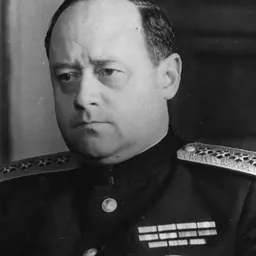





Contemporaries
People whose lives overlapped Harry Harcourt's
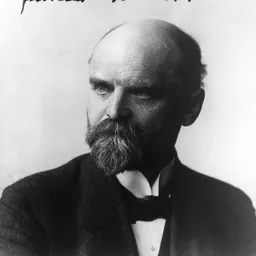
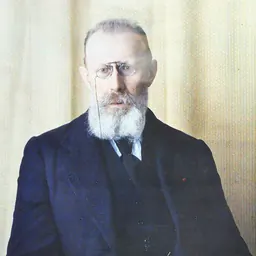
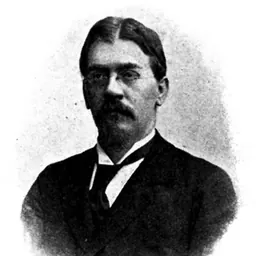

Frequently asked questions
Who was Harry Harcourt?
British Army commander (1895–1970)
When was Harry Harcourt born?
Harry Harcourt was born on 13 February 1895 in Westcliff-on-Sea.
When did Harry Harcourt die?
Harry Harcourt died on 20 December 1970 in Hobart.
What was Harry Harcourt's occupation?
Harry Harcourt was a military personnel.
What nationality was Harry Harcourt?
Harry Harcourt was British.
Sources & further reading
Cite this page
APA: Biography.guide. (2026). Harry Harcourt. https://biography.guide/harry-harcourt/
MLA: "Harry Harcourt." Biography.guide, https://biography.guide/harry-harcourt/.
Chicago: "Harry Harcourt." Biography.guide. https://biography.guide/harry-harcourt/.
Data last updated: 2026-09-27 · Spot an error? Report a correction.
Page generated 2026-09-27 05:17 UTC