
Harry Gottlieb
American painter, screen printer, lithographer, and educator
About Harry Gottlieb
Lived 1895 – 1992 (aged 96). Harry Gottlieb was an American and Romanian painter, printmaker and artist.
Ruins Along the Hudson by Harry Gottlieb, c. 1937, oil on canvas, WPA Collection, Oklahoma City Museum of Art Harry Gottlieb (September 23, 1895 – July 4, 1992) was an American painter, screen printer, lithographer, and educator.
Biography Gottlieb was born in Bucharest, Romania on September 23, 1895. He immigrated to America in 1907, and his family settled in Minneapolis. His family was Jewish.
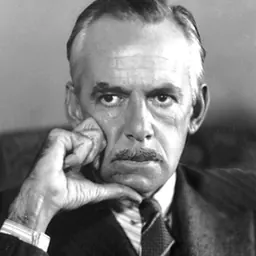
From 1915 to 1917, Gottlieb attended the Minneapolis Institute of Arts, where he became friends with Wanda Gág, later known as a famous illustrator. After a short stint as an illustrator for the U.S. Navy, Gottlieb moved to New York City; he became a scenic and costume designer for Eugene O'Neill's Provincetown Theater Group. He also studied at the Philadelphia Academy of Fine Arts and the National Academy of Design.
Career Gottlieb was one of America's first Social Realist painters, influenced by the Robert Henri-led movement in New York City where Gottlieb settled in 1918. He was also a pioneer in screen printing, which he learned while working for the Works Progress Administration (WPA).
In 1935, he joined the Federal Art Project (FAP); he was one of the first members of the WPA/FAP's Silk Screen Unit, along with Anthony Velonis, Elizabeth Olds, Hyman Warsager and other fellow printmakers. Gottlieb remained active as a painter and screen printer after the closure of the Federal Art Project, and served as the first director of the short-lived American Artists School in New York City. Gottlieb was a leader and active member of the Artists Union and the Artists Congress.
Art historian Helen Langa writes: "The WPA Federal Art Project opened the Harlem Community Art Center in 1937,
He lectured widely on art education and promoted the government support of artist and artistic projects.
Interest in silkscreen printmaking was growing in the years leading up to 1940. Art historian James Watrous wrote in 1984: "The mounting interest in printmaking with silkscreen was affirmed by several other events that occurred around the turn of the decade. In March 1940, the ACA (American Contemporary Art) Gallery sponsored the second one-man show of silkscreens, a display of prints by Harry Gottlieb. Among the twelve works was Winter on the Creek, elaborately printed with eleven colors that projected a picturesque scene of ice skaters in a seasonal American landscape. It was dependent upon painting for its conceptual characteristics, but the screen-printing process fell within the definition of an original print and, in 1942, Gottlieb's work received the Eyre Medal for the best print in the 40th Annual Exhibition of Watercolors and Prints at the Pennsylvania Academy of the Fine Arts." The allure of seeking "painterly" effects in screen printing was strong to some of the artists who worked in silkscreen in the late 1930's. Gottlieb and other artists, including Warsager and Leonard Pytlak, "often chose to ignore a graphic aesthetic and seized the opportunity to use many screens, colors and complex printings in order to simulate the nuances and illusions that usually had been reserved for watercolors and oils."
Exhibits and Museum Collections Gottlieb was included in the 1944 Dallas Museum of Fine Arts exhibition of the National Serigraph Society.
His work is in the collections of the Metropolitan Museum of Art in New York City, the Brooklyn Museum, the Whitney Museum, The Philadelphia Museum of Art, the Museum of Modern Art, the Amon Carter Museum of American Art, the Princeton University Art Museum, and the Smithsonian American Art Museum.
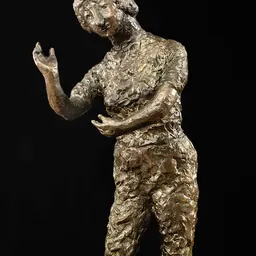
Personal life Gottlieb married Russian born artist and sculptor Eugenie Gershoy, and the couple joined the artist colony at Woodstock, New York. In 1923, Gottlieb settled in Woodstock, New York and in 1931, spent a year abroad studying under a Guggenheim Fellowship.
Gottlieb was an adherent of the political theories of Karl Marx and joined the Communist Party in the 1930s, remaining a lifelong member of the party.
Don’t just read it —
keep it.
Full-length biographies made to live with: read them, listen on the way to work, watch them tonight.
- E-book
- Audio
- Video
Instant download · yours to keep · every purchase keeps this site free
Important facts
People in Harry Gottlieb's life
Named in this biography and alive at the same time





Related people
Same field, nearest in time

Contemporaries
People whose lives overlapped Harry Gottlieb's
Frequently asked questions
Who was Harry Gottlieb?
American painter, screen printer, lithographer, and educator (1895-1992)
When was Harry Gottlieb born?
Harry Gottlieb was born on 23 September 1895 in Bucharest.
When did Harry Gottlieb die?
Harry Gottlieb died on 4 July 1992 in New York City.
What was Harry Gottlieb's occupation?
Harry Gottlieb was a painter, printmaker and artist.
What nationality was Harry Gottlieb?
Harry Gottlieb was American and Romanian.
Sources & further reading
Cite this page
APA: Biography.guide. (2026). Harry Gottlieb. https://biography.guide/harry-gottlieb/
MLA: "Harry Gottlieb." Biography.guide, https://biography.guide/harry-gottlieb/.
Chicago: "Harry Gottlieb." Biography.guide. https://biography.guide/harry-gottlieb/.
Data last updated: 2026-09-20 · Spot an error? Report a correction.
Page generated 2026-09-27 05:10 UTC