
Harry Burton
English egyptologist and archaeological photographer
About Harry Burton
Lived 1879 – 1940 (aged 60). Harry Burton was a British egyptologist, anthropologist, photographer and archaeologist, known for KV62.
Harry Burton (13 September 1879 – 27 June 1940) was an English archaeological photographer, best known for his photographs of excavations in Egypt's Valley of the Kings. Today, he is sometimes referred to as an Egyptologist, since he worked for the Egyptian Expedition of the Metropolitan Museum of Art for around 25 years, from 1915 until his death. His most famous photographs are the estimated 3,400 or more images that he took documenting Howard Carter's excavation of Tutankhamun's tomb from 1922 to 1932.
Early life
Burton was born in Stamford, Lincolnshire, England, to journeyman cabinet maker William Burton and Ann Hufton, the fifth of eleven children.
Career In his teens, he began to work for the art historian Robert Henry Hobart Cust and in 1896 moved to Florence, Italy, acting as Cust's secretary and establishing a reputation as an art photographer.
While in Florence, Burton met Theodore M. Davis, a wealthy American lawyer who sponsored a number of excavations of ancient tombs in Egypt. When in 1910 Cust returned to England, Burton went to Egypt, where Davis employed him as a photographer to record his excavations, including the artefacts found. Burton also supervised a number of tomb excavations and clearances, including KV3 and KV47 in 1912, and KV7 in 1913–14.
When Davis relinquished his excavation permit in 1914, Burton was engaged by the Metropolitan Museum of Art's Egyptian Expedition to serve as their official photographer, often working closely with Herbert E. Winlock. Over the next few years, Burton worked with the Metropolitan team on numerous excavations, mostly around Thebes. His photographs frequently appeared in the Bulletin of the Metropolitan Museum of Art and other publications, although they were often not credited.
Tutankhamun's tomb
In November 1922, Howard Carter discovered the tomb of Tutankhamun, its contents largely intact. Carter realised that "the first and pressing need was for photography, for nothing could be touched until a complete photographic record had been made, a task involving technical skill of the highest order." The Metropolitan Museum's excavation team, working nearby, readily agreed to Carter's request for the loan of Burton to formally photograph the findings of the British excavation at Tutankhamun's tomb.
Taking his first pictures on 27 December 1922, Burton was to spend nearly ten years photographing Tutankhamun's tomb and its artefacts, with more than 3,400
While working on Tutankhamun's tomb, Burton continued to do photographic work for the Metropolitan Museum's concession at nearby Deir el-Bahari, this taking up much of his time from 1927. He however continued to support Carter until the completion of the Tutankhamun clearance in 1932, the two remaining on good terms.
Later work From 1931 to 1934, Burton worked at the Metropolitan concession further down the Nile at Lisht. He remained in Egypt after the Metropolitan Museum ceased its major excavations in 1935, and continued to record other monuments and artefacts.
Legacy
While the 3,400 images from the tomb of Tutankhamun are widely known, and played a significant part in the "Egyptomania" of the 1920s, Carter valued his work highly, describing his photographs as "of outstanding beauty as well as great archaeological value". In May 1923, Carter wrote to Albert Lythgoe, who had agreed the loan of Burton from the Metropolitan concession, confirming that Burton had completed his work "in a splendid and admirable manner. In fact, I do not know how to praise his work sufficiently. He had a colossal task which he carried out to the end in the most efficient manner possible, and I should like to convey through you my most sincere gratitude to your trustees and Director for his good aid."
Burton's photographs have featured in a number of exhibitions: 2001: The Pharaoh's Photographer: Harry Burton, Tutankhamun, and the Metropolitan's Egyptian Expedition, at the Metropolitan Museum of Art; 2006–07: Discovering Tutankhamun: The Photographs of Harry Burton, at the Metropolitan Museum of Art; 2014: Discovering Tutankhamun, at the Ashmolean Museum, Oxford, featured many of Burton's original photographs alongside records and drawings from the Griffith Institute; 2017–2018: Photographing Tutankhamun, at the Museum of Archaeology and Anthropology, University of Cambridge, showed many of Harry Burton's photographs. Held also at The Collection, Lincoln, it was curated by Professor Christina Riggs.
Don’t just read it —
keep it.
Full-length biographies made to live with: read them, listen on the way to work, watch them tonight.
- E-book
- Audio
- Video
Instant download · yours to keep · every purchase keeps this site free
Important facts
People in Harry Burton's life
Named in this biography and alive at the same time
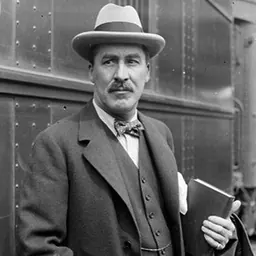

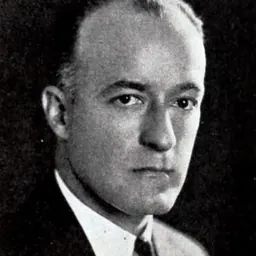


Related people
Same field, nearest in time
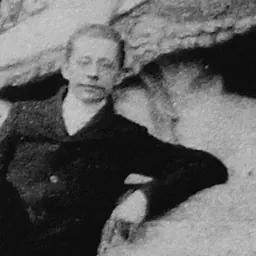

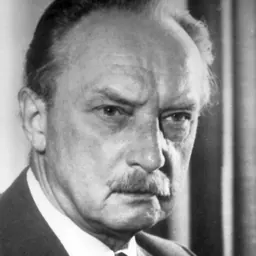

Contemporaries
People whose lives overlapped Harry Burton's


Frequently asked questions
Who was Harry Burton?
English egyptologist and archaeological photographer (1879–1940)
When was Harry Burton born?
Harry Burton was born on 13 September 1879 in Lincolnshire.
When did Harry Burton die?
Harry Burton died on 27 June 1940 in Kingdom of Egypt.
What was Harry Burton's occupation?
Harry Burton was an egyptologist, anthropologist, photographer and archaeologist.
What was Harry Burton known for?
Harry Burton was known for KV62.
What nationality was Harry Burton?
Harry Burton was British.
Sources & further reading
· DBpedia: Harry Burton (Egyptologist)
Cite this page
APA: Biography.guide. (2026). Harry Burton. https://biography.guide/harry-burton/
MLA: "Harry Burton." Biography.guide, https://biography.guide/harry-burton/.
Chicago: "Harry Burton." Biography.guide. https://biography.guide/harry-burton/.
Data last updated: 2026-09-22 · Spot an error? Report a correction.
Page generated 2026-09-27 05:26 UTC