
Harrison Hayford
American bibliographer
About Harrison Hayford
Lived 1916 – 2001 (aged 85). Harrison Hayford was a bibliographer.
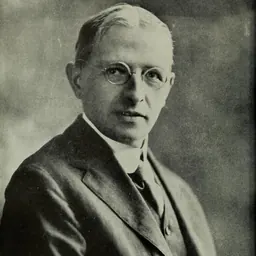
Harrison Mosher Hayford (b. Belfast, Waldo County, Maine 1 November 1916 - d. 10 December 2001 Evanston, Illinois) was a scholar of American literature, most prominently of Herman Melville, a book-collector, and a textual editor. He taught at Northwestern University from 1942 until his retirement in 1986. He was a leading figure in the post-World War II generation of Melville scholars who mounted the Melville Revival. He was General Editor of the Northwestern-Newberry The Writings of Herman Melville published by Northwestern University Press, which established reliable texts for all of Melville's works by using techniques of textual criticism.
G. Thomas Tanselle surveyed the scholarship about Herman Melville over the twentieth century and concluded that "Harrison Hayford has been responsible for more basic work —from the maintenance of a file of secondary material to the production of critical editions—than anyone else” .
Hayford received a Ford Foundation Fellowship in 1951; a Fulbright Fellowship in 1956-1957, which he spent in Florence, Italy; a Guggenheim Fellowship in 1962, which he spent in Paris, France. He helped found and served four terms as president of the Melville Society.
Life and education Harrison Hayford was born in Belfast, Maine, son of Ralph Hayford (1881 - 1945) and Marjorie Chase Hayford. He had two sisters, Viola (Glass), and Marion, who died of tuberculosis as a child.
Hayford's early life was spent on the Hayford Farm, which was established in 1821 and was in 1859 made the town Poorhouse Farm. The family prospered in business, construction, and dairy farming. The Hayford Block held a ballroom and theater in the center of town. Ralph Hayford, his father, was one of seven children (of eight). After his mother died shortly after childbirth in 1891, Ralph took over responsibility from his bereaved father, Loretto, and remained on the farm to support and educate his four younger siblings. One of Hayford's students later speculated that his love of story and language was nurtured by listening to the retired seamen who were taken into the poorhouse. The farm was auctioned by the county in the 1920s, however, when the family could not pay the taxes. Hayford attended a one-room school where his mother was the teacher, then graduated from Crosby High School in 1934. His undergraduate roommate was the poet John Ciardi. Their shared interest in poetry was sharpened by John Holmes, a nationally respected poet who taught at Tufts. Holmes held a weekly poetry reading and discussion session in his apartment, where Hayford and Ciardi met Josephine Bosworth Wishart, a graduate student whom both courted. In the spring of 1938 Hayford and Wishart eloped by street-car to Providence, where they married.
Hayford was among the students recruited by Yale English professor Stanley T. Williams for his graduate program in American literature. Although Williams did little publication on the subject himself, he encouraged these graduate students to focus on Melville. The group did research in archives and libraries in order to move beyond the first generation of studies, which treated Melville's writings as reliably autobiographical. The Yale students became key players in the Melville Revival of the 1940s. Among them were Walter Bezanson and Merton M. Sealts (Sealts had been a classmate of Hayford's wife at Wooster College). Hayford had intended to write his doctoral thesis on Ralph Waldo Emerson, but when he found that he could not gain access to crucial archival papers, he turned to Melville. His dissertation on the relationship between Melville and Nathaniel Hawthorne has been called “seminal." Hayford discovered letters, journal extracts, and other materials which he later included in articles.
He joined the English department of Northwestern University in 1942 and retired after 44 years of teaching there in 1986. He also was visiting professor at University of Minnesota, University of Washington, Seattle, University of Florence, 1956-1957, Harvard University 1962, University of Maine, and University of Paris, Sorbonne, 1977-1978. Selections included essays, short fiction, and poems ranging from the early English poet Bernard Mosher to contemporary writers.
He edited The Somers Mutiny Affair (1959), a selection of historical documents concerning the 1793 Somers mutiny which students could use as a resource for essays. Commander Alexander Slidell Mackenzie and the mutiny may have been in Melville's mind when he wrote Billy Budd.
Melville revival and influence Hayford's influence in the Melville field came without his having written an influential early book establishing him as an authority. His student, Hershel Parker, wrote that "he did it his way." He never published his Yale doctoral thesis on the relation between Melville and Hawthorne, but Melville scholars read it in manuscript and it is called "seminal". The prominent scholar of American literature F.O. Matthiessen disapproved of the idea, recalled Hilway, perhaps because he believed that there were already too many literary societies or that Melville did not merit one.
Textual editing Literary study in the 1940s was dominated by the New Criticism, an approach that focused on close reading of texts and downplayed or excluded the author's life or historical situation. Hayford later remarked that "Just by looking closely at a piece of writing, they saw a lot of things that nobody else had noticed before. But you take people with PhDs, who are expected to be scholars, and you tell them that they have to find something new -- well, the first 5 may come up with something, but when you have 50 people looking, the text gets used up." These critics also did not often question whether the texts themselves were reliable. The ideal of textual criticism was to establish the author's intention, which might well have been lost when the publisher edited the original manuscript or distorted when the printer set type.
Billy Budd Melville left loose pages of the draft manuscript of Billy Budd in disorder on his desk when he died in 1893. Melville's first biographer, Raymond Weaver found these pages among the papers made available to him by Melville's grand-daughter. Weaver produced a text for a collected edition of Melville's works in 1928, but he did not have experience with Melville's difficult handwriting and could only guess at Melville's intentions. Another version published in 1948 reproduced many of Weaver's misreadings and added other mistakes.
Some reviewers questioned the need for textual editing. They doubted that the earlier published versions needed to be revised, or objected to changing a text they had long been teaching. Princeton University literary historian Lawrance Roger Thompson, for instance, found fault with the “unacceptable attempts to throw out the ‘Preface,’” and suggested that “perhaps Melville put the so-called Preface in a separate folder because he wanted to use it eventually as a ‘Preface’ No other Preface for Billy Budd has been found.” Hershel Parker later countered that “those who felt as if they had been robbed of familiar passages did not particularly care whether or not Melville himself had rejected the passages.... what mattered to them was that as far as they were concerned Billy Budd had always come with a Preface and always should come with a ‘Preface.’”
Northwestern-Newberry Melville edition In the 1950s, the Modern Language Association (MLA) established the Center for Editions of American Authors (CEAA), which proposed to organize textual editing and publication projects for major American authors. At about the same time, the eminent literary figure Edmund Wilson and the publisher Jason Epstein, editor at Random House, proposed a series that would do for American authors what the Pléiade Editions did for French authors, that is, publish standard works in well-designed volumes that could be held and read comfortably. They were satisfied to print the text of the first editions of the works they selected. Hayford, who was a consultant for CEAA, applauded Wilson's idea for such a series but insisted that reliable texts must first be established. Interviewed by Lee Sandlin in the Chicago Reader in 1982, Hayford commented that "We pleaded with them to combine the two ideas. We'd do the texts, and they'd publish them. But they wouldn't have anything to do with us." Neither group could win over the other or convince foundations to support them. Hayford and the MLA approached the National Endowment for the Humanities, which agreed to support the CEAA. The final volume was not published until 2017.
Hayford brought the Newberry Library and Northwestwestern together as co-sponsors. A basic task was to assemble a collection of Melville editions and research materials. The Newberry's Herman Melville Collection at its height contained more than 6,100 items. The core was Hayford’s personal collection, augmented through purchases and gifts. The collection was enlarged to include at least one copy of every printing of each of Melville's books published in his lifetime, since Melville might possibly have made textual changes, and to accumulate copies of articles and reviews on Melville. When the collection was broken up, many of the contents were transferred to the Melville Society.
Establishing a reliable text was not simple. The first printing of a book might not represent the author's intentions: Melville's handwriting was cramped, misreadings and typographical errors were common, and Melville was impatient with proofreading. In addition, publishers censored or cut many of his early books and Melville made changes and corrections on the page proofs or inserted new material. It was also possible that any edition published during the author's life might have his own corrections or changes. Hayford studied the techniques of textual criticism that bibliographers such as Fredson Bowers had developed to analyze Elizabethan texts. The textual editor was to first chose a "copy text," then compare all other possible texts with it. Punctuation and spelling were known as "accidentals," since they had probably been decided on by the publishing house. Hayford's graduate students and editorial assistants later recalled reading copy-texts aloud word by word, including spelling and punctuation, in order to check against other editions.
The editorial team compared editions using a Hinman collator, a device used by astronomers to discover changes among the stars by comparing successive images. "You can look through a whole text and not find any changes," Hayford said. "But that doesn't mean you've been wasting your time. You've found out a great deal. You found that the text is healthy. Some are absolutely cancerous." Important corrections to accepted texts emerged almost immediately. Moby-Dick, for instance, was printed in London without the last chapter but with other substantive changes that only the author might have made. Correcting even a single word might affect interpretation. The Harvard literary historian F.O. Matthiessen expounded on meaning of the phrase "soiled fish of the sea," a phrase, however, that was a typesetter's misreading of "coiled fish of the sea."
Other reviewers praised the edition's textual scholarship for establishing reliable texts. Some questioned particular decisions behind the reading texts, however. Julian Markels, writing in the journal American Literature charged that Hayford and Sealts had been wrong to remove the "Preface" from Billy Budd. He also charged that Hayford used his position as General Editor to push his thesis that Moby-Dick contained "unnecessary duplicates" and that he excluded other interpretations. Robert Milder, reviewing several volumes published in the mid-1990s, remarked that the ratio of material in the appendices in the earlier volumes was roughly two to one, but that the Northwestern-Newberry editors had greatly expanded the material in the historical and critical appendices in the recent volumes. The edition "quite simply reinvented itself and in so doing redefined what a scholarly volume can and perhaps ought to be." Milder cautioned, however, "no firm and abiding principle governs the inclusion or exclusion of material."
Northwestern-Newberry texts soon were accepted as standard and widely reprinted. Because the National Endowment for the Humanities funded the project, the texts were not copyright, and there was no fee to reprint them. Edmund Wilson and Jason Epstein's vision came to fruition in the Library of America. The first volume in the series was devoted to Melville, edited by G. Thomas Tanselle, and Hayford edited a later volume. The texts were those established by the Northwestern- Newberry editions.
Selected publications Textual editions
Melville, Herman, edited and with an Introduction by Harrison Hayford,Omoo; a Narrative of Adventures in the South Seas. (New York: Hendricks House, 1969).
Teaching and textbooks Internet Archive HERE
Available free online HERE
Books and articles † = reprinted (and revised) in Melville's Prisoners (2003).
† † † † † . In addition to the essays marked above, includes "Is Moby-Dick a Botch?"; "An Apology for Book Accumulation"; "Melville's Imaginary Sister".
Don’t just read it —
keep it.
Full-length biographies made to live with: read them, listen on the way to work, watch them tonight.
- E-book
- Audio
- Video
Instant download · yours to keep · every purchase keeps this site free
Important facts
People in Harrison Hayford's life
Named in this biography and alive at the same time






Related people
Same field, nearest in time



Contemporaries
People whose lives overlapped Harrison Hayford's


Frequently asked questions
Who was Harrison Hayford?
American bibliographer (1916–2001)
When was Harrison Hayford born?
Harrison Hayford was born on 1 November 1916.
When did Harrison Hayford die?
Harrison Hayford died on 10 December 2001 in Evanston.
What was Harrison Hayford's occupation?
Harrison Hayford was a bibliographer.
Sources & further reading
· DBpedia: Harrison M. Hayford
Cite this page
APA: Biography.guide. (2026). Harrison Hayford. https://biography.guide/harrison-hayford/
MLA: "Harrison Hayford." Biography.guide, https://biography.guide/harrison-hayford/.
Chicago: "Harrison Hayford." Biography.guide. https://biography.guide/harrison-hayford/.
Data last updated: 2026-09-20 · Spot an error? Report a correction.
Page generated 2026-09-27 05:30 UTC