
About Harold Ware
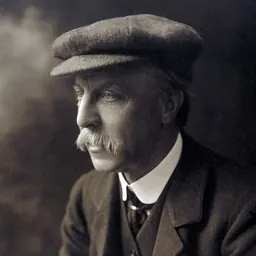
Lived 1889 – 1935 (aged 45–46). Harold Ware was an American drafter and farmer.
Harold or "Hal" Ware (August 19, 1889 – August 14, 1935) was an American Marxist, regarded as one of the Communist Party's top experts on agriculture. He was employed by a federal New Deal agency in the 1930s. He is alleged to have been a Soviet spy and is understood to have founded the "Ware Group," a covert group of operatives within the United States government aiding Soviet intelligence agents.
Background
Harold Maskell Ware, best known by his nickname "Hal," was born on August 19, 1889, in Woodstown, New Jersey, the fourth child of Ella Reeve Bloor and her husband, Lucien Bonaparte Ware. Two of Ware's three older siblings died in early childhood.
His mother, Ella Bloor, converted to socialism during 1894-1895, when the family lived in Philadelphia.
Career
Following graduation, with financial help from his father he bought a grain and dairy farm near Arden, a small town near Philadelphia, where he learned farming firsthand. Ware and his family stayed with the CLP throughout its permutations, merging into the United Communist Party in 1920, into the Communist Party of America in 1921, and into the "aboveground" Workers Party of America in 1922, and eventually the Communist Party of the USA in 1929.
Almost immediately after the Party launched, federal and state authorities moved against the fledgling communist movement, forcing its adherents to make use of pseudonyms and to conduct their activities in secret. During the so-called "underground period" of the party, the agriculturally-oriented Ware used the pseudonym "H.R. Harrow," publishing under that by-line in the communist press. (The pseudonym seems to have been a pun on his real given name, "Harold.")
First section of "H.R. Harrow's" agricultural recommendations to the underground Communist Party of America (November 1921)
In 1921, eager to study the plight of migrant farm workers firsthand with a view to organizing them for the Communist Party, Ware took a six-month trip around the United States, working harvests from the South to the Midwest, Northwest and then East again through the Upper Midwest. Ware was not typically a member of the Communist Party's top committees; he preferred to work in the agricultural sector rather than to engage in factional party politics.
Soviet collective farming
Ware helped come up with the idea of using funds raised by the Friends of Soviet Russia organization to construct a model collective farm in Soviet Russia. His farm would serve as a model to help to alleviate the great Russian famine through production of grain plus firsthand demonstration of modern agricultural technique. An appropriation of $75,000 was granted for the project, with Ware's half-brother, Carl Reeve, traveling around the U.S., showing a motion picture depicting horrific conditions in Russia to help raise funds. Funding in hand, Ware went to the J.I. Case Farm Implement Co. and brokered a deal for 24 tractors and related equipment.
Shortly after completion of this task, Ware established a research center in Washington, DC called Farm Research, Inc. and recruited personnel to run it. ("Farm Research" received funding from the Robert Marshall Foundation, which also funded the Communist controlled news agency "Federated Press." ) In 1932, Ware was active in the Farmers Holiday Association on behalf of the Communist Party. Chambers wrote that in addition to the four members of the group (also identified by Lee Pressman under oath to Congress in 1950, though Pressman denied that the group engaged in espionage):
There must have been sixty or seventy others, though Pressman did not necessarily know them all; neither did I. All were dues-paying members of the Communist Party. Nearly all were employed in the United States Government, some in rather high positions, notably in the Department of Agriculture, the Department of Justice, the Department of the Interior, the National Labor Relations Board, the Agricultural Adjustment Administration, the Railroad Retirement Board, the National Research Project — and others. He stated he had met Ware and that:
In my desire to see the destruction of Hitlerism and an improvement in economic conditions here at home, I joined a Communist group in Washington, D. C, about 1934. My participation in such group extended for about a year, to the best of my recollection.
Pressman also indicated that in at least one meeting of his group, perhaps two, he had met Soviet intelligence agent J. Peters. Pressman's 1950 testimony provided the first corroboration of Chambers' allegation that a Washington, D.C., Communist group around Ware existed, with federal officials Nathan Witt, John Abt and Charles Kramer named by Pressman as members of this party cell. Of his own Ware Group participation, Weyl said: "I was one of its less enthusiastic members." Weyl described what could be interpreted as Ware's efforts to corral him into espionage and his own effort to extract himself from the group:
Ware wanted me to try to get into the Foreign Service and be attached to the staff of William Bullitt, our first Ambassador to the Soviet Union ... I didn't think there was anything illegal about membership in the Ware unit, but nevertheless it was duplicitous ... I told Hal Ware that the Moscow idea was out and that I wanted to leave Washington and resign from government. He said: absolutely not. I forced his hand by committing an appalling breach of security. I showed up at a cell meeting with the girl I was having an affair with, a young lady who was not a Communist Party member and who had known nothing about the group. Ware withdrew his objections and I resigned from AAA. Hope Hale Davis: In her 1994 memoir, Hope Hale Davis also admitted to membership in the Ware group: Davis confirmed that it was engaged in illegal activity.
Personal life and death
Ware married Margaret Stephens: in 1916, she died three weeks after birth of their second child, Nancy Stephens Ware.
While in Russia, Ware met Jessica Smith, working with the Quaker famine relief effort, the American Friends Service Committee. Back in New York City, the pair were married in January 1925 by Rev. Norman Thomas, soon to become a key political leader of the Socialist Party of America. "Planning for Permanent Poverty: What Subsistence Farming Really Stands For." Harper's Magazine, April 1935
Don’t just read it —
keep it.
Full-length biographies made to live with: read them, listen on the way to work, watch them tonight.
- E-book
- Audio
- Video
Instant download · yours to keep · every purchase keeps this site free
Important facts
Family & relationships
People in Harold Ware's life
Named in this biography and alive at the same time





Related people
Same field, nearest in time



Contemporaries
People whose lives overlapped Harold Ware's


Frequently asked questions
Who was Harold Ware?
American communist (1889–1935)
When was Harold Ware born?
Harold Ware was born on 19 August 1889 in Woodstown.
When did Harold Ware die?
Harold Ware died in 1935.
What was Harold Ware's occupation?
Harold Ware was a drafter and farmer.
What nationality was Harold Ware?
Harold Ware was American.
Sources & further reading
Cite this page
APA: Biography.guide. (2026). Harold Ware. https://biography.guide/harold-ware/
MLA: "Harold Ware." Biography.guide, https://biography.guide/harold-ware/.
Chicago: "Harold Ware." Biography.guide. https://biography.guide/harold-ware/.
Data last updated: 2026-09-20 · Spot an error? Report a correction.
Page generated 2026-09-27 05:24 UTC