
About Lee Pressman
Lived 1906 – 1969 (aged 63). Lee Pressman was an American lawyer and spy, known for International Juridical Association, National Lawyers Guild and Ware Group.
Lee Pressman (July 1, 1906 – November 20, 1969) was a labor attorney and earlier a US government functionary, publicly alleged in 1948 to have been a spy for Soviet intelligence during the mid-1930s (as a member of the Ware Group), following his recent departure from Congress of Industrial Organizations (CIO) as a result of its purge of Communist Party members and fellow travelers. From 1936 to 1948, he represented the CIO and member unions in landmark collective bargaining deals with major corporations including General Motors and U.S. Steel. According to journalist Murray Kempton, anti-communists referred to him as "Comrade Big."
Background
Pressman was born Leon Pressman on July 1, 1906, on the Lower East Side of in New York City, first of two sons of immigrants Harry and Clara Pressman of Minsk. His father was a milliner on the Lower East Side of New York City. As a child, Leon survived polio. In his teens, the family moved out to the Bensonhurst section of Brooklyn. In 1922, he entered Washington Square College of New York University, where classmates included Nathan Witt and possibly Charles Kramer (later, fellow AAA and Ware Group members), then transferred to Cornell University, where he studied under labor economist Sumner Slichter.
In 1926, Pressman received his bachelor's degree from Cornell University in Ithaca, New York. In 1929, he received a Juris Doctor degree from Harvard Law School. At Harvard, he was a member of Phi Beta Kappa and was in the same class as Alger Hiss. With future defending lawyer Edward Cochrane McLean, they served on the Harvard Law Review:
Mr. Hiss: ... Lee Pressman was in my class at the Harvard Law School, and we were both on the Harvard Law Review at the same time.
Career
After graduation, he joined the law firm of Chadbourne, Stanchfield & Levy (currently Chadbourne & Parke) in New York City. (During the Great Depression, founder Thomas Chadbourne asserted that the capitalist system itself was "on trial" and became an early champion of both collective bargaining rights and profit sharing for workers. ) There, he worked for Jerome Frank (future chair of the SEC). When Jerome left in 1933 to work in FDR's New Deal, Pressman joined a small firm called Liebman, Blumenthal & Levy, to handle Jerome's clients. (See "Ware Group" sub-section, below)
AAA
In July 1933, Pressman received appointment as assistant general counsel of the Agricultural Adjustment Administration (AAA) by Secretary of Agriculture Henry A. Wallace. He reported to Jerome Frank, who was general counsel. The New Dealers saw the AAA as complementing the National Recovery Act (NRA – where fellow Ware Group member and lifelong Hiss friend Henry Collins worked). As they arrived at AAA, two camps quickly arose: previously existing officials who favored agribusiness interests and New Deal appointees who sought to protect small farmers (and farm laborers) and consumers as much as agribusiness. Or, as Arthur M. Schlesinger, Jr. summarized the attitude, "There were too many Ivy League men, too many intellectuals, too many radicals, too many Jews." By December 1933, Frank had hired John Abt and Arthur (or Howard) Bachrach (brother of Abt's sister Marion Abt Bachrach) to develop litigation strategies for agricultural reform policies.
WPA, RA By April 1935, Pressman had been appointed general counsel in the Works Progress Administration by Harry L. Hopkins. called the Emergency Relief Appropriation Act of 1935, passed in the United States Congress and became law on April 8, 1935. As a result, on May 6, 1935, FDR issued Executive Order 7034, that essentially transformed the Federal Emergency Relief Administration into the Works Progress Administration. "Pressman set to work analyzing the budget request that would transform FERA into the WPA."
In 1943, during hearings by a Dies Committee "Special Committee on Un-American Activities," director of research J.B. Matthews asked whether witness Lucien Koch had retained the New York City law firm of "Hays, St. John, Abramson, and Schulman" and "Is this Lee Pressman's firm?"; Koch confirmed "yes." (Osmond K. Fraenkel, a fellow member of the National Lawyers Guild, was also a member of Hays, St. John, Abramson, and Schulman. )
In his role as the CIO's general counsel, Pressman was influential in helping to stop the attempt to deport Communist Longshoreman's Union official Harry Bridges.
Under John L. Lewis 1936–1940
In June 1936, Pressman was named a counsel of the Congress of Industrial Organizations (CIO—later AFL-CIO) for the Steel Workers Organizing Committee (SWOC—later, the United Steelworkers of America), appointed by union chief John L. Lewis as part of a conscious attempt to mobilize left-wing activists on behalf of the new labor federation. According to scholars, "One of Pressman's unofficial roles in the CIO was liaison between the CIO's Communist faction and its predominantly non-Communist leadership."
In June 1938, Pressman moved back to Washington, D.C., to become full-time general counsel for the CIO and the SWOC. He remained in this position for the next decade. (According to his obituary in the New York Times, he was general counsel from 1936 to 1948.
In May 1939, Pressman spoke on behalf of the CIO before the US Senate's Education and Labor sub-committee to support the "National Health Bill" (part of the Reorganization Act of 1939), sponsored by US Senator Robert F. Wagner. He attacked the American Medical Society's position against the bill as "reactionary," which he felt had kept the bill from going "far enough."
From May through August 1939, Pressman attacked support for the "Walsh amendments" to the 1935 National Labor Relations Act (AKA the "Wagner Act"). In May 1939, when AFL president William Green supported the amendments on CBS Radio, the CIO's response, penned by Pressman, accused Green of colluding with the National Association of Manufacturers against not just the CIO but also the AFL, i.e., workers. In August 1939, Pressman appeared before the Senate Labor Committee to state that Green's support did not represent AFL rank and file.
Also in August 1939, Congress passed the Hatch Act of 1939, which restricted political campaign activities by federal employees. A provision of the Hatch Act made it illegal for the federal government to employ anyone who advocated the overthrow of the federal government. The left-leaning United Public Workers of America (UFWA) immediately hired Pressman to challenge the constitutionality of the Hatch Act.
In October 1939, during a closed-door session during a CIO convention, president John L. Lewis declared his intent to rid the CIO of "Communist influence." This decision came in response particularly from Philip Murray and Sidney Hillman, the CIO's two vice presidents, that pre-dated the Hitler-Stalin Pact (announced the previous month). Instead, Lewis would empower eight member of the CIO's 42 executive committee members. Further, Lewis increased the number of CIO vice presidents from two to six with: R. J. Thomas, president of the United Automobile Workers; Emil Rieve, president of the Textile Workers of America; Sherman Dalrymple, president of the United Rubber Workers; and Reid Robinson, president of the International Union of Mine, Mill and Smelter Workers. "Left forces" failed to have Joseph Curran, president of the National Maritime Union, elected vice president. Further, Lewis demoted Harry Bridges from West Coast CIO director to California state CIO director. In 1939, New York Times reported on further internal conflict.
On January 3, 1940, Pressman discussed the "1940 Legislative Program of the CIO" on CBS Radio. orIn his speech, Pressman said:
On pretexts of economy, more money for war purposes and similar catch cries, the reactionary financial interests and their political henchmen hope to reduce appropriations for the unemployed and for publish works, to emasculate labor and social legislation, and to restrict our civil liberties. The CIO ... calls for a determined advance in adapting social legislation to the needs of the whole American people.
On May 18, 1940, Pressman again spoke on CBS Radio, this time on the "Wagner Act."
In 1941, FDR appointed CIO vice president Sidney Hill to the Office of Production Management. Hillman lobbied for a mediating entity to OPM, and FDR created the National Defense Mediation Board (NDMB). In June 1941, NMDB and the United Auto Workers took over a North American Aviation factory during a strike. Later in June 1941, at a convention of the National Lawyers Guild in Chicago, Pressman criticized the Vinson and Ball bills before the US Congress, both of which he accused of a "long-range" plan whose aims included "destruction of workers' rights to organize, bargain collectively, and strike"; "destruction of labor organizations as the barrier to unchecked monopoly profits"; and "complete control of the national economy and the government by big business."
Pressman continued to give as good as he got. In February 1940, he held a "heated exchange" with US Representative Clare Hatch during a hearing of the US House Labor Committee, again on the issue of amendments to the NRLA (Wagner Act):
Pressman: I'll answer the question all right, Mr. Hoffman. Representative Thomas can take care of himself.
Hoffman: This boy is not going to tell me what to ask. I won't take this from Pressman. Remember that.
Pressman: I'll remember all I say.
Hoffman: You keep a civil tongue in your head.
In July 1943, the CIO formed a political action committee, the "CIO-PAC," chaired by Sidney Hillman, and supported by Pressman and John Abt as co-counsels.
Thus, in 1943, as American spy Elizabeth Bentley resurrected the Ware Group (of which Abt had been a member), could not risk involvement with her or the group. Instead, the group reformed under Victor Perlo as the Perlo Group.
In September 1943 at a conference of the National Lawyers Guild, Pressman praised labor for reducing strikes and promoting the war effort. He praised the National War Labor Board's policy for recognizing labor unions as institutions within the basic framework of our democratic society. He criticized "selfish blocs" in Congress that had opposed FDR's program.
In 1944, Pressman participated in resolution of a labor dispute of a national case in basic steel, involving some six hundreds unions on strike. The six-person board consisted of David L. Cole and Nathan P. Feisinger for the government, Philip Murry of the CIO with Pressman as counsel for unions, John Stevens with Chester McLain of U.S. Steel for industry.
During 1945–1947, Pressman worked with John Abt for the CIO to help create the World Federation of Trade Unions (WFTU) as successor to the International Federation of Trade Unions, itself seen as dominated by communist and socialist parties. During formation of the WFTU and in working with pro-Soviet American unions, "the active role played by" Pressman "in writing and rewriting convention resolutions helped to smooth possible conflicts."
In April 1945, Pressman represented Harry Bridges before the U.S. Supreme Court in Bridges v. Wixon with the help of Carol Weiss King and her recruit, Nathan Greene who penned the brief. Later that month, Pressman joined Murray, Abt, and other CIO officials in Paris for a meeting with Soviet counterparts about the WFTU.
On June 6, 1946, he contributed to a broadcast entitled "Should There Be Stricter Regulation of Labor Unions?" on America's Town Meeting of the Air show on NBC Radio with Sen. Allen J. Ellender, Henry J. Taylor, and Rep. Andrew J. Biemiller.
In July 1946, at a National Lawyers Guild convention in Cleveland, he attacked the "fallacious notion that increased wages in the interests of adequate purchasing power necessarily bring higher prices." He also attacked future Progressive Party vice presidential candidate, US Senator Glen H. Taylor, for the latter's prediction of economic uncertainty due to monopolies. He asked that an "aroused and enlightened public" make itself heard in Congress and in the 1946 fall elections:
This Congress has sought to stifle labor organization and at the same time has fought vigorously to assure expanded profit levels through tax and price policies. It has resisted any effort to lighten the tax burden on the lower income groups, but has acted swiftly to remove the excess-profits tax on corporations while continuing the carry-back provisions permitting gigantic tax rebates out of excess-profits tax payments of prior years.
In 1947, Pressman became involved in passage of the Taft-Hartley Act. In January 1947, he appeared on "New York Times radio" station WQXR-FM with US Senator Carl A. Hatch, former National War Labor Board chairman William Hammatt Davis, and General Precision Equipment Corporation general counsel Robert T. Rinear, to debate the topic "Do we need new labor laws?" While endorsing a Truman commission plan, he attacked any labor legislation passed hastily ahead of the commission's results, saying, "Judging from the bills now before Congress, their purpose is merely to penalize labor organizations." Senator Hatch agreed with him that severe wage cuts in terms of real wages and increased cost of living would not find resolutions in terms of legislation that addresses only jurisdictional disputes or secondary boycotts. "We need additional and new laws on all phases of the general problem of labor-management," Hatch said. Again in January 1947, on the topic of the related Portal to Portal Act of 1947, publicly before the US Senate Judiciary Committee, he urged Congress to make that act a simple authorization to employers and unions to settle portal claims through collective bargaining, while prohibiting management from attempting such settlements with individual workers at the "economic mercy" of employers. Further, he urged Congress to use the US Supreme Court's definition of "work" as activities of an employee which required physical or mental exertion for an employer's benefit and under an employer's control. Any legislation that ended portal-to-portal claims, he said, would "most seriously undermine" and in fact threatened "the entire future, operation" of the 1938 Fair Labor Standards Act. Again at month's end, he attacked labor curb bills in Congress during a speech before the University of Cincinnati Lawyers Institute. He said: Where parties agree to union security, what objection can there be? Nine million workers are now covered by such contracts. The status of the union under the Wagner Act established the obligation not to discriminate against non-members. Why should not all employees, therefore, have an obligation to become members? ... The anti-trust law stating that the service of the human being is a commodity is a negation of the Constitution, of the 1918 Clayton Act and the Norris-La Guardia Act ... The employer's right of free speech is fully protected ... The act has not created inequality between employers and employees for collective bargaining. The fairness of the Labor Board has been established by decisions of the Supreme Court ... [A compulsory] "cooling-off period" [would] actually discourage collective bargaining ... There is adequate protection in State courts for breach of collective bargaining agreements. Federal legislation will limit the protection labor unions now have under the anti-injunction statute. Litigation for alleged breach of contract is negation of collective bargaining and would merely clutter up the courts. He also asserted that labor unions do not constitute monopolies, compared with industrial combines. Later on June 24, 1947, Pressman appeared again on CBS Radio with Raymond Smethurst, general counsel of NAM to discuss the effect of the new labor law. In August 1947, he gave a strong speech to the International Union of Mine, Mill and Smelter Workers (IUMMSW) against the Taft-Hartley Act.
By September, the right wing of the CIO, led by Emil Rieve, claimed they were about to drive left wingers "with Lee Pressman as the leading victim" out of the CIO during its Fall 1947 convention.
1948
As of 1948, James I. Loeb, co-founder of both the Union for Democratic Action (UDA) Americans for Democratic Action (ADA), stated that Pressman was "probably was the most important Communist in the country ... he certainly was a Communist influence."
In early 1948, Pressman led a group of like-minded colleagues in a pitch to CIO executives to abandon Truman and the Democratic Party for Henry A. Wallace and his Progressive Party. The pitch failed. Repercussions came quickly. ) Pressman went into private legal practice in New York City following his firing. In March and April 1948, however, it was clear that the CIO still used his services, even after "firing" him. In March 1948, he joined CIO attorneys in opposing Government attorneys, who had declared that "the Taft-Hartley Law's ban against expenditures by labor unions in connection with Federal elections permissibly limited Constitutional guarantees of freedom of speech and of the press." In April 1948, he represented the CIO before the Supreme Court in a case about barring of expenditures by labor unions for political purposes. (Felix Frankfurter, then Supreme Court Justice, taught at Harvard Law while Pressman was a student there.) He also helped get Potash set free on $5,000 bail while awaiting deportation hearings.
Pressman continued private practice. He continued to represent the MEBA, e.g., over a restraining order against strikes on the Atlantic and Gulf Coasts in 1948. At the Supreme Court he represented Philip Murray (1886–1952), Scottish-born steelworker and American labor leader, first president of SWOC and USWA, and longest-serving president of the CIO.
Also in March 1948, Pressman joined a group of lawyers in defending five "aliens" against deportation hearings due to their Communist ties. Pressman represented all five, at least some of whom had their own attorneys: alleged Soviet spy Gerhart Eisler (represented by Abraham J. Isserman), Irving Potash of the Fur and Leather Workers Union, Ferdinand C. Smith of the National Maritime Union (Pressman); Charles A. Doyle of the Gas, Coke and Chemical Workers Union (Isadore Englander), and CPUSA labor secretary John Williamson (Carol Weiss King). Pressman went on to join Joseph Forer, a Washington-based attorney, in representing the five before the U.S. Supreme Court. On May 5, 1948, Pressman and Forer received a preliminary injunction so their defendants might have hearings with examiners unconnected with the investigations and prosecutions by examiners of the Immigration and Naturalization Service. (All attorneys were members of the National Lawyers Guild.)
On May 16, 1948, the United Public Workers read aloud their general counsel Pressman's letter, summarized by the New York Times:
The Congressional proposal to prohibit payment of Federal wages to members of groups whose leaders refused to swear they were not Communists violated the constitutional rights of civil service workers.
Mr. Pressman contended that the proposed ban would deprive civil service workers of freedom of speech, press and assembly under the first amendment, would violate their right to participate in political activity under the ninth and tenth amendments and would impose a test of "guilt by association" in contravention of the fifth amendment.
One of the most basic doctrines in American jurisprudence is that individuals may not be prosecuted for acts except for those for which they are directly responsible. It is this doctrine which precludes any individual from being adjudged guilty because of association, rather than because of his own personal guilt. It is this doctrine which is directly violated by the proposed rider. Later in May, during testimony before an SEC board of inquiry, Pressman declared he had "absolutely nothing to do with" the suit. "I have not been requested by anyone to suggest the name of a lawyer who would file a lawsuit against the Kaiser-Frazer Corporation." He stated, "I demand that I be given the opportunity to examine Mr. Lund under oath on the stand to determine who gave him that inaccurate information." The trial's examiner Milton P. Kroll informed Pressman, "You have been given the opportunity to state your position on the record. Your request is denied."
After passage of the Mundt-Nixon Bill on May 19, 1948, at month's end Pressman submitted a long, undated statement called "The Mundt Control Bill (H.R. 5852), a Law to Legalize Fascism and Destroy American Democracy" as part of proceedings by the Senate Judicial Committee on "Control of Subversive Activities."
During 1948, Pressman formed Pressman, Witt & Cammer; Bella Abzug started her career there. In September 1948, Pressman and Charles J. Margiotti tested the campaign-expenditures provision of the Taft-Hartley Act. Pressman and Margiotti each received $37,500 for their services – a fee CIO President Philip Murray called "outrageous, even for Standard Oil."
Political involvements
Pressman was important enough in American politics to have Arthur Schlesinger, Jr. single him out as recent example in Schlesinger's concept of the Vital Center as first described in a long New York Times article in 1948 entitled "Not Left, Not Right, but a Vital Center." In it, Schlesinger argues first that the 19th Century concept of "linear" spectrum Left and Right did not fit developments of the 20th Century. Rather, he promoted the "circular" spectrum of DeWitt Clinton Poole, in which Fascism and Nazism would meet at the circle's bottom with Soviet Communism (Leninism, Stalinism). He himself promotes the term "Non-Communist Left" (NCL) as an American modification of Leon Blum's Third Force. He cites as example the ascendancy of Walter Reuther in the CIO and ouster of Lee Pressman: Newspapers will doubtless continue to refer to Walter Reuther as the leader of the Right wing of the CIO, whereas, as every automobile manufacturer knows, Reuther is to the Right only in the sense of being profoundly pro-democratic and anti-Communist ... Instead of backing the Non-Communist Left as the group in Europe closest to the American progressive faith in combining freedom· and planning, the CIO, for example, maintained a disturbing silence over foreign affairs; and altogether too many liberals followed Communist cues in rejoicing at every Soviet triumph and at every Socialist discomfiture. The Wallace Doctrine of non-interference with Soviet expansion prevailed in these years. In recent months, the conception of the non-Communist Left has made headway in the United States. On the moderate Right, men like Senator Vandenberg and John Foster Dulles have recognized its validity. The fight against Communist influence in the CIO, culminating in Walter Reuther's victory in the United Auto Workers and the discharge of Lee Pressman as CIO general counsel, has finally brought the CIO side by side with the AFL in support of the Third Force in Europe.
In March 1948, Pressman joined a 700-member national organization in support of Henry A. Wallace for U.S. president and Glen H. Taylor for U.S. vice president.
By June 1948, the New York Times cited him as "general counsel" for the "National Labor Committee for Wallace." At the party's convention (July 23–25, 1948), Pressman served on the committee (under Rexford Tugwell, who had helped create and directed the AAA back in the early 1930s) to create a platform that the New York Times summed up as "endorsing Red foreign policy."
At the time, the Washington Post dubbed Pressman, Abt, and Calvin Benham "Beanie" Baldwin (C. B. Baldwin) as "influential insiders" and "stage managers" in the Wallace campaign. However, he was reportedly "forced out because of his Communist line."
During the 1948 convention, the New York Times described as follows: Lee Pressman, who, for years, exerted a powerful left-wing influence as counsel for the CIO, is secretary of the Platform Committee, which will hold another executive session at 10 A. M. Friday before preparing its final draft for submission to the 2,500 delegates who are expected at the convention's closing session next Sunday.
On June 9, 1948, Pressman declared that he himself was running for public office as the candidate of the American Labor Party for U.S. Congress in the 14th District of New York (Brooklyn). In early July 1948, he registered his candidacy. He ran against Abraham J. Multer. Multer used Pressman's communist association against him early on by claiming that he had received his "certificate of election" from the Daily Worker (CPUSA newspaper), thanks to its condemnation of him. In July 1948, he faced condemnation from New York state's CIO head Louis Hollander, who promised to oppose Pressman's candidacy. In late August 1948, he
In August 1948, during the Progressive Party convention in Philadelphia, Rexford Tugwell, chairman of its platform committee found his self-style "old-fashioned American progressive" platform scrapped by a pro-Communist line platform spearheaded by Pressman. TIME magazine noted, "It now seemed obvious to Tugwell that the Communists had taken over."
In the fall of 1948, Communist affiliation continued to hound Pressman's campaign. A month before the election, Pressman might have held out hope, as the New York Times characterized him as a lawyer of "wide reputation" and a man with a "national reputation" and did not mention allegations in Washington.
Private practice 1951-1969
Between 1948 and 1950, Pressman had represented "the estates of persons with heirs in Russia" of interest to the Soviets as well as affairs of AMTORG.
By 1951, Pressman had only one major client left, the Marine Engineers Beneficial Association (MEBA). Its president, Herbert Daggett, retained Pressman at $10,000 (some $94,000 adjusted for 2017).
Espionage allegations
Ware Group (1933–1935)
In 1933, Pressman was one of the original members of the Ware Group. He was present at its earliest known meeting. Furthermore, surmised historian Allen Weinstein, as the "top-ranking AAA official in the Ware Group," he was most likely also a top recruiter of new members. Weinstein also noted that, according to Gardner Jackson, Pressman had recommended that the Nye Committee take Alger Hiss on loan.
On August 4, Pressman characterized Chambers' testimony as "smearing me with the stale and lurid mouthings of a Republican exhibitionist who was bought by Henry Luce." By using Chambers, he claimed, HUAC sought to achieve three objectives: distract Americans from "the real issues" (civil rights, inflation, housing, Israel, and repeal of the Taft-Hartley Act), smear FDR's New Deal officials, and discredit Henry Wallace and his associates."
On August 20, 1948, in testimony under subpoena before the HUAC, Pressman declined to answer questions regarding Communist Party membership, citing grounds of potential self-incrimination.
1950 admission
Chairman Martin Dies, Jr. of HUAC proofs his letter replying to FDR's attack on his committee (1938)
During the superheated political environment which surrounded the Korean War, Pressman seems to have stepped back from his previous communist affinities. In 1950, Pressman resigned from the American Labor Party because of "Communist control of that organization," which was reported in the press and which signaled HUAC that Pressman was at last ready to talk.
Called again before Congress to give testimony on Communist Party activities, on August 28, 1950, Pressman reversed his previous decision to exercise his Fifth Amendment rights and gave testimony against his former comrades. Although he made no mention of having himself conducted intelligence-gathering activities, his 1950 testimony provided the first corroboration of Chambers' allegation that a Washington, D.C., communist group around Ware existed, with federal officials Nathan Witt, John Abt and Charles Kramer named as members of this party cell. Sophia Platnik Pressman (Cornell '28) died on May 12, 1980, in Sandia Park, New Mexico.
Legacy
"Showing men in power how to get things done legally" was Pressman's special skill, asserts historian Gilbert J. Gall in a biography of Pressman.
TIME magazine (never a friend of Pressman's) wrote at his death: Died. Lee Pressman, 63, the C.I.O.'s legal counsel from 1936 until 1948, when his far-left politics finally cost him his job and career; of cancer; in Mt. Vernon, N.Y. Pressman never made any bones about his Communist leanings, often supporting the Moscow line. Yet as a union lawyer he was tops; he played a major role in negotiating the original C.I.O. contracts with such industrial giants as U.S. Steel and General Motors, and ably fought labor cases before the Supreme Court. In 1948, "the first of a series of reports on Communists and Pro-Communists for Wallace" summarized Pressman's role in both the CIO and the 1948 presidential campaign as follows:
Subsequent findings
Pressman's VENONA codename was "Vig."
In 1949, VENONA reveals that the KGB used Pressman to pay Victor Perlo for "analysis." In 1950, it reported "Vig–covering the activities of the Progressive Party." In 1951, Pressman served as "conduit" to pay funds to Harold Glasser.
Don’t just read it —
keep it.
Full-length biographies made to live with: read them, listen on the way to work, watch them tonight.
- E-book
- Audio
- Video
Instant download · yours to keep · every purchase keeps this site free
Important facts
People in Lee Pressman's life
Named in this biography and alive at the same time




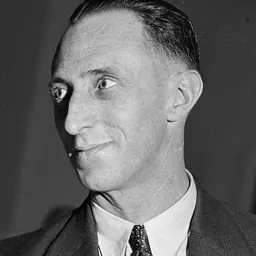

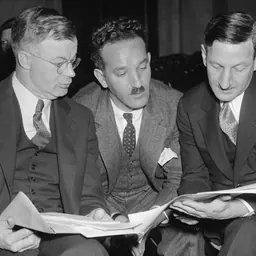
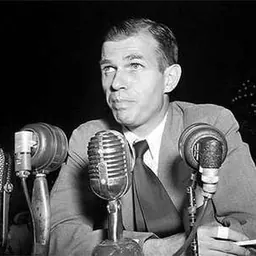
Related people
Same field, nearest in time


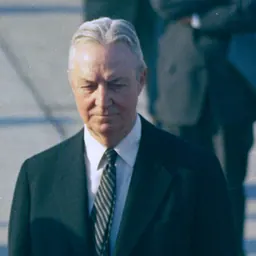
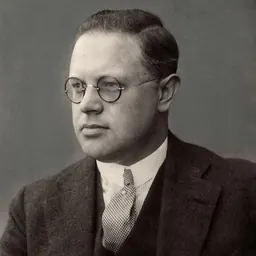
Contemporaries
People whose lives overlapped Lee Pressman's

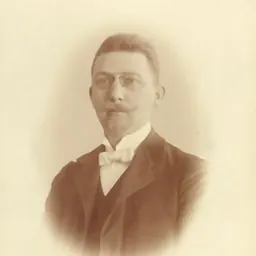
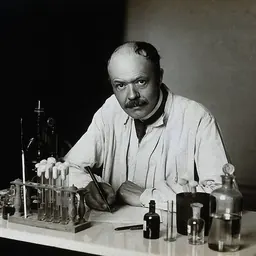
Frequently asked questions
Who was Lee Pressman?
American spy
When was Lee Pressman born?
Lee Pressman was born on 1 July 1906 in New York City.
When did Lee Pressman die?
Lee Pressman died on 20 November 1969 in Mount Vernon.
What was Lee Pressman's occupation?
Lee Pressman was a lawyer and spy.
What was Lee Pressman known for?
Lee Pressman was known for International Juridical Association, National Lawyers Guild and Ware Group.
What nationality was Lee Pressman?
Lee Pressman was American.
Sources & further reading
Cite this page
APA: Biography.guide. (2026). Lee Pressman. https://biography.guide/lee-pressman/
MLA: "Lee Pressman." Biography.guide, https://biography.guide/lee-pressman/.
Chicago: "Lee Pressman." Biography.guide. https://biography.guide/lee-pressman/.
Data last updated: 2026-09-20 · Spot an error? Report a correction.
Page generated 2026-09-27 05:25 UTC