
About Nathan Witt
Lived 1903 – 1982 (aged 79). Nathan Witt was an American lawyer, known for International Juridical Association, National Lawyers Guild and Ware Group.
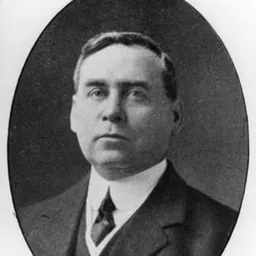
Nathan Witt (February 11, 1903 – February 16, 1982), born Nathan Wittowsky, was an American lawyer who is best known as being the Secretary of the National Labor Relations Board (NLRB) from 1937 to 1940. He resigned from the NLRB after his communist political beliefs were exposed, and he was accused of manipulating the Board's policies to favor his own political leanings. He was also investigated several times in the late 1940s and 1950s for being a spy for the Soviet Union in the 1930s. No evidence of espionage was ever found.
Background
Nathan R. Witt was born February 11, 1903, into a Jewish family on the Lower East Side of New York City. His father changed the family name to Witt shortly after his birth. His college education was interrupted several times by the need to earn a living: he drove a taxi cab.
Angered by what he perceived as the judicial mistreatment and illegal execution of the anarchists Sacco and Vanzetti in 1927, he drove a taxi cab for two years to earn money for law school. He graduated from Harvard Law School in 1932, His friend, Lee Pressman, recommended him for the job. According to accusers Whittaker Chambers, Lee Pressman, and Elizabeth Bentley, Witt—along with John Abt, Charles Kramer, Alger Hiss, and Nathaniel Weyl, among others—were part of the so-called "Ware group," a clandestine Communist Party USA group formed by AAA economist Harold Ware. Pressman said the men merely met to study and discuss left-wing political theory, but Chambers described it as a Soviet-controlled cell dedicated to committing espionage.
There is widespread disagreement as to whether Witt was actually a Communist Party member or not. Historian Arthur M. Schlesinger, Jr. observed that Chambers never provided evidence of Witt's party membership, just uncorroborated accusation. Labor historian Leon Fink agrees. Labor historian Nelson Lichtenstein, however, concluded that Witt "probably" was both a member of the Communist Party and held communist ideals, but historian Ronald Schatz has asserted that Witt's communist sympathies did "not necessarily" mean Party membership.
Witt never hid his communism and made it well known to others from his earliest days in the government. There is general agreement among professional historians that Witt's communist views did not affect his work and did not change the outcome of any policy choices made by government agencies.
National Labor Relations Board (NLRB) Witt (center) with NLRB Chair J. Warren Madden (left) and NLRB Chief Counsel Charles Fahy December 13, 1937 Witt joined the legal staff of the "first" National Labor Relations Board in February 1934. He exerted a great deal of influence in the Review Section, The Smith Committee received testimony from hundreds of witnesses, conducted a nationwide survey regarding the impact of the NLRB, and questioned NLRB officials at length about the agency's alleged anti-business and anti-American Federation of Labor/pro-Congress of Industrial Organizations biases. Leiserson testified that he had repeatedly voiced his concerns to board chairman J. Warren Madden, but that Madden and board member Edwin S. Smith had allied to prevent any attempt to rein in or fire Witt. and that Witt had assisted Madden in secretly building public and expert support for the NLRB (expending federal funds in lobbying against Congress). Madden attempted to defend Witt.
By September 1940, the Smith Committee was accusing other NLRB employees, such as chief economist David J. Saposs, of harboring communist ideas. It was clear that neither Madden nor Witt could continue at the NLRB much longer. President Franklin D. Roosevelt named University of Chicago economics professor Harry A. Millis to be the new chairman of the NLRB in November 1940, after Madden's term on the Board expired in August.
Witt resigned from the NLRB on November 18, 1940, although his resignation was not accepted until after Millis was sworn in on November 27. He ended his work at the Board on December 10. Later that month, Witt joined Board member Edwin S. Smith, former Board associate general counsel Thomas I. Emerson, and four other NLRB attorneys in denying Smith Committee testimony that they were members of the Communist Party or had followed the CPUSA line in their work.
Witt & Cammer
Harold I. Cammer was Witt's law partner as of 1941 and also legal counsel during hearings that started the Hiss Case in August 1948 In 1941, after leaving the NLRB, Witt joined with Harold I. Cammer (founder of the National Lawyers Guild) to form a law partnership of Witt & Cammer in New York City. (On November 24, 1947, the address for "Witt & Cammer, Esqs." was 9 East 40th Street, New York, NY. ) New clients for Witt & Cammer included the CIO (in New York), other labor organizations, and left-wing unions like the International Union of Mine, Mill and Smelter Workers (known as "Mine-Mill"). In 1941, Witt represented the Steel Workers Organizing Committee (or SWOC, later, the United Steel Workers of America).
Witt was involved in numerous labor union disputes and labor-related free speech cases in the 1940s and 1950s. He represented members of the College Teachers Union (a predecessor to the modern Professional Staff Congress union at the City College of New York) when they were accused in 1941 of being communists by the Rapp-Coudert Committee. He briefly served as legal counsel to the International Fur & Leather Workers Union in 1944 in a major due process case. He was the lead attorney for the Seamen's Joint Action Committee, a CIO-backed insurgent group which allied with three CIO longshoremen's unions to challenge International Longshoremen's Association president Joseph Ryan.
Pressman, Witt & Cammer Meantime, Pressman, remained as chief legal counsel of the CIO itself as well as the SWOC, both of which he had joined in the late 1930s, as Witt was joining and rising in the NLRB. (Bella Abzug started her career at Pressman, Witt & Cammer.)
In early 1948, Witt's clients included the Greater New York CIO Council. As their counsel, he spoke to the press over allegations that FBI investigators were intimidating local CIO offices. "There could not possibly be any technical violation in 1948 except for the Isacson election and the FBI agents made clear they were not investigating that."
Also in early 1948, Witt was working with fellow National Lawyers Guild member Joseph Forer of Washington, DC. On January 26–28 and February 2, 1948, a hearing of the House Education and Labor Subcommittee, chaired by U.S. Representative Clare E. Hoffman, occurred on the topic of a strike by United Cafeteria and Restaurant Workers (Local 471) and its parent, the United Public Workers of America (UPWA), CIO, against Government Services, Inc. (GSI), which had already lasted nearly a month. UPWA was a client of Forer & Rein. Hoffman refused to let UPWA head Abram Flaxer read a statement and asked questions including whether Flaxer was a communist. Witt, one of his UAW attorneys, objected to "abuse of congressional power." On January 26, 1948, UPWA negotiations director Alfred Bernstein (father of Carl Bernstein), charged that House committee agents had raided the union's offices. During January, William S. Tyson, solicitor for the Labor Department, and Robert N. Denham, general counsel for the National Labor Relations Board, both agreed that nothing in the Taft-Hartley Act prohibited GSI from bargaining with a non-complying union. However, Denham added, the Act intended to "eliminate Communist influence from unions by denying to such unions the services of NLRB."
In 1950, Witt and partner Cammer defended the New York City Teachers Union (their client) against accusations from William Jansen, superintendent of New York City schools.
In 1950, the U.S. State Department revoked singer and civil rights activist Paul Robeson's passport as a means of preventing him from traveling overseas and continuing his left-wing political work. Witt and Abt were among Robeson's first attorneys and initiated Robeson's eight-year battle to regain his passport.
He also represented several members of the Teachers Union accused of being communists in 1950 and 1952. (At the time, the Teachers Union was a local union representing New York City public schools teachers. It had been ejected by the American Federation of Teachers for being communist-controlled, and in the 1950s, it was part of the United Public Workers of America. It would later rejoin the American Federation of Teachers in the early 1960s and merge with another local to become the United Federation of Teachers.)
Later years
In 1955, he left Witt & Cammer and became full-time counsel to the International Union of Mine, Mill and Smelter Workers. He had a close connection to Albert Pezzati, who had been eastern regional director, national board member and secretary-treasurer of the International Union of Mine, Mill and Smelter Workers. (Like Witt, Pezzati had come under suspicion by HUAC of Communism. )
In 1961, Witt and Joseph Forer represented the International Union of Mine, Mill and Smelter Workers in Robert F. Kennedy, Attorney General of the United States, Petitioner, v. International Union of Mine, Mill and Smelter Workers, Respondent before the Subversive Activities Control Board.
When the International Union of Mine, Mill and Smelter Workers merged with and became a division of the United Steel Workers in the 1960s, Witt was retained as associate counsel for the new division. When called before a one-man subcommittee of HUAC (whose sole member was Representative Richard Nixon) on August 20, Witt denied knowing "J. Peters" (ostensibly the head of the Soviet Union's political operations in the United States), Chambers, or Alger Hiss. Along with Abt and Pressman (with Cammer as legal counsel for all three Federal law enforcement officials debated prosecuting Witt in late 1948—not for being a communist, a spy, or for committing espionage, but under a contempt of Congress charge for asserting his Fifth Amendment rights before the committee and refusing to answer its questions. No prosecution was ever made. Having refused to answer questions before Congress, "Witt understood that the public saw that as tantamount to admitting guilt" to Communist activities.
Testifying again before HUAC in 1950, Lee Pressman named Witt as a member of the CPUSA and the "Ware group." Speaking before a HUAC subcommittee on September 1, Witt once more denied that he had engaged in espionage, again invoked his Fifth Amendment privileges when asked about his CPUSA and "Ware group" membership, and refused to say whether he knew Chambers, Bentley, or scores of others.
In February 1952, writer Nathaniel Weyl named Witt as a "Ware group" member before the United States Senate Subcommittee on Internal Security.
In 1952 and 1953, the McCarran Committee called Witt back to Congress. Witt was called before the Subcommittee on Internal Security on April 18 to testify about his involvement in the Matusow affair. Witt freely admitted his legal role in obtaining the publication fee. and Leda Witt. Hal Witt worked with Joseph Forer in the 1960s on the Giles-Johnson case in defending the Giles brothers and in the Supreme Court Giles v. Maryland. Leda Witt was the biological mother of Paula Bernstein and Elyse Schein, the separated twins who were adopted by different families who didn't know they were twins. They reunited in 2004 and co-wrote Identical Strangers in 2007.
Nathan R. Witt died age 79 on February 16, 1982, at Rockefeller University Hospital in New York City. ), Hollenbeck criticized press coverage. For instance, he noted how a New York Journal-American story led a story stating "The government ended its cross-examination of Alger Hiss at 3:01 p.m. today after forcing him to admit he was an associate of Mrs. Carol King, prominent legal defender of Communists, and a friend of Nathan Witt, ex-New Deal lawyer who was fired because of his Communist activities." Hollenbeck noted that the transcript differed greatly, in that Hiss had said: he had met King "once or twice," while his description of when and where he met Witt even less clear. He also noted the guilt by association tactics of fellow journalists, for example, Westbrook Pegler, who sought to discredit Eleanor Roosevelt through link to Hiss via Felix Frankfurter.
Don’t just read it —
keep it.
Full-length biographies made to live with: read them, listen on the way to work, watch them tonight.
- E-book
- Audio
- Video
Instant download · yours to keep · every purchase keeps this site free
Important facts
People in Nathan Witt's life
Named in this biography and alive at the same time







Related people
Same field, nearest in time


Contemporaries
People whose lives overlapped Nathan Witt's
Frequently asked questions
Who was Nathan Witt?
Lawyer, former Secretary of the U.S. National Labor Relations Board
When was Nathan Witt born?
Nathan Witt was born on 11 February 1903 in New York City.
When did Nathan Witt die?
Nathan Witt died on 16 February 1982 in Manhattan.
What was Nathan Witt's occupation?
Nathan Witt was a lawyer.
What was Nathan Witt known for?
Nathan Witt was known for International Juridical Association, National Lawyers Guild and Ware Group.
What nationality was Nathan Witt?
Nathan Witt was American.
Sources & further reading
Cite this page
APA: Biography.guide. (2026). Nathan Witt. https://biography.guide/nathan-witt/
MLA: "Nathan Witt." Biography.guide, https://biography.guide/nathan-witt/.
Chicago: "Nathan Witt." Biography.guide. https://biography.guide/nathan-witt/.
Data last updated: 2026-09-27 · Spot an error? Report a correction.
Page generated 2026-09-27 05:17 UTC