
About Nathaniel Weyl
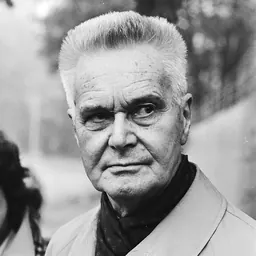
Lived 1910 – 2005 (aged 94). Nathaniel Weyl was an American economist, journalist, writer and politician.
Nathaniel Weyl (July 20, 1910 – April 13, 2005) was an American economist and author who wrote on a variety of social issues. A member of the Communist Party of the United States from 1933 until 1939, after leaving the party he became a conservative and avowed anti-communist. In 1952 he played a minor role in the Alger Hiss case.
Early life Weyl was born in New York City, the only child of Bertha Nevin (née Poole) and Walter Edward Weyl, a founder of The New Republic and a prominent progressive. His father was from a German Jewish family, and his mother, originally from Chicago, was from a Christian background.
Weyl received his Bachelor of Science Degree from Columbia College of Columbia University in 1931. There, he joined the Social Problems Club and "created the Morningside Heights branch of the Socialist Party, which covered Columbia, Barnard, and Union Theological Seminary ... soon ... the largest branch in the Party." He did postgraduate work at the London School of Economics, where instructors included Friederich Hayek on the right and Harold Laski on the left. He returned to Columbia for doctoral studies in economics in 1932 and became a leader of the "Communist-controlled" National Student Union. Edmund Stevens, like Weyl, was an editor of Student Review and convinced him to join the Communist Party.
Weyl described his position in the party in a manner that may indicate pre-positioning for underground work: I was made a Member At Large (MAL) of the Party. This meant that I was not to express views which identified me as a Communist, not frequently to attend rallies or associate with known Communists, that I would not be a member of any unit, and would have to stay away from CP headquarters. It was the only eyewitness corroboration of Whittaker Chambers's testimony that Alger Hiss was a Communist. However, it came two years after Hiss had been convicted of perjury, and Weyl never explained his failure to come forward as a witness in the Hiss trials.
Also in 1952, Weyl attended a loyalty board meeting in support of Mary Dublin Keyserling. Keyserling was accused of communist ties, in part through alleged connections to Weyl. Weyl spoke against this.
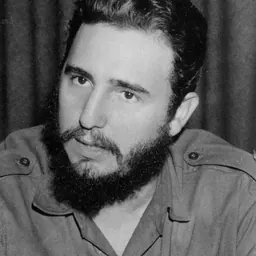
Weyl writings included studies of communism, especially in Latin America; espionage and internal security in the United States; racial, ethnic and class analyses of societies; and the roles of political and intellectual elites. Some of his writing has been published in eugenics journals and has espoused such views as blaming modern revolutionary movements on the "envy of non-achievers against creative minorities." Two of Weyl's books, Treason (1950) and Red Star Over Cuba (1961), received some critical interest and discussion in their times. Red Star Over Cuba postulates that Fidel Castro was a covert Communist before the Cuban Revolution and had been recruited by the Soviets while he was a teenager. The theory has not been widely accepted.
Weyl wrote for the National Review from the 1960s through the 1970s.
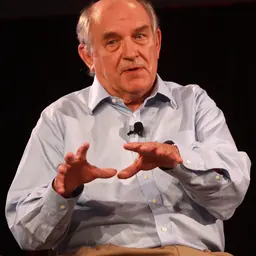
Weyl visited Rhodesia in 1966. During this visit, Weyl received IQ data from the Rhodesian government. Learning of Rhodesian government reports indicating a large number of white Rhodesian individuals having unusually high IQs, Weyl concluded in a journal article in Intelligence that high taxes and other economic hardships in "socialist Britain" were causing a brain drain to Rhodesia. This work was later cited in the 1994 book The Bell Curve by Charles Murray.
Following the release of Red Star Over Cuba, Weyl and John Martino, an activist against Castro, also actively promoted the story that Lee Harvey Oswald had been in Cuba prior to the assassination of John F. Kennedy, where he enjoyed contact with Cuban intelligence and Castro. Martino admitted that the story was fabricated shortly before dying, in 1975. Weyl ghostwrote Martino's memoir I Was Castro's Prisoner (1963). He also worked on a memoir of William D. Pawley, although it was never published.
Weyl's 1979 book Karl Marx - Racist contains a summary and critique of Marx's views on race and the role of Jews in modern capitalism, and a discussion of later refutations of Marx's economic views. At the same time, Weyl himself supported white minority-rule regimes in southern Africa against "communist terrorists" like Nelson Mandela, preferring the whites of Rhodesia, South Africa, and Portuguese colonial rule. Thinking that the struggle of Communist liberation movements was essentially destroyed by 1970, he published Traitor's End and intended the book to be the white anti-Communists' celebration of the supposed destruction of the black majority's liberation movements. However, Weyl, unlike others in the magazine, allowed that marriage between races might be permissible in select instances.
Don’t just read it —
keep it.
Full-length biographies made to live with: read them, listen on the way to work, watch them tonight.
- E-book
- Audio
- Video
Instant download · yours to keep · every purchase keeps this site free
Important facts
Family & relationships
People in Nathaniel Weyl's life
Named in this biography and alive at the same time





Related people
Same field, nearest in time


Contemporaries
People whose lives overlapped Nathaniel Weyl's





Frequently asked questions
Who was Nathaniel Weyl?
American politician (1910–2005)
When was Nathaniel Weyl born?
Nathaniel Weyl was born on 20 July 1910 in New York City.
When did Nathaniel Weyl die?
Nathaniel Weyl died on 13 April 2005 in Ojai.
What was Nathaniel Weyl's occupation?
Nathaniel Weyl was an economist, journalist, writer and politician.
What nationality was Nathaniel Weyl?
Nathaniel Weyl was American.
Sources & further reading
Cite this page
APA: Biography.guide. (2026). Nathaniel Weyl. https://biography.guide/nathaniel-weyl/
MLA: "Nathaniel Weyl." Biography.guide, https://biography.guide/nathaniel-weyl/.
Chicago: "Nathaniel Weyl." Biography.guide. https://biography.guide/nathaniel-weyl/.
Data last updated: 2026-09-20 · Spot an error? Report a correction.
Page generated 2026-09-27 05:01 UTC