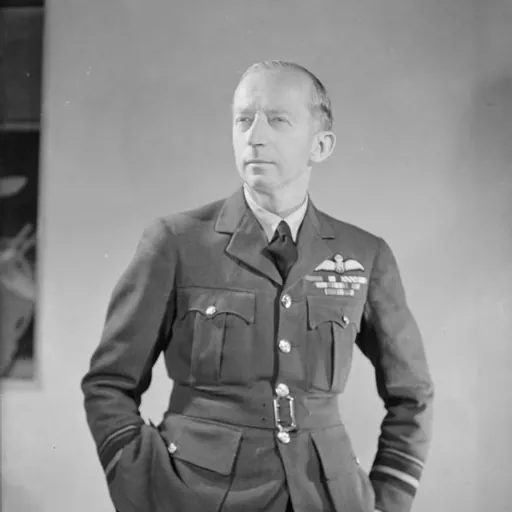
Harold Spencer Kerby
Royal Air Force air marshals
About Harold Spencer Kerby
Lived 1893 – 1963 (aged 70).
Air Vice Marshal Harold Spencer Kerby, (14 May 1893 – 8 June 1963) was a Canadian-born air officer of the Royal Air Force. He served in the Royal Naval Air Service during the First World War, where he became a flying ace with nine confirmed aerial victories, later transferring to the Royal Air Force, rising to command of British Air Forces in East Africa during the Second World War.
Early life and education Kerby was born in Hamilton, Ontario, Canada, the only son of Reverend George William Kerby, Harold Kerby graduated from the University of Toronto with a degree in mechanical engineering. He was granted Royal Aero Club Aviators Certificate No. 1214 after soloing a Grahame-White biplane at the Grahame-White School at Hendon on 5 May. On 12 June Kerby was posted to No. 3 (Naval) Squadron (later No. 3 Wing), under Commander Charles Samson, to serve in the Gallipoli Campaign. He was wounded on 26 November, He was then posted to No. 9 (Naval) Squadron in France, where on 24 March 1917 he gained his first aerial victory, flying a Sopwith Pup, sharing in the destruction of an enemy seaplane at Wenduine. he then returned to No. 3 (Naval) Squadron, now also based in France, where he gained six more aerial victories between 22 April and 27 May. In August, while serving in the Walmer Defence Flight, he destroyed two Gotha G.IV heavy bombers.
He was subsequently awarded the Distinguished Service Cross, which was gazetted on 2 November 1917. His citation read:
On 31 December he was promoted to flight commander. On 1 April 1918, the Royal Naval Air Service was merged with the Army's Royal Flying Corps to form the Royal Air Force, and Kerby joined the RAF with the rank of lieutenant (temporary captain). to serve as Officer Commanding and Instructor at No. 4 Fighter School, RAF Freiston. He was again appointed an acting major on 1 May, and on 1 August was granted a permanent commission in the RAF with the rank of captain (flight lieutenant). He served on the staff of the No. 1 School of Technical Training at RAF Halton from December 1919,
He was one of the first students at the Staff College, which had only just opened under the command of Air Commodore Robert Brooke-Popham. The Directing Staff included Air Commodore Robert Clark-Hall, Group Captain Philip Joubert de la Ferté, Wing Commanders Wilfrid Freeman and Charles Edmonds, and Squadron Leader Bertine Sutton, while Kerby's fellow students included Wing Commanders Jack Baldwin and Richard Peirse, Squadron Leaders Conway Pulford, Keith Park, Wilfred McClaughry and Charles Portal, and Flight Lieutenants Eric Betts and John Cole-Hamilton.
On completion of the Staff College course he was posted to the Air Staff of No. 3 Group on 4 April 1923, then to the staff of No. 3 Wing, India, on 14 September. Kerby was promoted to squadron leader on 10 October 1928, before finally returning to England to be posted to the RAF Depot at Uxbridge on 6 April 1929. On 1 November he was posted to serve on the staff of the Directorate of Operations and Intelligence in the Air Ministry, before finally returning to flying on 4 April 1934 as Officer Commanding No. 504 (County of Nottingham) Squadron, a Special Reserve Squadron of the Auxiliary Air Force operating Westland Wallace bombers from RAF Hucknall. He was promoted to wing commander on 1 July 1935, leaving No. 504 Squadron on 5 August. From 5 October he was a supernumerary officer on the staff of RAF Far East, and Shanghai. On 1 January 1939 Kerby was promoted to group captain, returning to the No. 1 RAF Depot on the 26th. He was promoted to the temporary rank of air commodore on 1 March 1941, and then to acting air vice-marshal on 5 March 1943, to serve as Air Officer Commanding, AHQ East Africa. On 1 December 1943 Kerby was promoted from group captain to air commodore, and also granted the temporary rank of air vice marshal. On 1 December 1944 he was appointed Air Officer Administration of RAF Coastal Command. On 15 October 1946 he was granted permission to wear the insignia of an Officer of the Legion of Merit conferred by the United States, followed by Commander of the Legion of Merit on 29 July 1947.
He died on 8 June 1963.
Don’t just read it —
keep it.
Full-length biographies made to live with: read them, listen on the way to work, watch them tonight.
- E-book
- Audio
- Video
Instant download · yours to keep · every purchase keeps this site free
Important facts
People in Harold Spencer Kerby's life
Named in this biography and alive at the same time



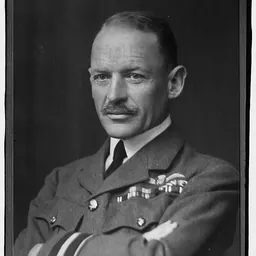
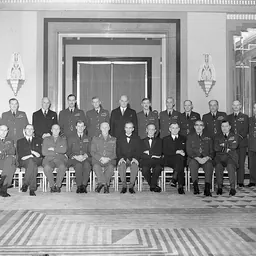

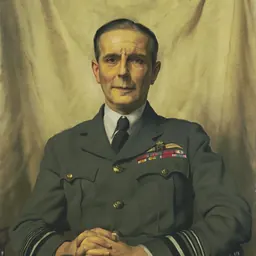

Contemporaries
People whose lives overlapped Harold Spencer Kerby's

Frequently asked questions
Who was Harold Spencer Kerby?
Royal Air Force air marshals (1893–1963)
When was Harold Spencer Kerby born?
Harold Spencer Kerby was born on 14 May 1893 in Hamilton.
When did Harold Spencer Kerby die?
Harold Spencer Kerby died on 8 June 1963 in London.
Sources & further reading
· Wikipedia: Harold Spencer Kerby
· DBpedia: Harold Spencer Kerby
Cite this page
APA: Biography.guide. (2026). Harold Spencer Kerby. https://biography.guide/harold-spencer-kerby/
MLA: "Harold Spencer Kerby." Biography.guide, https://biography.guide/harold-spencer-kerby/.
Chicago: "Harold Spencer Kerby." Biography.guide. https://biography.guide/harold-spencer-kerby/.
Data last updated: 2026-09-22 · Spot an error? Report a correction.
Portrait: Wikimedia Commons · author & licence
Page generated 2026-09-27 05:04 UTC