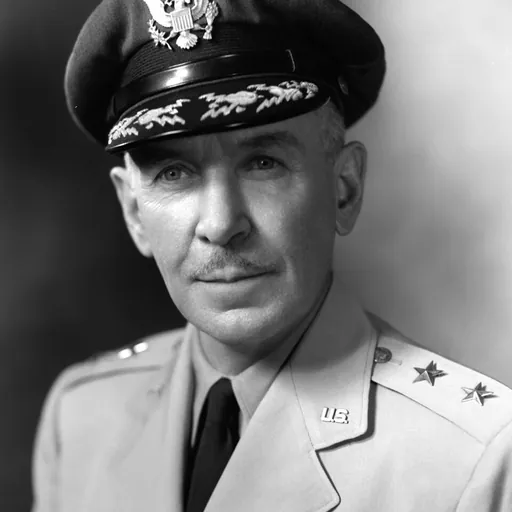
About Harold M. McClelland
Lived 1893 – 1965 (aged 72). Harold M. McClelland was an American military officer.
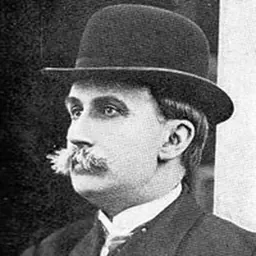
Harold Mark McClelland (November 4, 1893 – November 19, 1965) was a United States Air Force (USAF) major general who is considered the father of Air Force communications. He founded and led the 19th Bombardment Group in the early 1930s, commanded Rockwell Field for a year then was groomed for higher leadership, becoming the inspector for the General Headquarters Air Force (GHQ) in 1937.
Between 1934 and 1938, McClelland researched the technical and logistical aspects of long-range air communications, an effort which resulted in the establishment of the Army Airways Communications System.
In the USAF, an award is given annually in McClelland's name, for excellence in large unit communications. On November 19, 1918, McClelland joined the 48th Infantry at Norfolk, Virginia. He also saw service in England with the U.S. Army Liquidation Mission,
Communications In January 1921, McClelland attended the Air Service Communications School at Fort Sill, Oklahoma, and after graduation, remained there as an instructor. In February 1922, he was assigned to the Signal Corps radio laboratory at Camp Alfred Vail, New Jersey, as Air Service representative and from August 1922 to February 1924, was officer in charge of the laboratory. Enthusiastic Air Corps booster Major Benjamin Foulois, commander of Mitchel Field, arranged for a USAAC pilot to fly over and drop baseballs for Babe Ruth to catch. Ruth came out to Mitchel Field on July 22, 1926, dressed up in an Army uniform (he was in the Reserves) to keep his end of the bargain. In the sweltering heat and humidity of a Long Island summer, in front of a row of newspaper and film cameramen, as well as radio and print reporters, McClelland flew over Ruth at a speed of and a height of about . Foulois recalled that the first two baseballs that McClelland dropped near Ruth "knocked him flat" but that the third ball was caught with a shout of pain and then handed to the major. Foulois wrote in 1980: "The last I saw of the Babe that day he was slowly flexing his burning hand and trying to smile about it as he left in a big limousine."
McClelland returned to the U.S. in July 1942 and was assigned to Headquarters Army Air Forces, Washington, D.C., where he was director of technical services until March 1943. After serving the next several months as deputy assistant chief of Air Staff, operations, Headquarters Army Air Forces, he became the air communications officer in July 1943.
In January 1946, McClelland reported for newspaper and radio audiences that the recent radar contact with the Moon could well be an "opening step" in the search for life in space.
On April 8, 1946, McClelland became the first commanding general of the Airways and Air Communications Service,
Upon creation of the Military Air Transport Service, June 6, 1948, McClelland was named deputy commander, services. These services included Airways and Air Communications Service, Air Weather Service, Air Rescue Service, Flight Service and National Interest Bases. In addition to his new duties, he continued as commanding general of Airways and Air Communications Service until September 10, 1948. McClelland stepped down as commander of AACS Alumni Association on September 9, 1948.
On August 30, 1949, McClelland was appointed director of communications-electronics in the United States Department of Defense for the Joint Chiefs of Staff, with station at Washington, D.C. McClelland was survived by his wife Doris C. McClelland, and by their son Alan J. McClelland of Houston, Texas. McClelland's brother Herbert "Mac" McClelland continued to thrive as the founder and president of McClelland Sound in Wichita, Kansas, with clients that included McConnell Air Force Base and area businesses Boeing and Learjet.
In honor of his work in military communications, the "Air Force Communications and Information Major General Harold M. McClelland Award" is given annually to the large USAF unit (301 or more members) which has demonstrated "sustained superior performance and professional excellence while managing core communications and information functions and for contributions that most improved communications and information support to Air Force and (or) DoD operations and missions."
McClelland Hall, used by the 333rd Training Squadron on Keesler Air Force Base, is named in his honor.
Don’t just read it —
keep it.
Full-length biographies made to live with: read them, listen on the way to work, watch them tonight.
- E-book
- Audio
- Video
Instant download · yours to keep · every purchase keeps this site free
Important facts
People in Harold M. McClelland's life
Named in this biography and alive at the same time

Related people
Same field, nearest in time


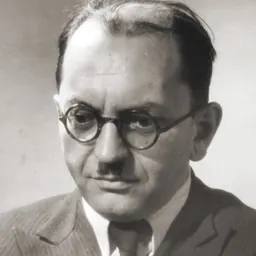
Contemporaries
People whose lives overlapped Harold M. McClelland's
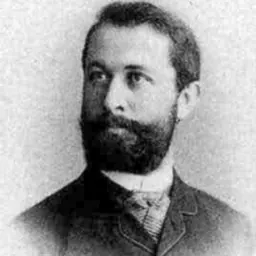

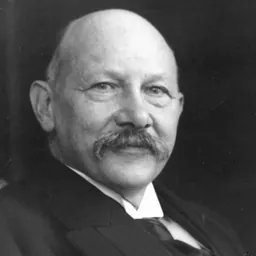
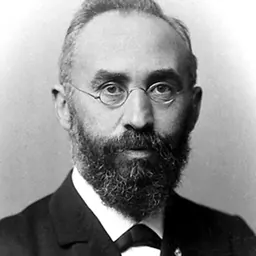

Frequently asked questions
Who was Harold M. McClelland?
American Air Force general (1893–1965)
When was Harold M. McClelland born?
Harold M. McClelland was born on 4 November 1893 in Tiffin.
When did Harold M. McClelland die?
Harold M. McClelland died on 19 November 1965 in Washington, D.C..
What was Harold M. McClelland's occupation?
Harold M. McClelland was a military officer.
What nationality was Harold M. McClelland?
Harold M. McClelland was American.
Sources & further reading
· Wikipedia: Harold M. McClelland
· DBpedia: Harold M. McClelland
Cite this page
APA: Biography.guide. (2026). Harold M. McClelland. https://biography.guide/harold-m-mcclelland/
MLA: "Harold M. McClelland." Biography.guide, https://biography.guide/harold-m-mcclelland/.
Chicago: "Harold M. McClelland." Biography.guide. https://biography.guide/harold-m-mcclelland/.
Data last updated: 2026-09-23 · Spot an error? Report a correction.
Portrait: Wikimedia Commons · author & licence
Page generated 2026-09-27 05:05 UTC